While takeoff favors the right for the Chugach Mountains, the landing approach on the left provides superior views of the North Shore Mountains and Burrard Inlet—more dramatic and sustained scenery during the critical descent phase. The landing experience outweighs the takeoff advantage.
Flown EDF to YVR? Did we get it right?
Flight Path
Anchorage to Vancouver is 1,324 miles (2,130 km), a flight of about 3 hours 15 minutes.
The flight path crosses the Inside Passage region. Notable features include the Glacier Bay area (visible around 1.5 hours into flight), the Alexander Archipelago with its dense island chains and fjords, and the transition from Alaska's coastal mountains to British Columbia's Coast Range. The route typically passes east of the Queen Charlotte Islands (Haida Gwaii) at cruise altitude, with views of the continental shelf and open water of the Gulf of Alaska to the west.
Great circle distance and headings ›

Phase by phase
Takeoff from EDF
RIGHTElmendorf typically departs to the north or northeast. Right-side seats face the Chugach Mountains immediately, with Cook Inlet visible to the west. Left side shows the flat Anchorage bowl and urban sprawl with less dramatic terrain.
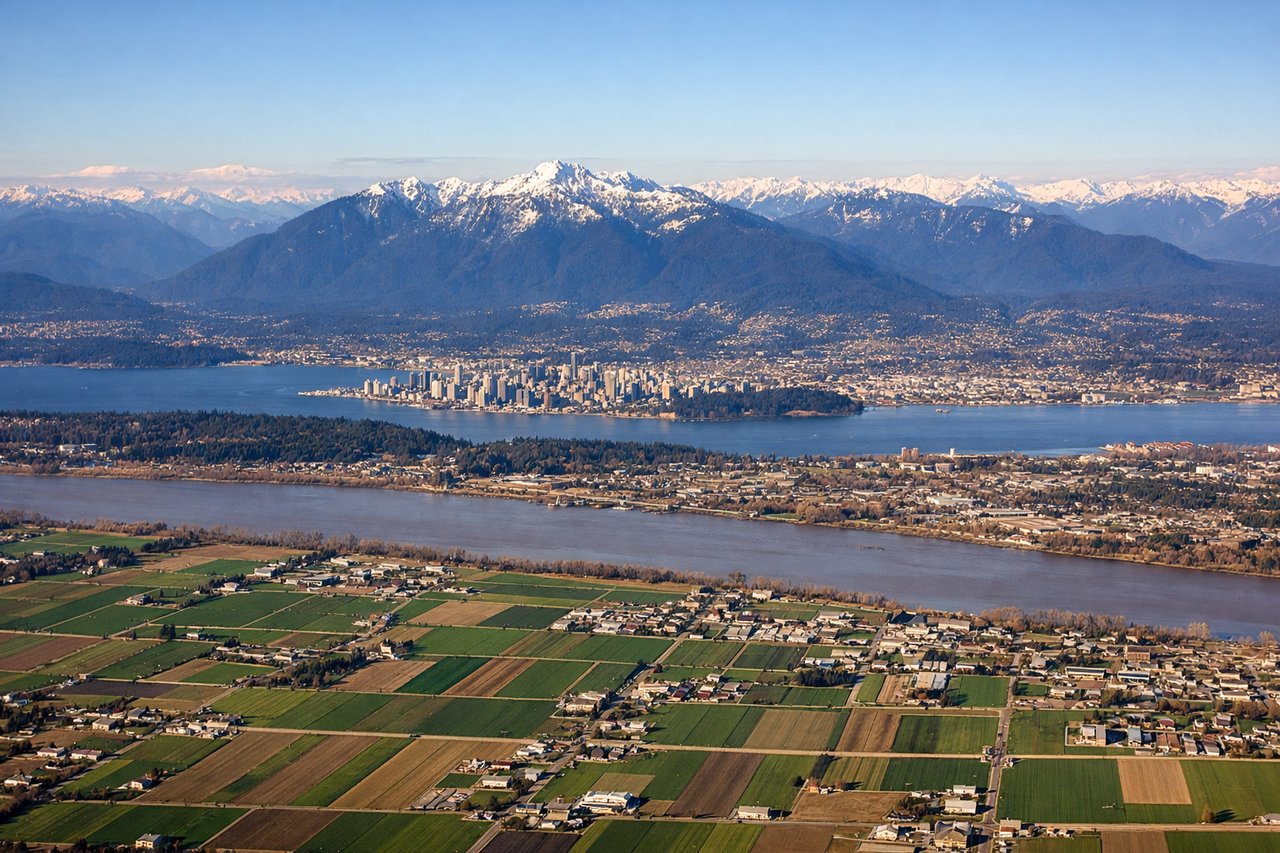
Landing at YVR
LEFTApproaching Vancouver from the north typically uses runways 26L/26R or 27L/27R (westerly approaches). Left-side seats face the North Shore Mountains and Burrard Inlet directly during descent. Right side shows the city and suburban sprawl with less dramatic topography.
Will your flight be in sunlight?
Pick a date and time in the Sun Map to watch the sun move across your whole flight.
About This Route
Which side of the plane should I sit on flying from Elmendorf Afb (EDF) to Vancouver International (YVR)?
Sit on the Left side of the plane for the best views on flights from Anchorage to Vancouver. While takeoff favors the right for the Chugach Mountains, the landing approach on the left provides superior views of the North Shore Mountains and Burrard Inlet—more dramatic and sustained scenery during the critical descent phase. The landing experience outweighs the takeoff advantage.
What can I see during takeoff from Elmendorf Afb in Anchorage?
During takeoff from Elmendorf Afb (EDF), sit on the Right side for the best views. Elmendorf typically departs to the north or northeast. Right-side seats face the Chugach Mountains immediately, with Cook Inlet visible to the west. Left side shows the flat Anchorage bowl and urban sprawl with less dramatic terrain. Notable sights include: Chugach Mountains (immediate eastern wall), Cook Inlet (western water body), Knik Arm (northern inlet extension), Anchorage city grid (southern foreground).
What can I see when landing at Vancouver International in Vancouver?
When landing at Vancouver International (YVR), sit on the Left side for the best views. Approaching Vancouver from the north typically uses runways 26L/26R or 27L/27R (westerly approaches). Left-side seats face the North Shore Mountains and Burrard Inlet directly during descent. Right side shows the city and suburban sprawl with less dramatic topography. Notable sights include: North Shore Mountains (Grouse, Cypress, Seymour peaks), Burrard Inlet (water body separating North Shore from city), Vancouver city skyline (downtown core), Strait of Georgia (visible to the west).
How long is the flight from Anchorage to Vancouver?
The flight from Elmendorf Afb (EDF) to Vancouver International (YVR) takes about 3 hours 15 minutes. The shortest flight path between them is 1,324 miles (2,130 km); winds and air traffic control usually add a few percent.
What does the Anchorage to Vancouver flight path pass over?
The flight path crosses the Inside Passage region. Notable features include the Glacier Bay area (visible around 1.5 hours into flight), the Alexander Archipelago with its dense island chains and fjords, and the transition from Alaska's coastal mountains to British Columbia's Coast Range. The route typically passes east of the Queen Charlotte Islands (Haida Gwaii) at cruise altitude, with views of the continental shelf and open water of the Gulf of Alaska to the west.