Keffallinia to New York is 4,771 miles (7,678 km), a flight of about 10 hours 15 minutes.
While the left offers excellent views during departure from Kefallinia, the right side dominates the majority of this transatlantic flight, providing the most dramatic scenery during the long descent into New York. The approach into JFK over Long Island and Jamaica Bay is visually superior to the initial climb-out.
Flight Path
This eastbound transatlantic route crosses the Atlantic Ocean for roughly 8 hours with minimal visible landmarks. The flight typically passes north of the Azores (visible only on clear days, roughly 6 hours into flight), then continues over open ocean. The mid-Atlantic ridge and deep ocean basin are not visible from cruise altitude. Approximately 2 hours before descent into JFK, the aircraft enters the North American airspace and begins the approach corridor, eventually descending over Nova Scotia and the New England coast before turning south toward New York.
Great circle distance and headings ›_-_75_(50558355441).jpg?width=600)


.jpg?width=600)
Phase by phase
Takeoff from EFL
LEFTLeft side offers immediate views of Kefallinia's rugged interior and the Ionian Sea coastline as the aircraft climbs northwestward. You'll see the island's mountainous spine and the strait separating Kefallinia from Zakynthos to the south.
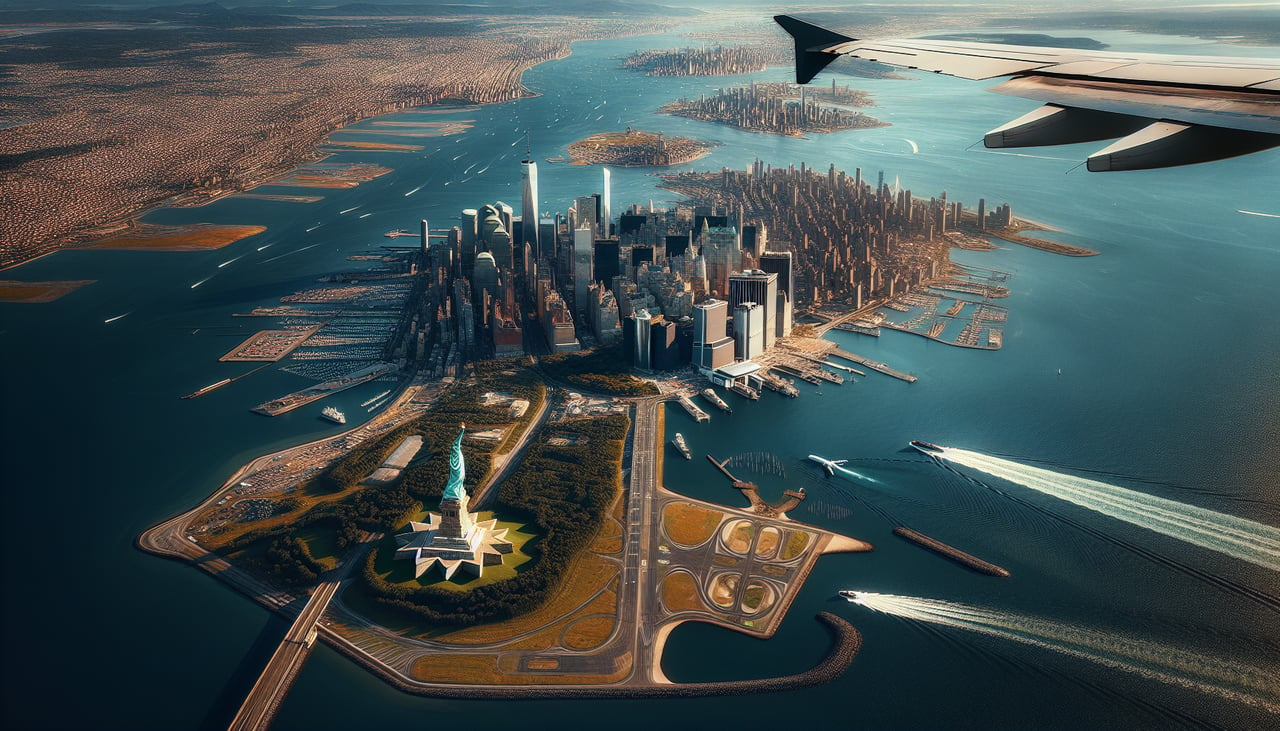
Landing at JFK
RIGHTRight side provides the best views during the long transatlantic descent into JFK. As the aircraft approaches from the east over the Atlantic, the right side captures the New York metropolitan area, Long Island, and the approach corridor over Jamaica Bay and the Rockaway Peninsula.
Landmarks on this routeAll landmarks →
Will your flight be in sunlight?
Pick a date and time in the Sun Map to watch the sun move across your whole flight.
About This Route
Which side of the plane should I sit on flying from Kefallinia (EFL) to John F Kennedy International (JFK)?
Sit on the Right side of the plane for the best views on flights from Keffallinia to New York. While the left offers excellent views during departure from Kefallinia, the right side dominates the majority of this transatlantic flight, providing the most dramatic scenery during the long descent into New York. The approach into JFK over Long Island and Jamaica Bay is visually superior to the initial climb-out.
What can I see during takeoff from Kefallinia in Keffallinia?
During takeoff from Kefallinia (EFL), sit on the Left side for the best views. Left side offers immediate views of Kefallinia's rugged interior and the Ionian Sea coastline as the aircraft climbs northwestward. You'll see the island's mountainous spine and the strait separating Kefallinia from Zakynthos to the south. Notable sights include: Mount Aenos (the island's highest peak at 1,628 m), the Ionian Sea to the west, Zakynthos Island to the south, Lixouri town on the western peninsula.
What can I see when landing at John F Kennedy International in New York?
When landing at John F Kennedy International (JFK), sit on the Right side for the best views. Right side provides the best views during the long transatlantic descent into JFK. As the aircraft approaches from the east over the Atlantic, the right side captures the New York metropolitan area, Long Island, and the approach corridor over Jamaica Bay and the Rockaway Peninsula. Notable sights include: Long Island's urban sprawl and barrier islands, Jamaica Bay and its wetlands, the Rockaway Peninsula, Manhattan's skyline in the distance.
How long is the flight from Keffallinia to New York?
The flight from Kefallinia (EFL) to John F Kennedy International (JFK) takes about 10 hours 15 minutes. The shortest flight path between them is 4,771 miles (7,678 km); winds and air traffic control usually add a few percent.
What does the Keffallinia to New York flight path pass over?
This eastbound transatlantic route crosses the Atlantic Ocean for roughly 8 hours with minimal visible landmarks. The flight typically passes north of the Azores (visible only on clear days, roughly 6 hours into flight), then continues over open ocean. The mid-Atlantic ridge and deep ocean basin are not visible from cruise altitude. Approximately 2 hours before descent into JFK, the aircraft enters the North American airspace and begins the approach corridor, eventually descending over Nova Scotia and the New England coast before turning south toward New York.