New York to Keffallinia is 4,771 miles (7,678 km), a flight of about 10 hours 30 minutes.
The right side wins overall because the arrival into Kefallinia on the right is genuinely spectacular — Mount Ainos, the Ionian coastline, and Ithaca are iconic and hard to beat. The takeoff left side is good but the arrival right side view is more dramatic and memorable for the full journey.
Flight Path
The route tracks northeast over the North Atlantic, passing south of Iceland and over the British Isles — typically crossing southern Ireland or Wales, then England, before crossing the English Channel and tracking over France, Switzerland or northern Italy, then down the Adriatic Sea toward Greece. The Alps may be visible as a distant white ridge from either side over central Europe, and the Adriatic coastline of Croatia and Albania is a notable feature in the final hour of flight.
Great circle distance and headings ›.jpg?width=600)


_-_75_(50558355441).jpg?width=600)
Phase by phase
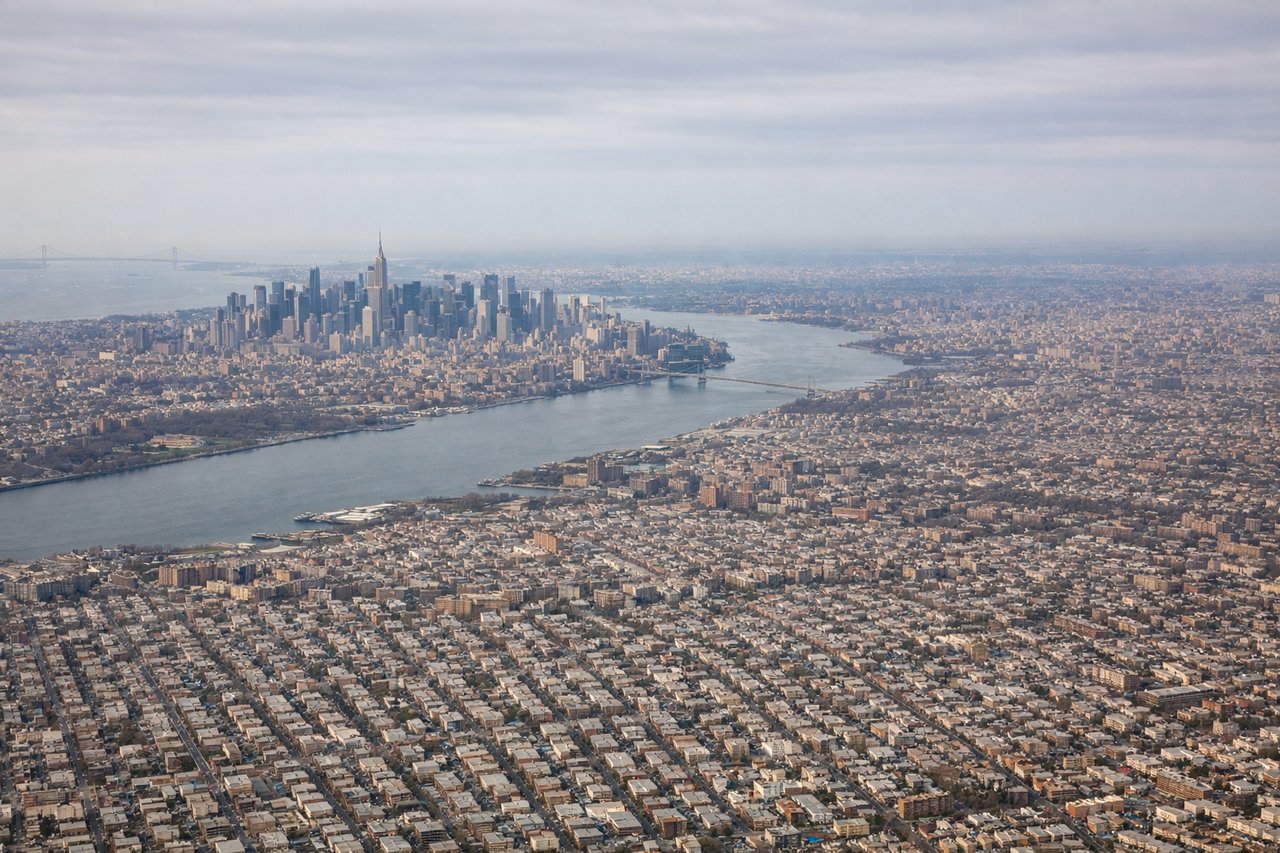
Takeoff from JFK
LEFTJFK departures heading east or northeast on runway 31L/31R give the left side views over Jamaica Bay, the Rockaways, and then Manhattan's skyline receding to the northwest. As the aircraft turns northeast toward the Atlantic, the left side tracks the Long Island coastline and the city grid below.
Landing at EFL
RIGHTKefallinia Airport sits on the northeast coast of the island, and aircraft typically approach from the north or northwest over the Ionian Sea. A right-side seat gives views over the island's mountainous interior including Mount Ainos, the turquoise Ionian waters, and the neighboring island of Ithaca to the northeast.
Landmarks on this routeAll landmarks →
Will your flight be in sunlight?
Pick a date and time in the Sun Map to watch the sun move across your whole flight.
About This Route
Which side of the plane should I sit on flying from John F Kennedy International (JFK) to Kefallinia (EFL)?
Sit on the Right side of the plane for the best views on flights from New York to Keffallinia. The right side wins overall because the arrival into Kefallinia on the right is genuinely spectacular — Mount Ainos, the Ionian coastline, and Ithaca are iconic and hard to beat. The takeoff left side is good but the arrival right side view is more dramatic and memorable for the full journey.
What can I see during takeoff from John F Kennedy International in New York?
During takeoff from John F Kennedy International (JFK), sit on the Left side for the best views. JFK departures heading east or northeast on runway 31L/31R give the left side views over Jamaica Bay, the Rockaways, and then Manhattan's skyline receding to the northwest. As the aircraft turns northeast toward the Atlantic, the left side tracks the Long Island coastline and the city grid below. Notable sights include: Manhattan skyline to the northwest, Jamaica Bay and its barrier islands directly below, Long Island Sound coastline, Coney Island peninsula.
What can I see when landing at Kefallinia in Keffallinia?
When landing at Kefallinia (EFL), sit on the Right side for the best views. Kefallinia Airport sits on the northeast coast of the island, and aircraft typically approach from the north or northwest over the Ionian Sea. A right-side seat gives views over the island's mountainous interior including Mount Ainos, the turquoise Ionian waters, and the neighboring island of Ithaca to the northeast. Notable sights include: Mount Ainos (1,628m, the island's dominant peak), Argostoli Bay and the capital Argostoli, Island of Ithaca visible to the northeast, Ionian Sea turquoise shallows around the coastline.
How long is the flight from New York to Keffallinia?
The flight from John F Kennedy International (JFK) to Kefallinia (EFL) takes about 10 hours 30 minutes. The shortest flight path between them is 4,771 miles (7,678 km); winds and air traffic control usually add a few percent.
What does the New York to Keffallinia flight path pass over?
The route tracks northeast over the North Atlantic, passing south of Iceland and over the British Isles — typically crossing southern Ireland or Wales, then England, before crossing the English Channel and tracking over France, Switzerland or northern Italy, then down the Adriatic Sea toward Greece. The Alps may be visible as a distant white ridge from either side over central Europe, and the Adriatic coastline of Croatia and Albania is a notable feature in the final hour of flight.