East London to Madrid is 5,461 miles (8,789 km), a flight of about 11 hours 30 minutes.
While takeoff offers coastal scenery, the landing approach into Madrid provides more dramatic and varied visual interest with the Guadarrama Mountains and the approach to Europe's interior plateau. Left-side seats capture the best of the descent and approach sequence.
Flight Path
The flight path crosses the Atlantic Ocean for roughly 6-7 hours with no significant landmarks visible—only open ocean. As the aircraft approaches the African coast near Western Sahara and Morocco, the Sahara Desert becomes visible as a vast tan expanse. The Atlas Mountains appear as the aircraft passes over or near Morocco. The Mediterranean coast of Spain and the transition from North Africa to southern Spain marks the final approach phase, with the Iberian Peninsula's interior plateau and mountain ranges becoming progressively more detailed.
Great circle distance and headings ›


Phase by phase
Takeoff from ELS
RIGHTRight-side seats offer views of the Eastern Cape coastline and the Indian Ocean immediately after departure. The aircraft climbs northwestward, so right-side passengers see the coast receding southward, including the Algoa Bay shoreline and the rugged cliffs near the airport.
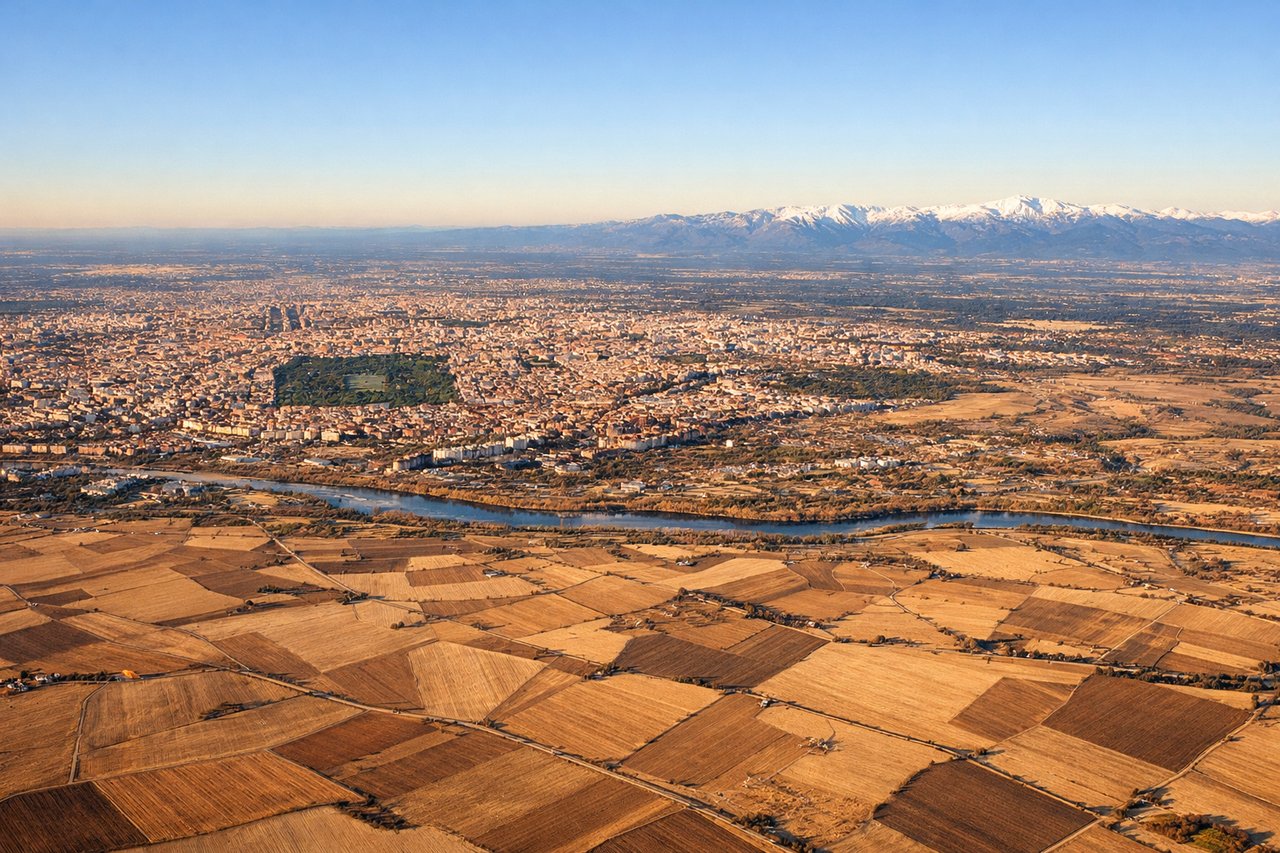
Landing at MAD
LEFTLeft-side seats provide excellent views during the final approach into Madrid. The aircraft descends from the northeast, and left-side passengers see the Guadarrama Mountains and the Spanish Meseta plateau. As descent continues, the urban sprawl of Madrid becomes visible, with the Manzanares River valley and the city's distinctive grid pattern.
Landmarks on this routeAll landmarks →
Will your flight be in sunlight?
Pick a date and time in the Sun Map to watch the sun move across your whole flight.
About This Route
Which side of the plane should I sit on flying from East London (ELS) to Barajas (MAD)?
Sit on the Left side of the plane for the best views on flights from East London to Madrid. While takeoff offers coastal scenery, the landing approach into Madrid provides more dramatic and varied visual interest with the Guadarrama Mountains and the approach to Europe's interior plateau. Left-side seats capture the best of the descent and approach sequence.
What can I see during takeoff from East London in East London?
During takeoff from East London (ELS), sit on the Right side for the best views. Right-side seats offer views of the Eastern Cape coastline and the Indian Ocean immediately after departure. The aircraft climbs northwestward, so right-side passengers see the coast receding southward, including the Algoa Bay shoreline and the rugged cliffs near the airport. Notable sights include: Algoa Bay, Indian Ocean coastline, Eastern Cape cliffs, Sundays River valley.
What can I see when landing at Barajas in Madrid?
When landing at Barajas (MAD), sit on the Left side for the best views. Left-side seats provide excellent views during the final approach into Madrid. The aircraft descends from the northeast, and left-side passengers see the Guadarrama Mountains and the Spanish Meseta plateau. As descent continues, the urban sprawl of Madrid becomes visible, with the Manzanares River valley and the city's distinctive grid pattern. Notable sights include: Guadarrama Mountains, Spanish Meseta plateau, Manzanares River valley, Madrid urban area.
How long is the flight from East London to Madrid?
The flight from East London (ELS) to Barajas (MAD) takes about 11 hours 30 minutes. The shortest flight path between them is 5,461 miles (8,789 km); winds and air traffic control usually add a few percent.
What does the East London to Madrid flight path pass over?
The flight path crosses the Atlantic Ocean for roughly 6-7 hours with no significant landmarks visible—only open ocean. As the aircraft approaches the African coast near Western Sahara and Morocco, the Sahara Desert becomes visible as a vast tan expanse. The Atlas Mountains appear as the aircraft passes over or near Morocco. The Mediterranean coast of Spain and the transition from North Africa to southern Spain marks the final approach phase, with the Iberian Peninsula's interior plateau and mountain ranges becoming progressively more detailed.