East London to New Orleans is 8,838 miles (14,223 km), a flight of about 14 hours 30 minutes.
While the takeoff offers coastal scenery, the landing approach over the Mississippi River and New Orleans provides more dramatic and distinctive geography. The river's crescent shape and the contrast between urban development and surrounding wetlands create a more visually compelling final descent than the initial climb-out.
Flight Path
The flight path crosses the Atlantic Ocean for roughly 8-9 hours with no significant landmarks visible. The aircraft will pass south of the Azores (not visible at cruise altitude), cross the Caribbean waters approaching the Gulf of Mexico, and may offer views of the Yucatan Peninsula or Gulf Coast depending on the specific routing chosen by the airline. The Gulf of Mexico crossing provides open water views for the final 2-3 hours before Louisiana approach.
Great circle distance and headings ›
Phase by phase
Takeoff from ELS
RIGHTRight-side seats offer views of the Indian Ocean coastline and the Eastern Cape's dramatic coastal cliffs as the aircraft climbs eastward over the sea before turning northwest toward the Atlantic crossing.
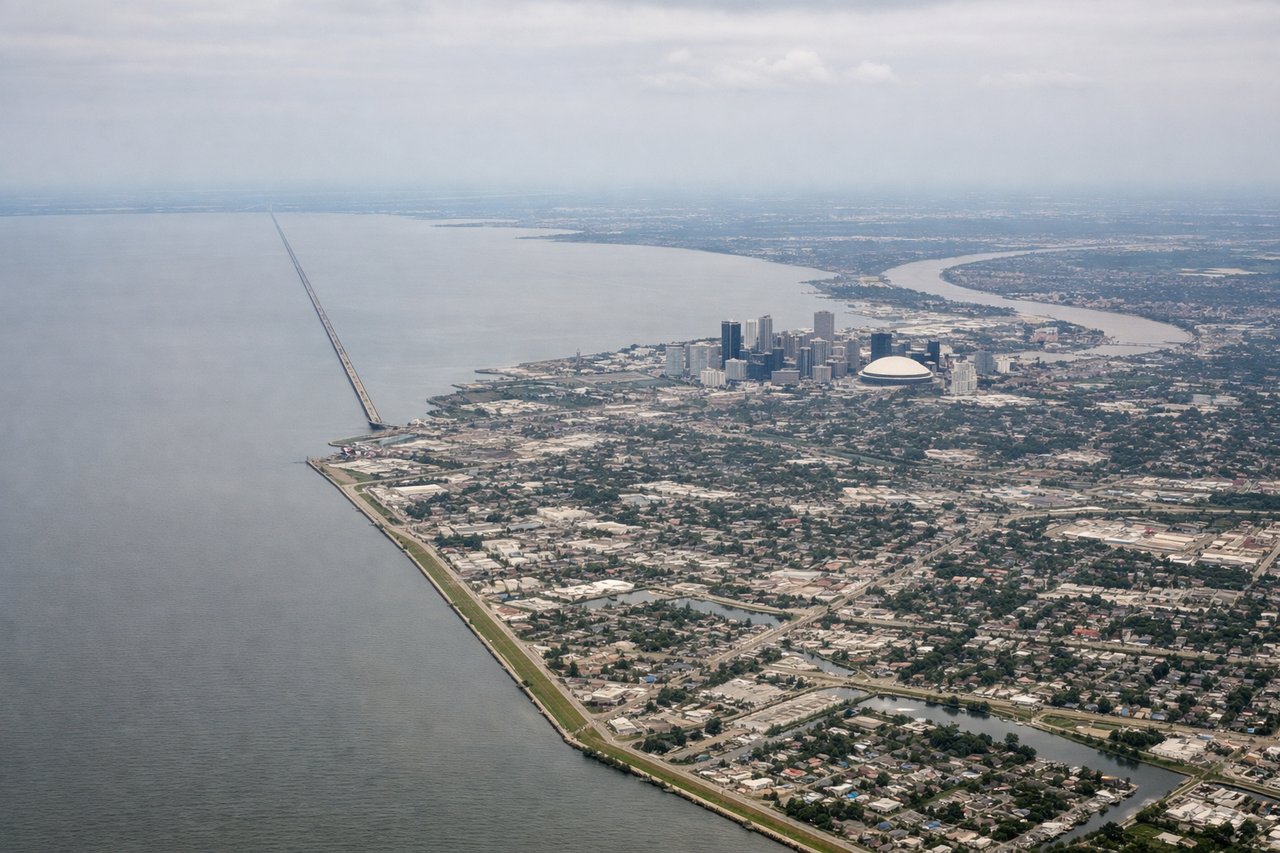
Landing at MSY
LEFTLeft-side seats provide excellent views of the Mississippi River's distinctive meanders and the New Orleans metropolitan area during descent, particularly the river's crescent bend that defines the city's geography.
Landmarks on this routeAll landmarks →
Will your flight be in sunlight?
Pick a date and time in the Sun Map to watch the sun move across your whole flight.
About This Route
Which side of the plane should I sit on flying from East London (ELS) to Louis Armstrong New Orleans International (MSY)?
Sit on the Left side of the plane for the best views on flights from East London to New Orleans. While the takeoff offers coastal scenery, the landing approach over the Mississippi River and New Orleans provides more dramatic and distinctive geography. The river's crescent shape and the contrast between urban development and surrounding wetlands create a more visually compelling final descent than the initial climb-out.
What can I see during takeoff from East London in East London?
During takeoff from East London (ELS), sit on the Right side for the best views. Right-side seats offer views of the Indian Ocean coastline and the Eastern Cape's dramatic coastal cliffs as the aircraft climbs eastward over the sea before turning northwest toward the Atlantic crossing. Notable sights include: Algoa Bay, the Indian Ocean coastline near Humewood Beach, the Eastern Cape escarpment inland, and Port Elizabeth's urban sprawl.
What can I see when landing at Louis Armstrong New Orleans International in New Orleans?
When landing at Louis Armstrong New Orleans International (MSY), sit on the Left side for the best views. Left-side seats provide excellent views of the Mississippi River's distinctive meanders and the New Orleans metropolitan area during descent, particularly the river's crescent bend that defines the city's geography. Notable sights include: The Mississippi River with its characteristic meanders, Lake Pontchartrain to the north, the New Orleans urban grid in the river crescent, and the surrounding bayou wetlands.
How long is the flight from East London to New Orleans?
The flight from East London (ELS) to Louis Armstrong New Orleans International (MSY) takes about 14 hours 30 minutes. The shortest flight path between them is 8,838 miles (14,223 km); winds and air traffic control usually add a few percent.
What does the East London to New Orleans flight path pass over?
The flight path crosses the Atlantic Ocean for roughly 8-9 hours with no significant landmarks visible. The aircraft will pass south of the Azores (not visible at cruise altitude), cross the Caribbean waters approaching the Gulf of Mexico, and may offer views of the Yucatan Peninsula or Gulf Coast depending on the specific routing chosen by the airline. The Gulf of Mexico crossing provides open water views for the final 2-3 hours before Louisiana approach.