Newark to Mosjoen is 3,627 miles (5,838 km), a flight of about 8 hours 30 minutes.
The left side delivers the spectacular New York harbor departure, and during the transatlantic cruise at high altitude the left side also faces south toward Greenland's ice sheet edge and the Norwegian Sea coastline on descent. The MJF landing view is better on the right, but the takeoff spectacle and mid-flight geography give the left side the overall edge.
Flight Path
The great-circle route from EWR to MJF tracks northeast over Newfoundland and Labrador, crosses the Labrador Sea, passes south of Greenland's tip near Cape Farewell, crosses the Iceland Basin, passes north of the Faroe Islands, and enters Norwegian airspace over the Norwegian Sea before descending toward Nordland county. Key features include the Labrador coastline, the Greenland ice sheet visible on the northern horizon, the open North Atlantic, and the deeply indented Norwegian fjord coast on descent.
Great circle distance and headings ›.jpg?width=600)
.jpeg?width=600)

Phase by phase
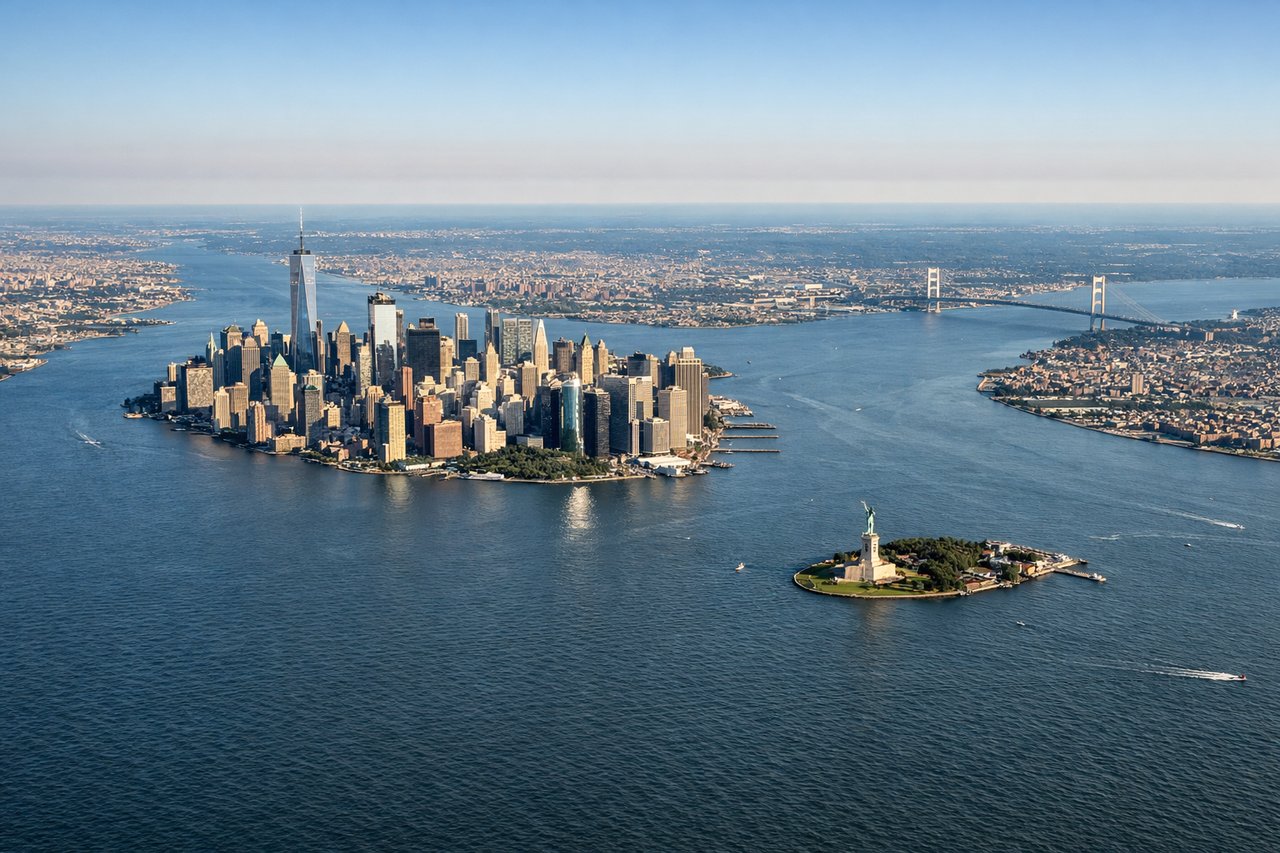
Takeoff from EWR
LEFTEWR's primary departure runway 22L sends aircraft southwest before turning northeast over the New York metro area. The left side captures Manhattan's skyline, the Hudson River, and Upper New York Bay as the aircraft banks north. You get a clear view of the Verrazano-Narrows Bridge and the full sweep of the harbor.
Landing at MJF
RIGHTMJF sits in the Vefsn valley with approaches typically from the southwest over Vefsna fjord. Landing to the northeast, the right side faces southeast toward the dramatic Okstindan massif and the glaciated peaks above Mosjoen. The fjord and surrounding snow-covered plateau are clearly visible on this side.
Landmarks on this routeAll landmarks →
Will your flight be in sunlight?
Pick a date and time in the Sun Map to watch the sun move across your whole flight.
About This Route
Which side of the plane should I sit on flying from Newark Liberty International (EWR) to Kjaerstad (MJF)?
Sit on the Left side of the plane for the best views on flights from Newark to Mosjoen. The left side delivers the spectacular New York harbor departure, and during the transatlantic cruise at high altitude the left side also faces south toward Greenland's ice sheet edge and the Norwegian Sea coastline on descent. The MJF landing view is better on the right, but the takeoff spectacle and mid-flight geography give the left side the overall edge.
What can I see during takeoff from Newark Liberty International in Newark?
During takeoff from Newark Liberty International (EWR), sit on the Left side for the best views. EWR's primary departure runway 22L sends aircraft southwest before turning northeast over the New York metro area. The left side captures Manhattan's skyline, the Hudson River, and Upper New York Bay as the aircraft banks north. You get a clear view of the Verrazano-Narrows Bridge and the full sweep of the harbor. Notable sights include: Manhattan skyline, Hudson River, Upper New York Bay, Verrazano-Narrows Bridge.
What can I see when landing at Kjaerstad in Mosjoen?
When landing at Kjaerstad (MJF), sit on the Right side for the best views. MJF sits in the Vefsn valley with approaches typically from the southwest over Vefsna fjord. Landing to the northeast, the right side faces southeast toward the dramatic Okstindan massif and the glaciated peaks above Mosjoen. The fjord and surrounding snow-covered plateau are clearly visible on this side. Notable sights include: Vefsna fjord, Okstindan massif, Vefsn valley, Mosjoen town.
How long is the flight from Newark to Mosjoen?
The flight from Newark Liberty International (EWR) to Kjaerstad (MJF) takes about 8 hours 30 minutes. The shortest flight path between them is 3,627 miles (5,838 km); winds and air traffic control usually add a few percent.
What does the Newark to Mosjoen flight path pass over?
The great-circle route from EWR to MJF tracks northeast over Newfoundland and Labrador, crosses the Labrador Sea, passes south of Greenland's tip near Cape Farewell, crosses the Iceland Basin, passes north of the Faroe Islands, and enters Norwegian airspace over the Norwegian Sea before descending toward Nordland county. Key features include the Labrador coastline, the Greenland ice sheet visible on the northern horizon, the open North Atlantic, and the deeply indented Norwegian fjord coast on descent.