The right side delivers the more dramatic and iconic single moment — Rome's historic center and the Tiber River on departure — which is harder to replicate elsewhere on the route. The Chicago approach on the left is excellent but the lakefront view is available on many midwest arrivals. Right side wins on the strength of the Rome departure alone.
Flight Path
The route tracks northwest from Rome across the Alps (visible from both sides at altitude), crosses southern France and the Bay of Biscay, then follows a great circle arc over the North Atlantic passing south of Iceland and Greenland's southern tip. The route then crosses Labrador and Quebec in Canada before descending over the Great Lakes into Chicago. Greenland's ice sheet edge and the St. Lawrence River valley are the most visually distinctive midpoint features.
Great circle distance and headings ›


Phase by phase
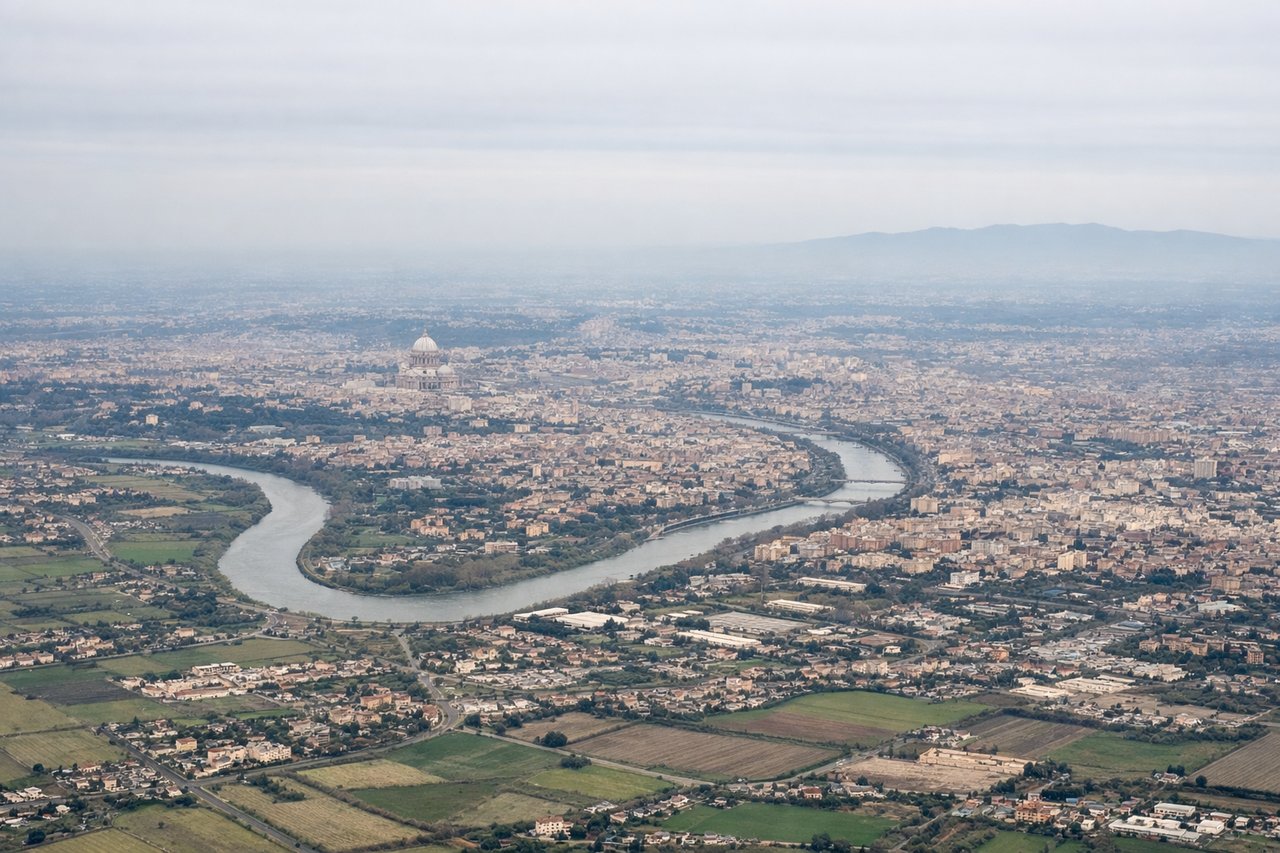
Takeoff from FCO
RIGHTFCO typically departs on runway 16R/16L heading southeast, then aircraft turn northwest over the coast. The right side gets a clear view of Rome's historic center — the Tiber River, the dome of St. Peter's Basilica, and the dense urban grid — as the plane banks north. The left side faces the Tyrrhenian Sea during the initial climb.

Landing at ORD
LEFTORD predominantly lands from the east on runways 10L/10C/10R, meaning the approach comes in from over Lake Michigan heading west. The left side has a sustained view of the Chicago lakefront, Grant Park, the Loop skyline, and Navy Pier as the aircraft descends over the lake before crossing the shoreline.
Landmarks on this routeAll landmarks →
Will your flight be in sunlight?
See exactly which side of the plane gets sun and shade at your departure time.
About This Route
Which side of the plane should I sit on flying from Fiumicino (FCO) to Chicago Ohare International (ORD)?
Sit on the Right side of the plane for the best views on flights from Rome to Chicago. The right side delivers the more dramatic and iconic single moment — Rome's historic center and the Tiber River on departure — which is harder to replicate elsewhere on the route. The Chicago approach on the left is excellent but the lakefront view is available on many midwest arrivals. Right side wins on the strength of the Rome departure alone.
What can I see during takeoff from Fiumicino in Rome?
During takeoff from Fiumicino (FCO), sit on the Right side for the best views. FCO typically departs on runway 16R/16L heading southeast, then aircraft turn northwest over the coast. The right side gets a clear view of Rome's historic center — the Tiber River, the dome of St. Peter's Basilica, and the dense urban grid — as the plane banks north. The left side faces the Tyrrhenian Sea during the initial climb. Notable sights include: Tiber River snaking through Rome, St. Peter's Basilica dome, the dense urban sprawl of central Rome, Castel Sant'Angelo near the river bend.
What can I see when landing at Chicago Ohare International in Chicago?
When landing at Chicago Ohare International (ORD), sit on the Left side for the best views. ORD predominantly lands from the east on runways 10L/10C/10R, meaning the approach comes in from over Lake Michigan heading west. The left side has a sustained view of the Chicago lakefront, Grant Park, the Loop skyline, and Navy Pier as the aircraft descends over the lake before crossing the shoreline. Notable sights include: Chicago Loop skyline along the lakefront, Lake Michigan shoreline, Grant Park and Museum Campus, Navy Pier extending into the lake.
How long is the flight from Rome to Chicago?
The flight from Fiumicino (FCO) to Chicago Ohare International (ORD) takes Approximately 10 to 11 hours.
What does the Rome to Chicago flight path pass over?
The route tracks northwest from Rome across the Alps (visible from both sides at altitude), crosses southern France and the Bay of Biscay, then follows a great circle arc over the North Atlantic passing south of Iceland and Greenland's southern tip. The route then crosses Labrador and Quebec in Canada before descending over the Great Lakes into Chicago. Greenland's ice sheet edge and the St. Lawrence River valley are the most visually distinctive midpoint features.