While takeoff favors the right for coastal scenery, the landing approach on the left offers more dramatic and distinctive views of the Spring Mountains and Las Vegas Valley that make the overall journey more visually rewarding. The westbound flight path means the left side captures the most interesting geography on both ends.
Flown FLL to LAS? Did we get it right?
Flight Path
Fort Lauderdale to Las Vegas is 2,170 miles (3,492 km), a flight of about 5 hours.
Lake Okeechobee (visible from southern Florida), the Florida peninsula's transition from coastal development to inland swamps, the Gulf of Mexico coastline near Naples/Everglades, the northern Gulf coast near the Florida Panhandle, Mobile Bay area, Mississippi River valley near Memphis, Arkansas and Missouri plains, Oklahoma panhandle, Texas Panhandle, New Mexico high desert plateau, and the Colorado Plateau approaching Nevada
Great circle distance and headings ›


Phase by phase
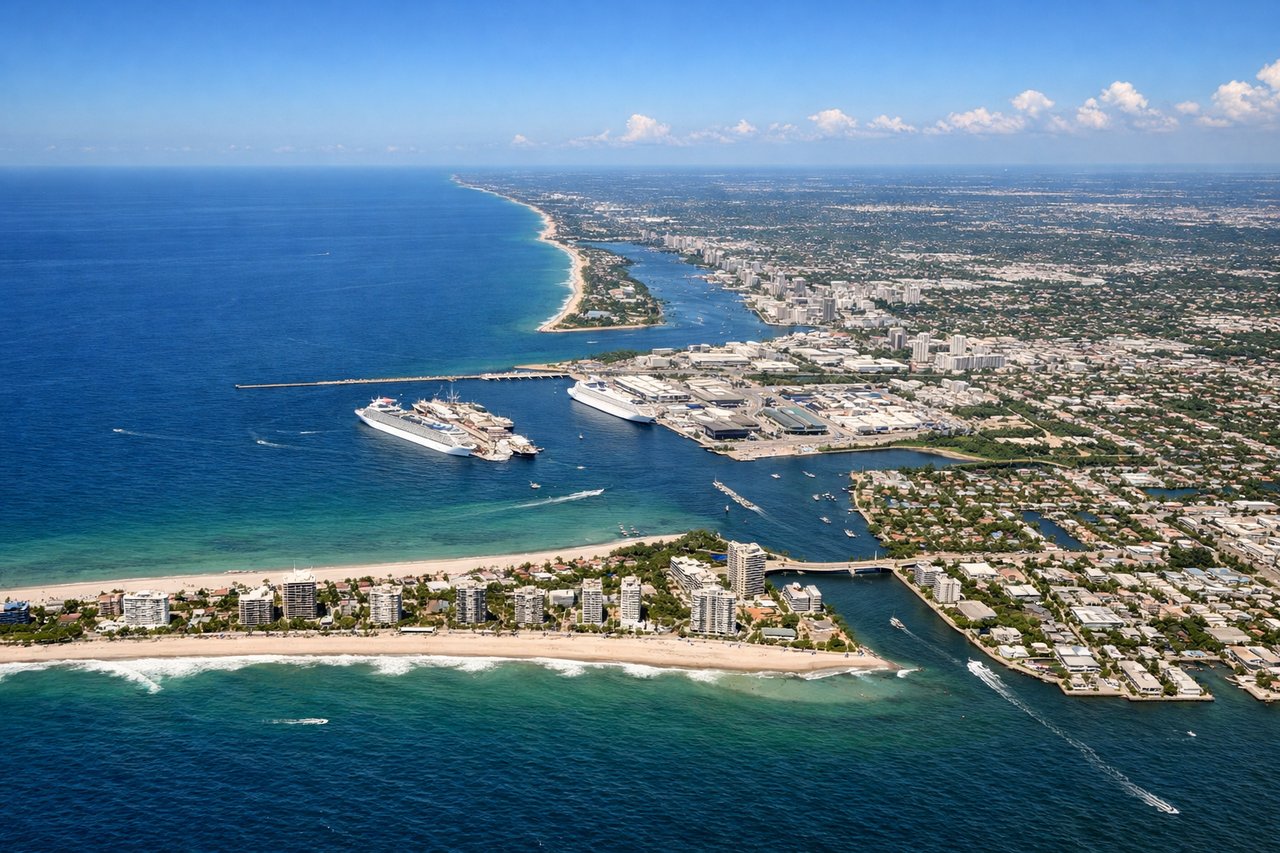
Takeoff from FLL
RIGHTRight side offers immediate views of the Atlantic coastline, Port Everglades, and the Miami-Fort Lauderdale urban corridor as you climb out westward. The left side faces inland swamps and developed areas with less visual interest.

Landing at LAS
LEFTLeft side provides the best views during descent into Las Vegas. You'll see the Spring Mountains and Red Rock Canyon to the west, then the Las Vegas Valley floor with the Strip and downtown visible as you approach from the east. Right side faces the barren desert with less distinctive features.
Will your flight be in sunlight?
Pick a date and time in the Sun Map to watch the sun move across your whole flight.
About This Route
Which side of the plane should I sit on flying from Fort Lauderdale Hollywood International (FLL) to Mc Carran International (LAS)?
Sit on the Left side of the plane for the best views on flights from Fort Lauderdale to Las Vegas. While takeoff favors the right for coastal scenery, the landing approach on the left offers more dramatic and distinctive views of the Spring Mountains and Las Vegas Valley that make the overall journey more visually rewarding. The westbound flight path means the left side captures the most interesting geography on both ends.
What can I see during takeoff from Fort Lauderdale Hollywood International in Fort Lauderdale?
During takeoff from Fort Lauderdale Hollywood International (FLL), sit on the Right side for the best views. Right side offers immediate views of the Atlantic coastline, Port Everglades, and the Miami-Fort Lauderdale urban corridor as you climb out westward. The left side faces inland swamps and developed areas with less visual interest. Notable sights include: Atlantic Ocean and barrier islands, Port Everglades shipping channel, Miami-Fort Lauderdale metropolitan sprawl, Intracoastal Waterway.
What can I see when landing at Mc Carran International in Las Vegas?
When landing at Mc Carran International (LAS), sit on the Left side for the best views. Left side provides the best views during descent into Las Vegas. You'll see the Spring Mountains and Red Rock Canyon to the west, then the Las Vegas Valley floor with the Strip and downtown visible as you approach from the east. Right side faces the barren desert with less distinctive features. Notable sights include: Spring Mountains and Red Rock Canyon, Las Vegas Valley floor, The Strip (visible as linear development), Downtown Las Vegas and Fremont Street area.
How long is the flight from Fort Lauderdale to Las Vegas?
The flight from Fort Lauderdale Hollywood International (FLL) to Mc Carran International (LAS) takes about 5 hours. The shortest flight path between them is 2,170 miles (3,492 km); winds and air traffic control usually add a few percent.
What does the Fort Lauderdale to Las Vegas flight path pass over?
Lake Okeechobee (visible from southern Florida), the Florida peninsula's transition from coastal development to inland swamps, the Gulf of Mexico coastline near Naples/Everglades, the northern Gulf coast near the Florida Panhandle, Mobile Bay area, Mississippi River valley near Memphis, Arkansas and Missouri plains, Oklahoma panhandle, Texas Panhandle, New Mexico high desert plateau, and the Colorado Plateau approaching Nevada