Frankfurt to Cork is 751 miles (1,209 km), a flight of about 2 hours 10 minutes.
While the left side has the better Frankfurt departure view, the right side wins overall because it captures the dramatic Irish coastline, Cork Harbour, and the Atlantic on descent, which are more visually distinctive than the Rhine-Main plain. During the cruise over Belgium and the Irish Sea, the right side also picks up occasional views of the Welsh coastline and the Irish Sea.
Flight Path
The route tracks northwest over the Rhine valley near Koblenz, crosses Belgium and the Belgian Ardennes, passes over the English Channel near Calais or Dover, crosses southern England over Kent and possibly the Thames Estuary, then tracks over the Celtic Sea and St George's Channel before making landfall on the southern Irish coast near Waterford or Youghal ahead of Cork descent.
Great circle distance and headings ›

.jpeg?width=600)
Phase by phase
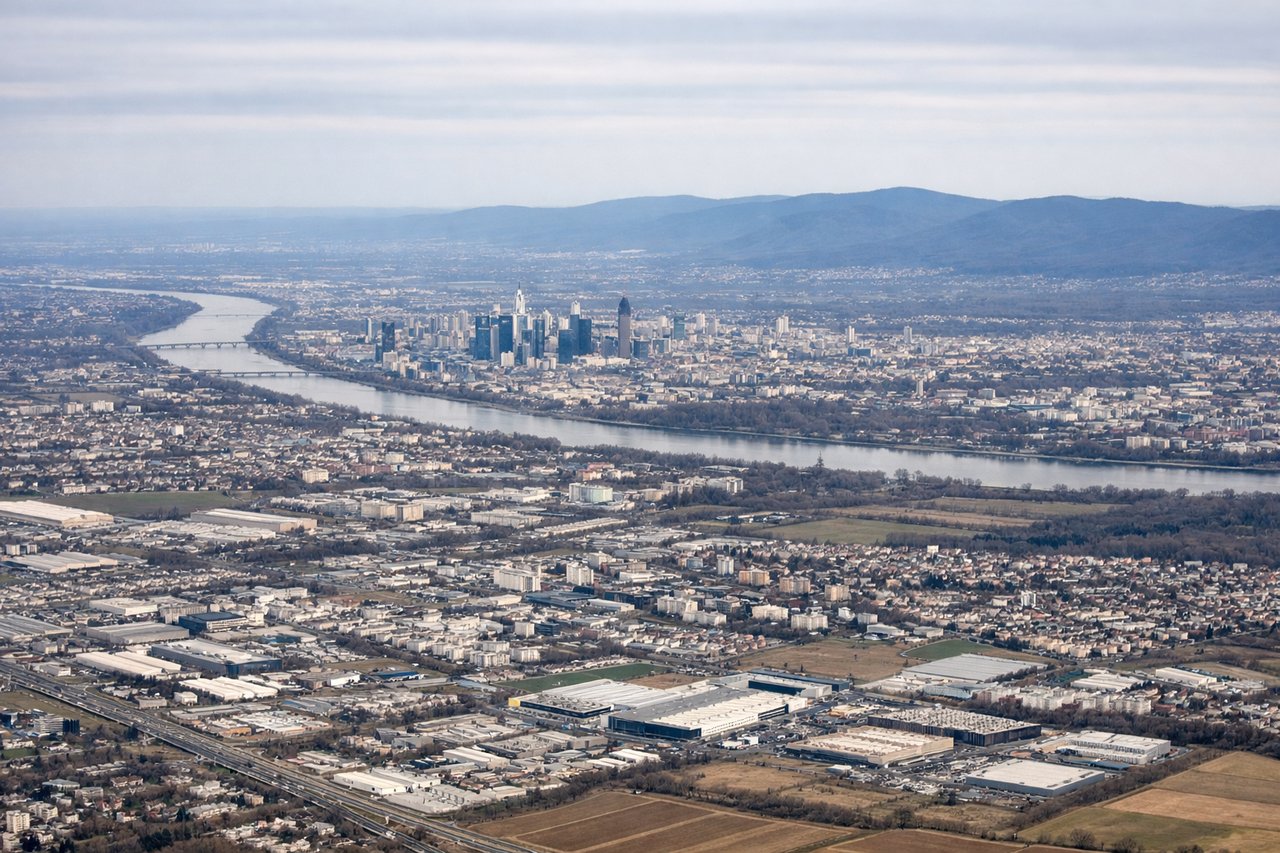
Takeoff from FRA
LEFTFrankfurt typically departs westbound on runway 25C/25R, so a left-side seat faces south during the initial climb, giving views over the Main River valley and the Taunus hills. You'll see the Frankfurt skyline receding behind you to the northeast as the aircraft banks left toward its westerly heading.
Landing at ORK
RIGHTCork Airport typically uses runway 17 for southerly approaches, meaning the aircraft tracks roughly south on final. A right-side seat faces west, giving views over Cork Harbour, the Great Island, and the open Atlantic coastline as you descend. The patchwork of County Cork farmland and the Lee River estuary are clearly visible on approach.
Landmarks on this routeAll landmarks →
Will your flight be in sunlight?
Pick a date and time in the Sun Map to watch the sun move across your whole flight.
About This Route
Which side of the plane should I sit on flying from Frankfurt Main (FRA) to Cork (ORK)?
Sit on the Right side of the plane for the best views on flights from Frankfurt to Cork. While the left side has the better Frankfurt departure view, the right side wins overall because it captures the dramatic Irish coastline, Cork Harbour, and the Atlantic on descent, which are more visually distinctive than the Rhine-Main plain. During the cruise over Belgium and the Irish Sea, the right side also picks up occasional views of the Welsh coastline and the Irish Sea.
What can I see during takeoff from Frankfurt Main in Frankfurt?
During takeoff from Frankfurt Main (FRA), sit on the Left side for the best views. Frankfurt typically departs westbound on runway 25C/25R, so a left-side seat faces south during the initial climb, giving views over the Main River valley and the Taunus hills. You'll see the Frankfurt skyline receding behind you to the northeast as the aircraft banks left toward its westerly heading. Notable sights include: Frankfurt city skyline and Main River bend, Taunus hills to the north, Rhine-Main floodplain, Wiesbaden and the Rhine River confluence.
What can I see when landing at Cork in Cork?
When landing at Cork (ORK), sit on the Right side for the best views. Cork Airport typically uses runway 17 for southerly approaches, meaning the aircraft tracks roughly south on final. A right-side seat faces west, giving views over Cork Harbour, the Great Island, and the open Atlantic coastline as you descend. The patchwork of County Cork farmland and the Lee River estuary are clearly visible on approach. Notable sights include: Cork Harbour and Great Island, Lee River estuary, Cobh town on Great Island, Atlantic coastline to the west.
How long is the flight from Frankfurt to Cork?
The flight from Frankfurt Main (FRA) to Cork (ORK) takes about 2 hours 10 minutes. The shortest flight path between them is 751 miles (1,209 km); winds and air traffic control usually add a few percent.
What does the Frankfurt to Cork flight path pass over?
The route tracks northwest over the Rhine valley near Koblenz, crosses Belgium and the Belgian Ardennes, passes over the English Channel near Calais or Dover, crosses southern England over Kent and possibly the Thames Estuary, then tracks over the Celtic Sea and St George's Channel before making landfall on the southern Irish coast near Waterford or Youghal ahead of Cork descent.