The right side benefits from the Seto Inland Sea's scattered islands and coastline during cruise, plus a scenic Ise Bay approach into NGO, while the left side offers only a brief city view at takeoff and unremarkable interior terrain during cruise.
Flight Path
Seto Inland Sea islands, northern Shikoku coastline, Kii Peninsula, Osaka Bay approach corridor
Great circle distance and headings ›Phase by phase
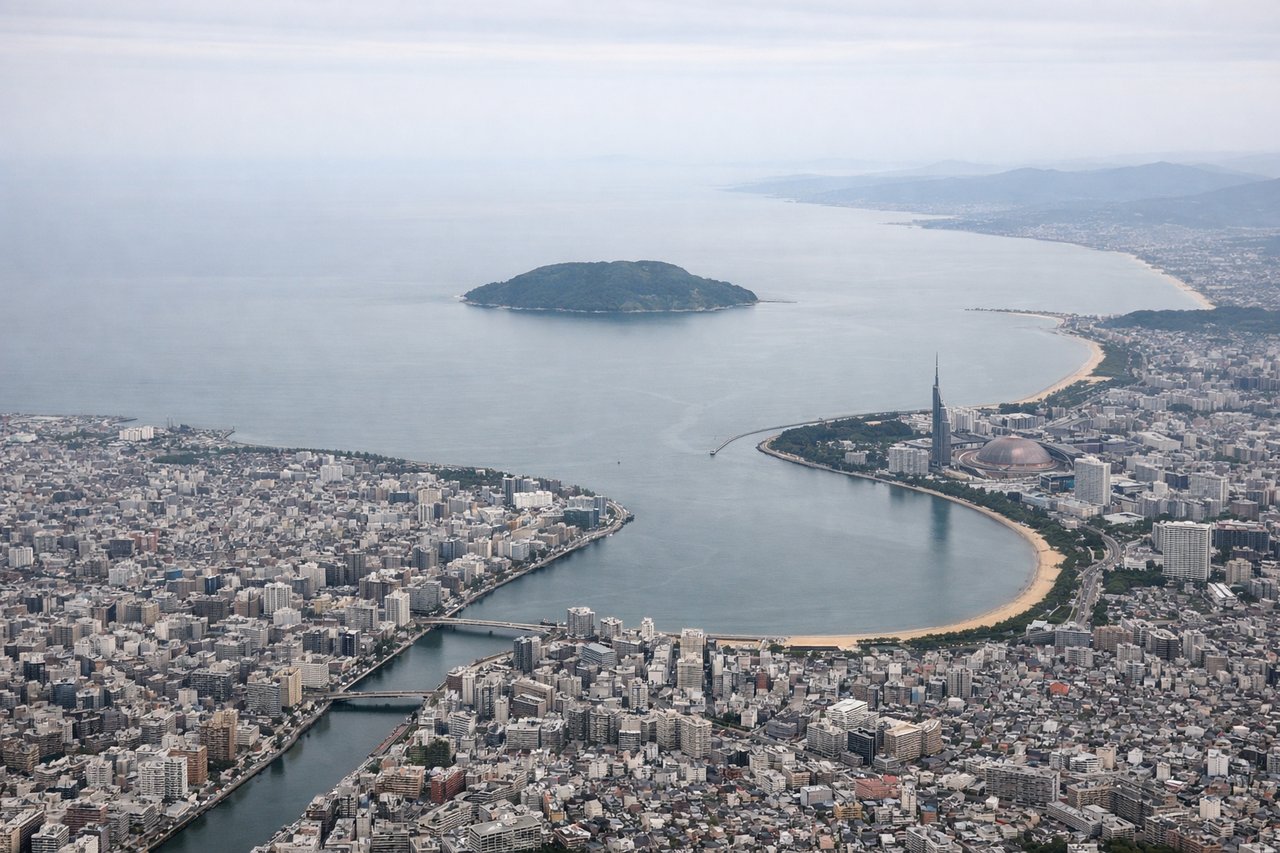
Takeoff from FUK
LEFTDeparting FUK on the north-flow runway, the initial climb and turn toward the east give left-side passengers a good look at Fukuoka's harbor district and Hakata Bay before the aircraft banks onto its ENE track. The right side mostly shows open water of the Genkai Sea during this turn.
Landing at NGO
RIGHTOn the descent into NGO, the approach path curves over Ise Bay when southerly winds are in play, giving right-side passengers a sweeping view of the bay's open water and the Chita Peninsula just before touchdown at the artificial island airport. The left side mainly faces inland Nagoya suburbs with less distinctive scenery.
Will your flight be in sunlight?
See exactly which side of the plane gets sun and shade at your departure time.
About This Route
Which side of the plane should I sit on flying from Fukuoka (FUK) to Chubu Centrair International Airport (NGO)?
Sit on the Right side of the plane for the best views on flights from Fukuoka to Nagoya. The right side benefits from the Seto Inland Sea's scattered islands and coastline during cruise, plus a scenic Ise Bay approach into NGO, while the left side offers only a brief city view at takeoff and unremarkable interior terrain during cruise.
What can I see during takeoff from Fukuoka in Fukuoka?
During takeoff from Fukuoka (FUK), sit on the Left side for the best views. Departing FUK on the north-flow runway, the initial climb and turn toward the east give left-side passengers a good look at Fukuoka's harbor district and Hakata Bay before the aircraft banks onto its ENE track. The right side mostly shows open water of the Genkai Sea during this turn. Notable sights include: Hakata Bay, Fukuoka city skyline, Genkai Sea coastline.
What can I see when landing at Chubu Centrair International Airport in Nagoya?
When landing at Chubu Centrair International Airport (NGO), sit on the Right side for the best views. On the descent into NGO, the approach path curves over Ise Bay when southerly winds are in play, giving right-side passengers a sweeping view of the bay's open water and the Chita Peninsula just before touchdown at the artificial island airport. The left side mainly faces inland Nagoya suburbs with less distinctive scenery. Notable sights include: Ise Bay, Chita Peninsula, Centrair's man-made island runway.
How long is the flight from Fukuoka to Nagoya?
The flight from Fukuoka (FUK) to Chubu Centrair International Airport (NGO) takes 1h 15m.
What does the Fukuoka to Nagoya flight path pass over?
Seto Inland Sea islands, northern Shikoku coastline, Kii Peninsula, Osaka Bay approach corridor