Spokane to Dallas-Fort Worth is 1,476 miles (2,375 km), a flight of about 2 hours 45 minutes.
The right side offers subtly better terrain interest during departure near Spokane's foothills and a clearer skyline view during the DFW approach, while the left side is dominated by featureless plains for most of the flight.
Flight Path
Rocky Mountain foothills of Idaho and Wyoming, then the flat expanse of the Great Plains across Colorado, Kansas, and Oklahoma before descending into North Texas
Great circle distance and headings ›.jpg?width=600)

.jpg?width=600)
Phase by phase
Takeoff from GEG
RIGHTDeparting GEG on runway 21 the aircraft climbs southwest before turning onto its southeast course, giving right-side passengers a last look at the forested ridges of the Palouse and the edge of the Rocky Mountain foothills in Idaho. Left-side views are mostly flat farmland and the Spokane River valley receding behind.
Landing at DFW
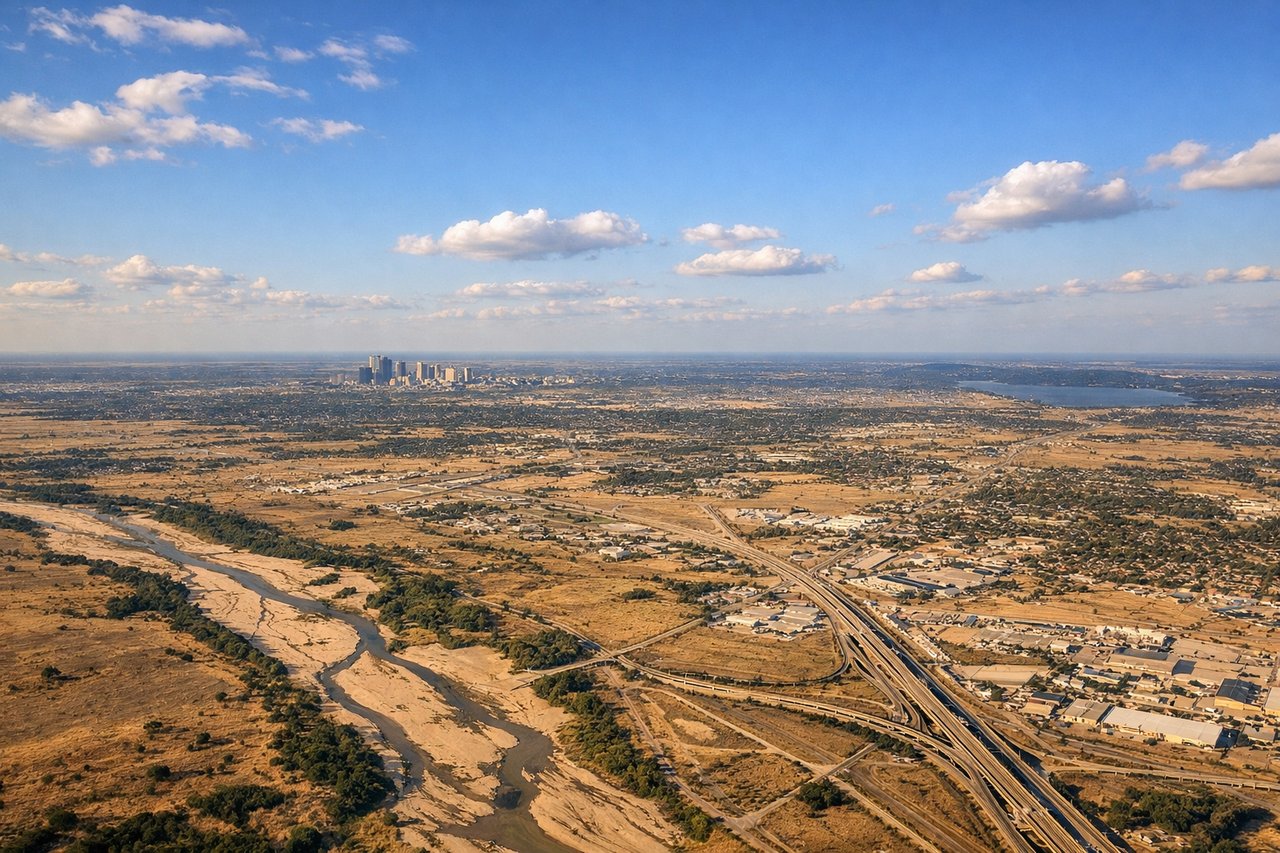
RIGHTOn approach into DFW from the north, arrivals typically bank to align with the north-south runways, and passengers on the right side get a wider view of the Dallas skyline and the sprawling grid of northern Dallas suburbs before touchdown. The left side mostly faces open plains with little to distinguish it.
Landmarks on this routeAll landmarks →
Will your flight be in sunlight?
Pick a date and time in the Sun Map to watch the sun move across your whole flight.
About This Route
Which side of the plane should I sit on flying from Spokane International (GEG) to Dallas Fort Worth International (DFW)?
Sit on the Right side of the plane for the best views on flights from Spokane to Dallas-Fort Worth. The right side offers subtly better terrain interest during departure near Spokane's foothills and a clearer skyline view during the DFW approach, while the left side is dominated by featureless plains for most of the flight.
What can I see during takeoff from Spokane International in Spokane?
During takeoff from Spokane International (GEG), sit on the Right side for the best views. Departing GEG on runway 21 the aircraft climbs southwest before turning onto its southeast course, giving right-side passengers a last look at the forested ridges of the Palouse and the edge of the Rocky Mountain foothills in Idaho. Left-side views are mostly flat farmland and the Spokane River valley receding behind. Notable sights include: Spokane River, Palouse hills, Coeur d'Alene Mountains foothills, Selkirk Range in the distance.
What can I see when landing at Dallas Fort Worth International in Dallas-Fort Worth?
When landing at Dallas Fort Worth International (DFW), sit on the Right side for the best views. On approach into DFW from the north, arrivals typically bank to align with the north-south runways, and passengers on the right side get a wider view of the Dallas skyline and the sprawling grid of northern Dallas suburbs before touchdown. The left side mostly faces open plains with little to distinguish it. Notable sights include: Dallas downtown skyline, Lake Lewisville, suburban grid of Denton and Plano.
How long is the flight from Spokane to Dallas-Fort Worth?
The flight from Spokane International (GEG) to Dallas Fort Worth International (DFW) takes about 2 hours 45 minutes. The shortest flight path between them is 1,476 miles (2,375 km); winds and air traffic control usually add a few percent.
What does the Spokane to Dallas-Fort Worth flight path pass over?
Rocky Mountain foothills of Idaho and Wyoming, then the flat expanse of the Great Plains across Colorado, Kansas, and Oklahoma before descending into North Texas