Left side wins at both ends of the flight. The Rio departure delivers the most spectacular urban geography in South America — Guanabara Bay, Sugarloaf, and the Rio skyline — while the JFK approach gives a classic view of Jamaica Bay, the Verrazano, and the Manhattan skyline on the horizon. The mid-flight Atlantic crossing offers little differentiation between sides.
Flight Path
The route tracks north-northeast over the Atlantic Ocean, passing well east of the Amazon delta and the Caribbean islands. Around the midpoint the aircraft is over the open South Atlantic or approaching the equatorial Atlantic near 10-20°N latitude. The Lesser Antilles chain may be distantly visible on the left side if the routing passes close enough, and the Bahamas archipelago can appear as scattered pale turquoise shoals on the left side during descent toward the US East Coast. Most of the flight is over open ocean with no significant landmarks.
Great circle distance and headings ›
.jpg?width=600)
Phase by phase
Takeoff from GIG
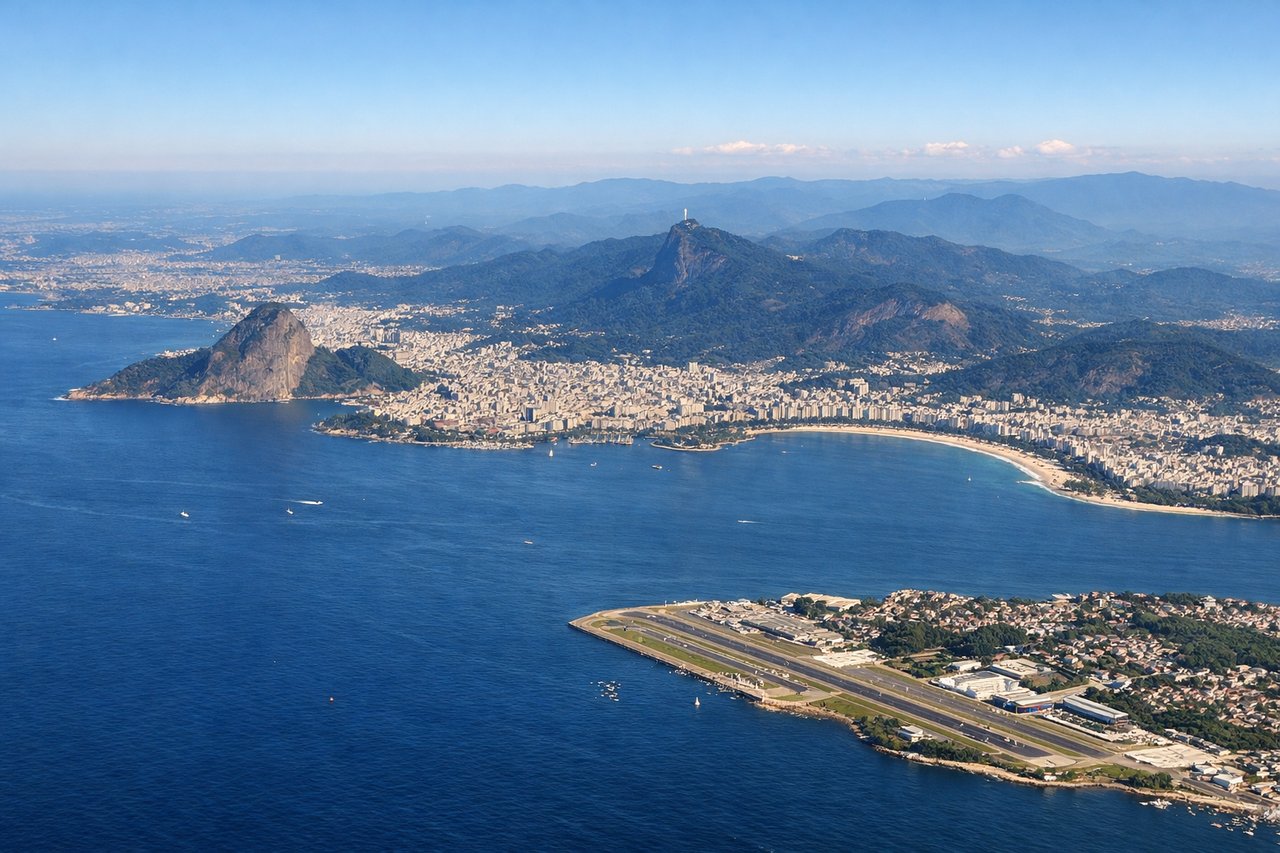
LEFTGIG's primary departure runway 10/28 means northbound flights typically depart heading east then turn north. A left-side seat captures the iconic Guanabara Bay, Sugarloaf Mountain, and the Rio city skyline as the aircraft banks north over the bay. The right side faces inland toward less distinctive terrain.
Landing at JFK
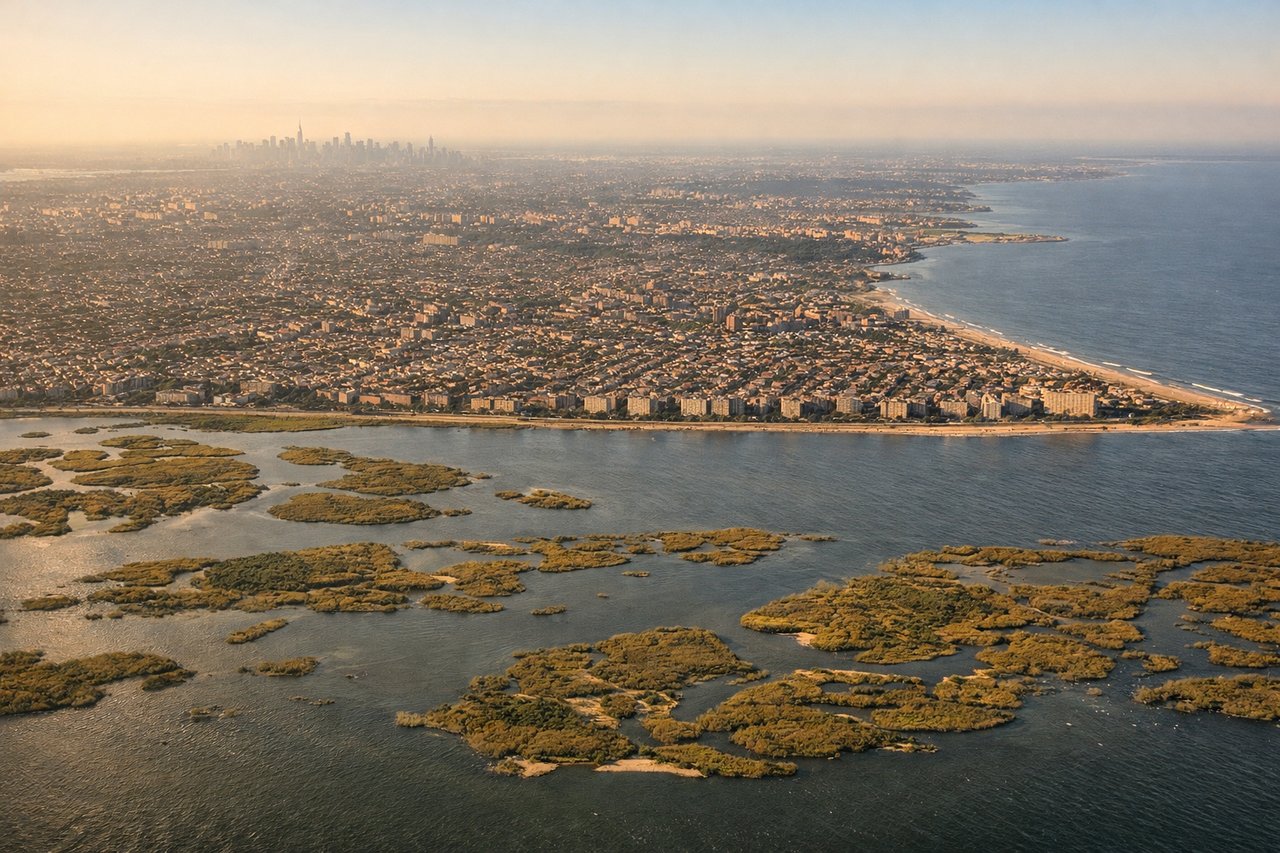
LEFTFlights from Rio typically approach JFK from the south or southwest, often on runway 31L/31R heading northwest or runway 22L heading southwest. A left-side seat on a southwesterly approach gives a clear view of Lower Manhattan's skyline, the Verrazano-Narrows Bridge, and Jamaica Bay. The right side faces toward the less scenic suburban sprawl of Long Island.
Landmarks on this routeAll landmarks →
Will your flight be in sunlight?
See exactly which side of the plane gets sun and shade at your departure time.
About This Route
Which side of the plane should I sit on flying from Galeao Antonio Carlos Jobim (GIG) to John F Kennedy International (JFK)?
Sit on the Left side of the plane for the best views on flights from Rio De Janeiro to New York. Left side wins at both ends of the flight. The Rio departure delivers the most spectacular urban geography in South America — Guanabara Bay, Sugarloaf, and the Rio skyline — while the JFK approach gives a classic view of Jamaica Bay, the Verrazano, and the Manhattan skyline on the horizon. The mid-flight Atlantic crossing offers little differentiation between sides.
What can I see during takeoff from Galeao Antonio Carlos Jobim in Rio De Janeiro?
During takeoff from Galeao Antonio Carlos Jobim (GIG), sit on the Left side for the best views. GIG's primary departure runway 10/28 means northbound flights typically depart heading east then turn north. A left-side seat captures the iconic Guanabara Bay, Sugarloaf Mountain, and the Rio city skyline as the aircraft banks north over the bay. The right side faces inland toward less distinctive terrain. Notable sights include: Guanabara Bay, Sugarloaf Mountain (Pão de Açúcar), Rio de Janeiro city center and Flamengo waterfront, Niterói and the Rio-Niterói Bridge.
What can I see when landing at John F Kennedy International in New York?
When landing at John F Kennedy International (JFK), sit on the Left side for the best views. Flights from Rio typically approach JFK from the south or southwest, often on runway 31L/31R heading northwest or runway 22L heading southwest. A left-side seat on a southwesterly approach gives a clear view of Lower Manhattan's skyline, the Verrazano-Narrows Bridge, and Jamaica Bay. The right side faces toward the less scenic suburban sprawl of Long Island. Notable sights include: Lower Manhattan skyline, Verrazano-Narrows Bridge, Jamaica Bay and its wildlife refuge, Brooklyn waterfront.
How long is the flight from Rio De Janeiro to New York?
The flight from Galeao Antonio Carlos Jobim (GIG) to John F Kennedy International (JFK) takes Approximately 9 to 10 hours.
What does the Rio De Janeiro to New York flight path pass over?
The route tracks north-northeast over the Atlantic Ocean, passing well east of the Amazon delta and the Caribbean islands. Around the midpoint the aircraft is over the open South Atlantic or approaching the equatorial Atlantic near 10-20°N latitude. The Lesser Antilles chain may be distantly visible on the left side if the routing passes close enough, and the Bahamas archipelago can appear as scattered pale turquoise shoals on the left side during descent toward the US East Coast. Most of the flight is over open ocean with no significant landmarks.