Left side wins at both ends of the flight. The Rio departure gives you the most dramatic urban geography in South America, and the London approach delivers the Thames and the city center. Over the mid-Atlantic there is little to distinguish sides, so the departure and arrival views are the deciding factor.
Flight Path
The route tracks northeast from Rio across the South Atlantic, passing roughly over the mid-Atlantic ridge with no land visible for the majority of the crossing. The Cape Verde Islands may be visible far to the right in the eastern Atlantic if routing passes near them. The flight crosses the equator over open ocean, then tracks northeast toward the Iberian Peninsula, passing over or near the coast of Portugal and northern Spain before crossing the Bay of Biscay and southern England.
Great circle distance and headings ›


.jpeg?width=600)
Phase by phase

Takeoff from GIG
LEFTGIG's primary departure runway 10/28 means northbound departures often swing left over Guanabara Bay, putting the left side directly over the iconic Rio geography. You get Sugarloaf Mountain, the bay, and the city center laid out below before climbing out over the Atlantic.
Landing at LHR
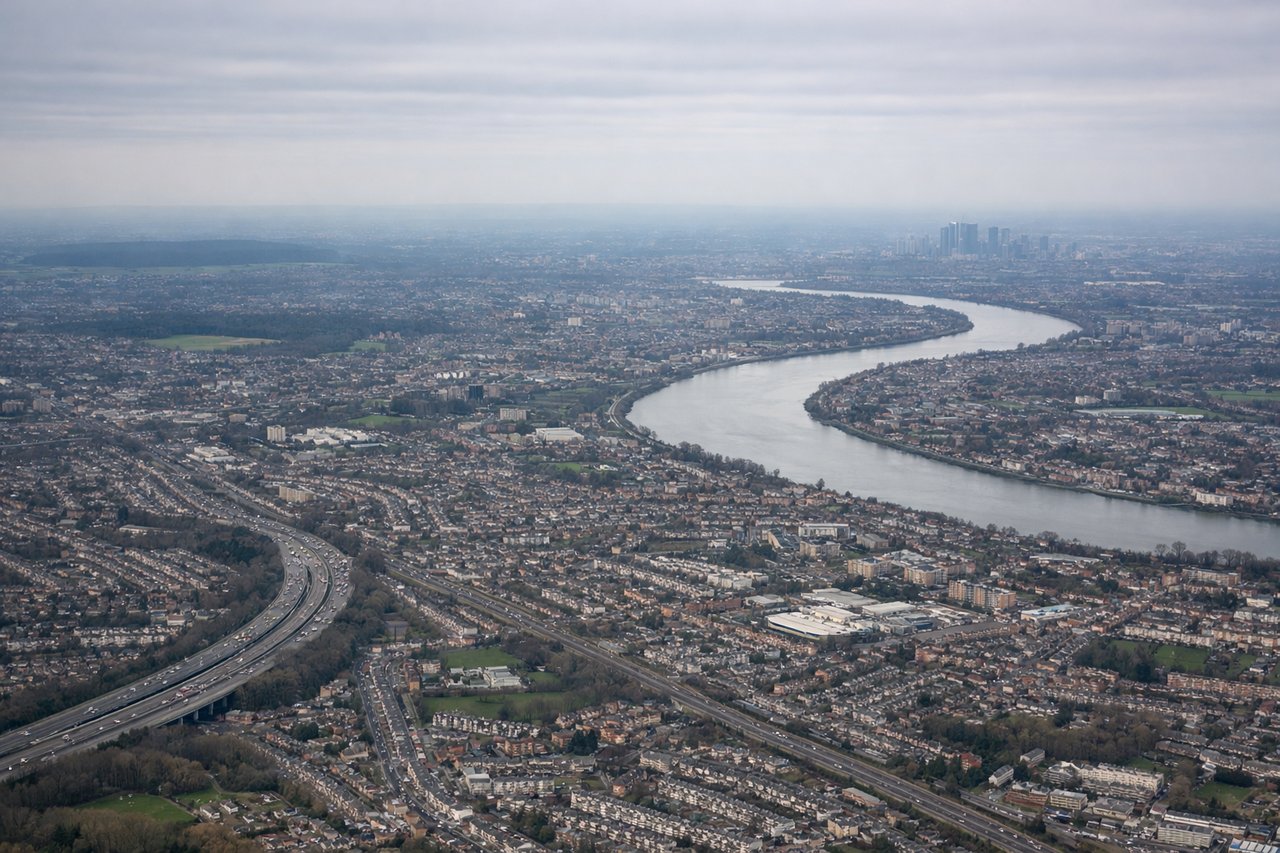
LEFTLHR's dominant runway 27L/27R means westward landings approach from the east over London. The left side tracks directly over central London, giving clear views of the Thames, the City of London, and the dense urban core before touching down.
Landmarks on this routeAll landmarks →
Will your flight be in sunlight?
See exactly which side of the plane gets sun and shade at your departure time.
About This Route
Which side of the plane should I sit on flying from Galeao Antonio Carlos Jobim (GIG) to Heathrow (LHR)?
Sit on the Left side of the plane for the best views on flights from Rio De Janeiro to London. Left side wins at both ends of the flight. The Rio departure gives you the most dramatic urban geography in South America, and the London approach delivers the Thames and the city center. Over the mid-Atlantic there is little to distinguish sides, so the departure and arrival views are the deciding factor.
What can I see during takeoff from Galeao Antonio Carlos Jobim in Rio De Janeiro?
During takeoff from Galeao Antonio Carlos Jobim (GIG), sit on the Left side for the best views. GIG's primary departure runway 10/28 means northbound departures often swing left over Guanabara Bay, putting the left side directly over the iconic Rio geography. You get Sugarloaf Mountain, the bay, and the city center laid out below before climbing out over the Atlantic. Notable sights include: Sugarloaf Mountain (Pão de Açúcar), Guanabara Bay, Centro and Lapa district, Niterói across the bay.
What can I see when landing at Heathrow in London?
When landing at Heathrow (LHR), sit on the Left side for the best views. LHR's dominant runway 27L/27R means westward landings approach from the east over London. The left side tracks directly over central London, giving clear views of the Thames, the City of London, and the dense urban core before touching down. Notable sights include: River Thames snaking through central London, City of London skyline, Windsor Castle and Windsor Great Park to the west, M25 motorway ring.
How long is the flight from Rio De Janeiro to London?
The flight from Galeao Antonio Carlos Jobim (GIG) to Heathrow (LHR) takes Approximately 11 to 12 hours.
What does the Rio De Janeiro to London flight path pass over?
The route tracks northeast from Rio across the South Atlantic, passing roughly over the mid-Atlantic ridge with no land visible for the majority of the crossing. The Cape Verde Islands may be visible far to the right in the eastern Atlantic if routing passes near them. The flight crosses the equator over open ocean, then tracks northeast toward the Iberian Peninsula, passing over or near the coast of Portugal and northern Spain before crossing the Bay of Biscay and southern England.