The right side captures the most dramatic and geographically significant features: the Han River estuary and Yellow Sea departure from Seoul, followed by extended views of the Korean peninsula's western coast, and the approach across the North Sea toward Scandinavia. While the landing favors the left, the takeoff scenery is more visually distinctive and memorable.
Flown GMP to CPH? Did we get it right?
Flight Path
Seoul to Copenhagen is 4,929 miles (7,932 km), a flight of about 9 hours 35 minutes.
The flight path crosses the Korean peninsula westward, then traverses the Yellow Sea, passes over or near the Liaodong Peninsula (China), crosses Manchuria and Mongolia's vast steppes, continues over Russia's southern regions including the Altai Mountains and Lake Baikal area, then proceeds northwest across Siberia toward the Arctic Circle before descending toward Scandinavia. Notable landmarks include the Gobi Desert region to the south of the direct route, the Ural Mountains as a major geographic divide, and the North Sea crossing into Denmark.
Great circle distance and headings ›

Phase by phase
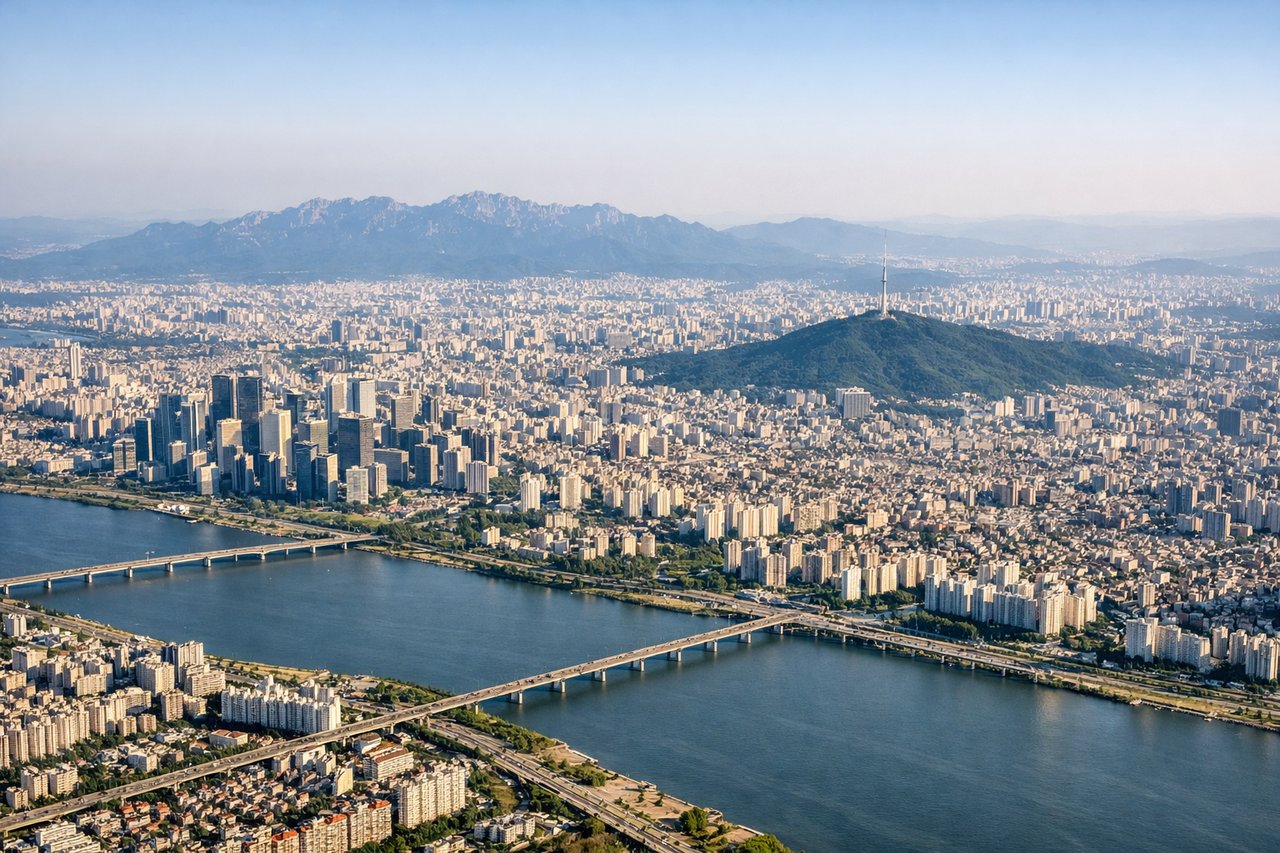
Takeoff from GMP
RIGHTRight-side seats capture the Han River estuary and Incheon's industrial waterfront during the initial climb-out westward. The river's distinctive meanders and the Yellow Sea coastline provide clear visual reference points as the aircraft gains altitude over the Korean peninsula's western edge.
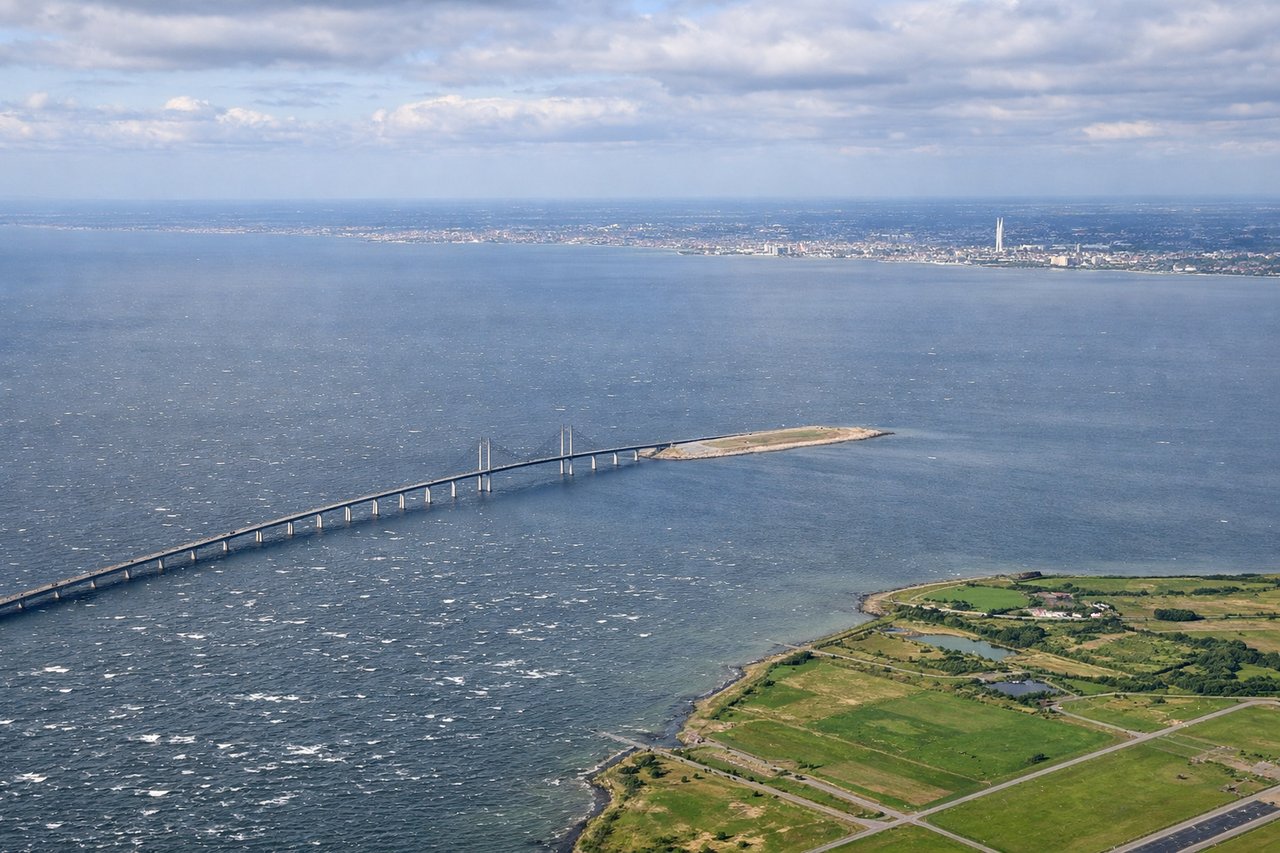
Landing at CPH
LEFTLeft-side seats offer the best views during the approach to Copenhagen. The aircraft descends over the Øresund Strait, and left-side passengers see the strait's narrowest point, the Øresund Bridge connecting Sweden and Denmark, and the Danish coastline with its characteristic low-lying terrain and Copenhagen's urban sprawl.
Will your flight be in sunlight?
Pick a date and time in the Sun Map to watch the sun move across your whole flight.
About This Route
Which side of the plane should I sit on flying from Gimpo (GMP) to Kastrup (CPH)?
Sit on the Right side of the plane for the best views on flights from Seoul to Copenhagen. The right side captures the most dramatic and geographically significant features: the Han River estuary and Yellow Sea departure from Seoul, followed by extended views of the Korean peninsula's western coast, and the approach across the North Sea toward Scandinavia. While the landing favors the left, the takeoff scenery is more visually distinctive and memorable.
What can I see during takeoff from Gimpo in Seoul?
During takeoff from Gimpo (GMP), sit on the Right side for the best views. Right-side seats capture the Han River estuary and Incheon's industrial waterfront during the initial climb-out westward. The river's distinctive meanders and the Yellow Sea coastline provide clear visual reference points as the aircraft gains altitude over the Korean peninsula's western edge. Notable sights include: Han River estuary, Incheon port and container terminals, Yellow Sea coastline, Seoul metropolitan sprawl to the east.
What can I see when landing at Kastrup in Copenhagen?
When landing at Kastrup (CPH), sit on the Left side for the best views. Left-side seats offer the best views during the approach to Copenhagen. The aircraft descends over the Øresund Strait, and left-side passengers see the strait's narrowest point, the Øresund Bridge connecting Sweden and Denmark, and the Danish coastline with its characteristic low-lying terrain and Copenhagen's urban sprawl. Notable sights include: Øresund Strait, Øresund Bridge (Öresundsbron), Swedish coast near Malmö, Copenhagen metropolitan area and Amager Island.
How long is the flight from Seoul to Copenhagen?
The flight from Gimpo (GMP) to Kastrup (CPH) takes about 9 hours 35 minutes. The shortest flight path between them is 4,929 miles (7,932 km); winds and air traffic control usually add a few percent.
What does the Seoul to Copenhagen flight path pass over?
The flight path crosses the Korean peninsula westward, then traverses the Yellow Sea, passes over or near the Liaodong Peninsula (China), crosses Manchuria and Mongolia's vast steppes, continues over Russia's southern regions including the Altai Mountains and Lake Baikal area, then proceeds northwest across Siberia toward the Arctic Circle before descending toward Scandinavia. Notable landmarks include the Gobi Desert region to the south of the direct route, the Ural Mountains as a major geographic divide, and the North Sea crossing into Denmark.