While takeoff offers good metropolitan views, the landing approach over the Tyrrhenian Sea and into the Roman Campagna provides more dramatic and geographically distinctive scenery. Left seats capture the Mediterranean approach and the Tiber delta—iconic features of the Rome region.
Flight Path
The flight crosses the South Atlantic, passing east of the Mid-Atlantic Ridge (not visible at cruise altitude). Over Africa, the route typically passes south of the Sahara, with views possible of the Sahel transition zone and scattered cloud formations. Crossing into the Mediterranean basin, the Atlas Mountains appear as a distant ridge along the North African coast. The Mediterranean itself dominates the final 2-3 hours, with occasional views of the Balearic Islands or southern Italy depending on exact routing. The Alps may be visible to the north on the final approach into Rome, weather permitting.
Great circle distance and headings ›


Phase by phase

Takeoff from GRU
RIGHTGRU typically departs eastbound (runways 09L/09R). Right-side seats face north toward the Atlantic approach corridor and offer views of the Serra da Mantiqueira mountain range and the sprawling São Paulo metropolitan area before climbing over open ocean.
Landing at FCO
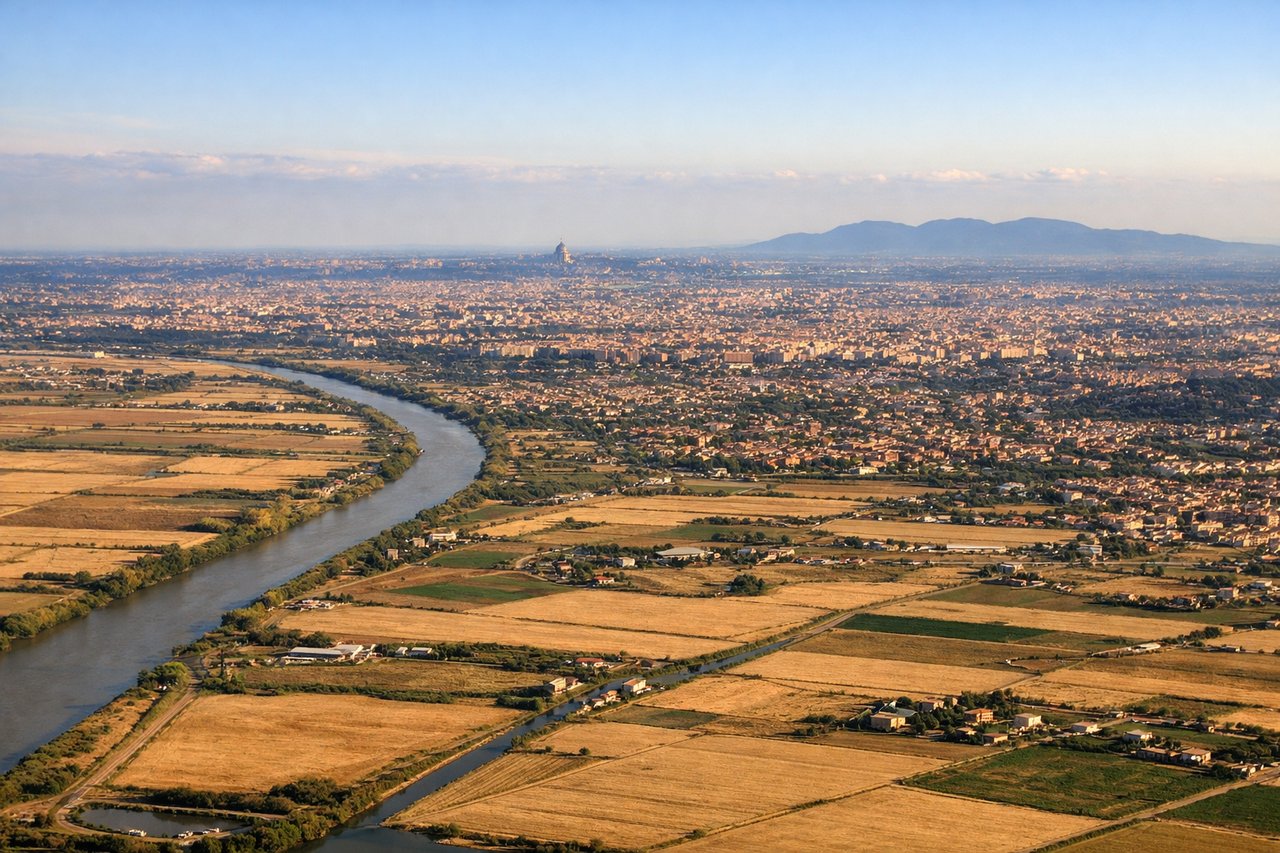
LEFTFCO has two parallel runways (16L/16R) with approaches from the west over the Tyrrhenian Sea. Left-side seats on descent offer unobstructed views of the Roman Campagna plains, the Tiber River delta, and coastal features approaching from the Mediterranean.
Landmarks on this routeAll landmarks →
Will your flight be in sunlight?
See exactly which side of the plane gets sun and shade at your departure time.
About This Route
Which side of the plane should I sit on flying from Guarulhos (GRU) to Fiumicino (FCO)?
Sit on the Left side of the plane for the best views on flights from Sao Paulo to Rome. While takeoff offers good metropolitan views, the landing approach over the Tyrrhenian Sea and into the Roman Campagna provides more dramatic and geographically distinctive scenery. Left seats capture the Mediterranean approach and the Tiber delta—iconic features of the Rome region.
What can I see during takeoff from Guarulhos in Sao Paulo?
During takeoff from Guarulhos (GRU), sit on the Right side for the best views. GRU typically departs eastbound (runways 09L/09R). Right-side seats face north toward the Atlantic approach corridor and offer views of the Serra da Mantiqueira mountain range and the sprawling São Paulo metropolitan area before climbing over open ocean. Notable sights include: Serra da Mantiqueira (distant ridge to the north), São Paulo city grid (urban sprawl directly below during initial climb), Paraíba River valley (threading through the landscape), Atlantic Ocean horizon (appearing as you reach cruise altitude).
What can I see when landing at Fiumicino in Rome?
When landing at Fiumicino (FCO), sit on the Left side for the best views. FCO has two parallel runways (16L/16R) with approaches from the west over the Tyrrhenian Sea. Left-side seats on descent offer unobstructed views of the Roman Campagna plains, the Tiber River delta, and coastal features approaching from the Mediterranean. Notable sights include: Tyrrhenian Sea (approaching from the west), Tiber River delta and mouth (distinctive Y-shaped feature near Rome), Roman Campagna plains (flat agricultural landscape), Castelli Romani hills (low ridge visible to the southeast before landing).
How long is the flight from Sao Paulo to Rome?
The flight from Guarulhos (GRU) to Fiumicino (FCO) takes Approximately 10 hours 45 minutes to 11 hours 15 minutes.
What does the Sao Paulo to Rome flight path pass over?
The flight crosses the South Atlantic, passing east of the Mid-Atlantic Ridge (not visible at cruise altitude). Over Africa, the route typically passes south of the Sahara, with views possible of the Sahel transition zone and scattered cloud formations. Crossing into the Mediterranean basin, the Atlas Mountains appear as a distant ridge along the North African coast. The Mediterranean itself dominates the final 2-3 hours, with occasional views of the Balearic Islands or southern Italy depending on exact routing. The Alps may be visible to the north on the final approach into Rome, weather permitting.