Right side captures the most dramatic scenery during departure (Serra da Cantareira and São Paulo metropolitan area), while the landing approach favors the left. However, the takeoff views are more visually distinctive and sustained, making right the better overall choice for a single seat selection.
Flight Path
The flight path crosses the Atlantic Ocean for roughly 6,000 nautical miles. Notable geographic features along the route include: the Brazilian coast and Atlantic shelf (visible during initial climb), the mid-Atlantic ridge region (underwater, not visible), the Azores archipelago (if passing nearby, visible around 6-7 hours into flight), the Bay of Biscay off the Iberian Peninsula (visible during descent into Europe), and the European coastline approaching France and Germany. The majority of the flight is over open ocean with no visible landmarks; the most scenic portions are the first 1-2 hours (São Paulo departure) and final 1-2 hours (European approach).
Great circle distance and headings ›


Phase by phase

Takeoff from GRU
RIGHTRight side offers views of the Serra da Cantareira mountain range and the sprawling São Paulo metropolitan area as the aircraft climbs northwestward. The left side faces inland terrain with less distinctive visual features during the initial climb.
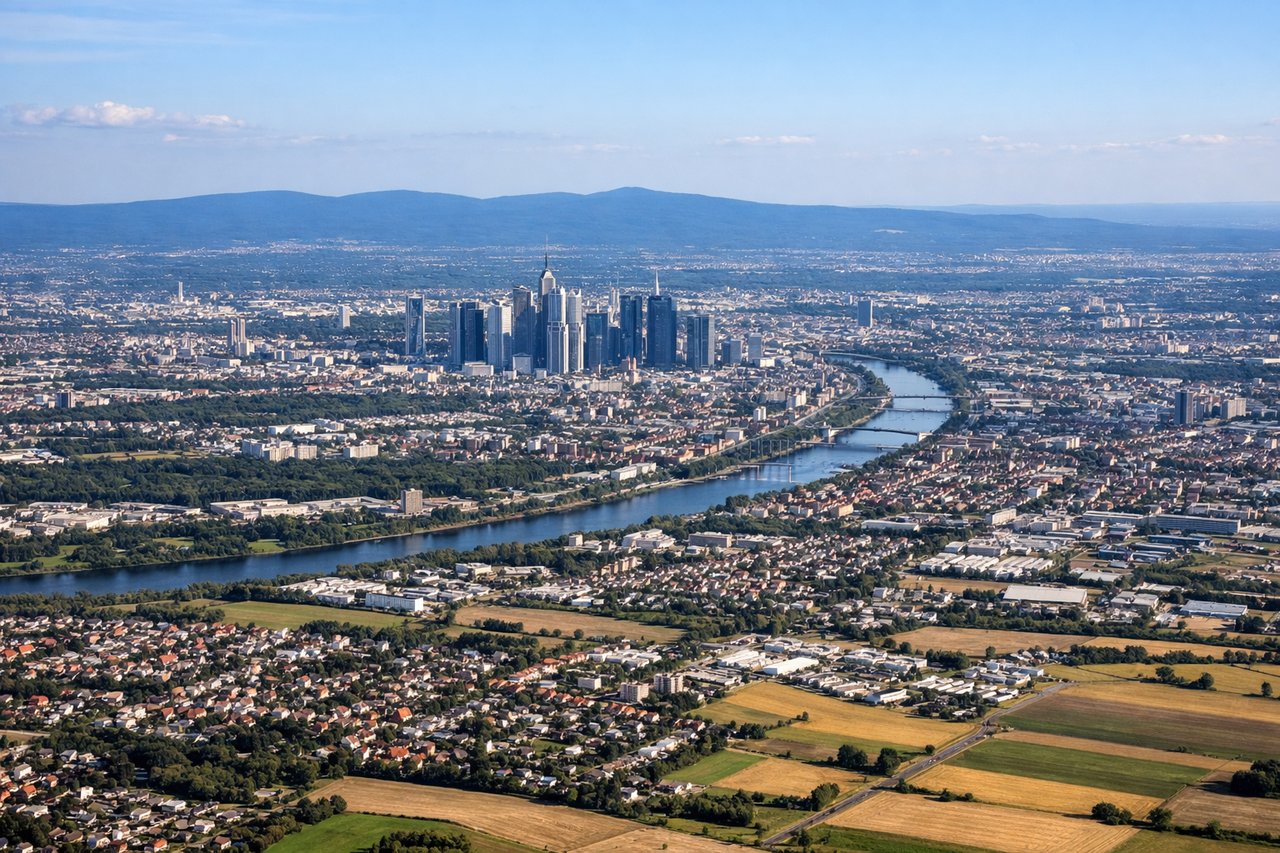
Landing at FRA
LEFTLeft side provides views of the Rhine River, Frankfurt's city center skyline, and the Main River confluence as the aircraft descends on final approach from the southwest. The right side faces less distinctive suburban terrain and industrial areas.
Landmarks on this routeAll landmarks →
Will your flight be in sunlight?
See exactly which side of the plane gets sun and shade at your departure time.
About This Route
Which side of the plane should I sit on flying from Guarulhos (GRU) to Frankfurt Main (FRA)?
Sit on the Right side of the plane for the best views on flights from Sao Paulo to Frankfurt. Right side captures the most dramatic scenery during departure (Serra da Cantareira and São Paulo metropolitan area), while the landing approach favors the left. However, the takeoff views are more visually distinctive and sustained, making right the better overall choice for a single seat selection.
What can I see during takeoff from Guarulhos in Sao Paulo?
During takeoff from Guarulhos (GRU), sit on the Right side for the best views. Right side offers views of the Serra da Cantareira mountain range and the sprawling São Paulo metropolitan area as the aircraft climbs northwestward. The left side faces inland terrain with less distinctive visual features during the initial climb. Notable sights include: Serra da Cantareira (northern mountain range), São Paulo city grid and urban sprawl, Tietê River valley, Guarulhos industrial zone.
What can I see when landing at Frankfurt Main in Frankfurt?
When landing at Frankfurt Main (FRA), sit on the Left side for the best views. Left side provides views of the Rhine River, Frankfurt's city center skyline, and the Main River confluence as the aircraft descends on final approach from the southwest. The right side faces less distinctive suburban terrain and industrial areas. Notable sights include: Rhine River (main waterway), Main River confluence, Frankfurt city center and skyline, Taunus Hills (distant, southwest).
How long is the flight from Sao Paulo to Frankfurt?
The flight from Guarulhos (GRU) to Frankfurt Main (FRA) takes Approximately 11.5 to 12.5 hours.
What does the Sao Paulo to Frankfurt flight path pass over?
The flight path crosses the Atlantic Ocean for roughly 6,000 nautical miles. Notable geographic features along the route include: the Brazilian coast and Atlantic shelf (visible during initial climb), the mid-Atlantic ridge region (underwater, not visible), the Azores archipelago (if passing nearby, visible around 6-7 hours into flight), the Bay of Biscay off the Iberian Peninsula (visible during descent into Europe), and the European coastline approaching France and Germany. The majority of the flight is over open ocean with no visible landmarks; the most scenic portions are the first 1-2 hours (São Paulo departure) and final 1-2 hours (European approach).