While takeoff favors right seats for mountain views, the landing approach over the Alps and Lake Como from the left side is more dramatic and geographically distinctive. The Alps provide a far more striking visual payoff than São Paulo's departure views.
Flown GRU to MXP? Did we get it right?
Flight Path
Sao Paulo to Milano is 5,894 miles (9,485 km), a flight of about 12 hours.
This route crosses the Atlantic at roughly 35°W, then transits over North Africa (Atlas Mountains visible on southern routing), the Mediterranean (Balearic Islands, Corsica, or Sardinia depending on exact flight path), and finally the Alps. The most notable midpoint feature is the Mediterranean crossing—if routed via southern Spain or North Africa, passengers may see the Atlas Mountains or North African coast. The Alps appear approximately 2 hours before landing. The Atlantic crossing itself offers only open ocean with occasional ship traffic visible.
Great circle distance and headings ›


Phase by phase

Takeoff from GRU
RIGHTGRU typically departs eastbound on runways 09L/09R. Right-side seats face north during initial climb, giving views of the Atlantic coast and the Serra da Mantiqueira mountain range. Left seats see only inland urban sprawl and industrial areas.
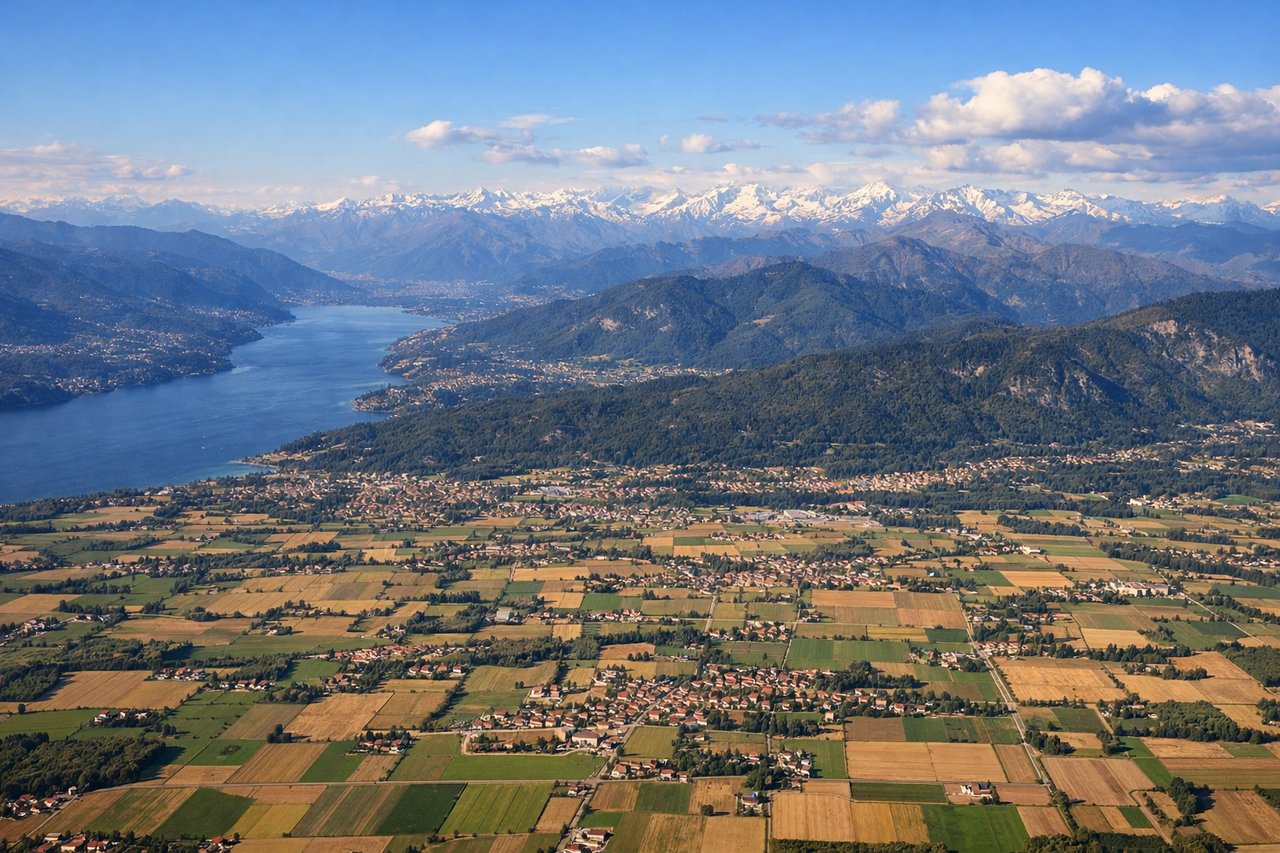
Landing at MXP
LEFTMXP approaches from the south on runways 35L/35R. Left-side seats during descent face east and southeast, offering views of the Alps, Lake Como, and the Lombardy plain. Right seats see only the flat Po Valley and industrial areas west of Milan.
Will your flight be in sunlight?
Pick a date and time in the Sun Map to watch the sun move across your whole flight.
About This Route
Which side of the plane should I sit on flying from Guarulhos (GRU) to Malpensa (MXP)?
Sit on the Left side of the plane for the best views on flights from Sao Paulo to Milano. While takeoff favors right seats for mountain views, the landing approach over the Alps and Lake Como from the left side is more dramatic and geographically distinctive. The Alps provide a far more striking visual payoff than São Paulo's departure views.
What can I see during takeoff from Guarulhos in Sao Paulo?
During takeoff from Guarulhos (GRU), sit on the Right side for the best views. GRU typically departs eastbound on runways 09L/09R. Right-side seats face north during initial climb, giving views of the Atlantic coast and the Serra da Mantiqueira mountain range. Left seats see only inland urban sprawl and industrial areas. Notable sights include: Serra da Mantiqueira (distant ridge on horizon), Litoral Norte beaches (coastal strip 40+ miles away), Paraíba River valley (threading through foreground terrain), Greater São Paulo urban grid (immediately below).
What can I see when landing at Malpensa in Milano?
When landing at Malpensa (MXP), sit on the Left side for the best views. MXP approaches from the south on runways 35L/35R. Left-side seats during descent face east and southeast, offering views of the Alps, Lake Como, and the Lombardy plain. Right seats see only the flat Po Valley and industrial areas west of Milan. Notable sights include: Alps (snow-capped peaks dominating the horizon), Lake Como (elongated blue water body nestled in pre-Alpine terrain), Lombardy plain (flat agricultural expanse), Ticino River valley (linear feature threading through lowlands).
How long is the flight from Sao Paulo to Milano?
The flight from Guarulhos (GRU) to Malpensa (MXP) takes about 12 hours. The shortest flight path between them is 5,894 miles (9,485 km); winds and air traffic control usually add a few percent.
What does the Sao Paulo to Milano flight path pass over?
This route crosses the Atlantic at roughly 35°W, then transits over North Africa (Atlas Mountains visible on southern routing), the Mediterranean (Balearic Islands, Corsica, or Sardinia depending on exact flight path), and finally the Alps. The most notable midpoint feature is the Mediterranean crossing—if routed via southern Spain or North Africa, passengers may see the Atlas Mountains or North African coast. The Alps appear approximately 2 hours before landing. The Atlantic crossing itself offers only open ocean with occasional ship traffic visible.