Hachijojima to Tokyo is 168 miles (271 km), a flight of about 55 minutes.
While takeoff from Hachijojima offers island and volcanic scenery, the landing approach into Haneda provides more dramatic and varied views—Tokyo Bay's geography, the sprawling Kanto Plain, and Tokyo's urban landscape are more visually distinctive than the relatively small volcanic island at departure.
Flight Path
During the northbound climb over open ocean, passengers will see the Izu Islands chain receding southward, then the Izu Peninsula's forested mountains appearing to the west as the aircraft tracks toward Tokyo Bay. The transition from open Pacific to the densely developed Kanto region is gradual but notable. No major landmarks dominate the midpoint—the flight path crosses relatively open water and lower-altitude terrain before approaching the Tokyo metropolitan area.
Great circle distance and headings ›Phase by phase
Takeoff from HAC
RIGHTRight-side seats offer views of Hachijojima's volcanic terrain and the surrounding Izu Islands chain as the aircraft climbs northward toward Tokyo. The island's distinctive topography and nearby smaller islands are clearly visible during the initial climb.
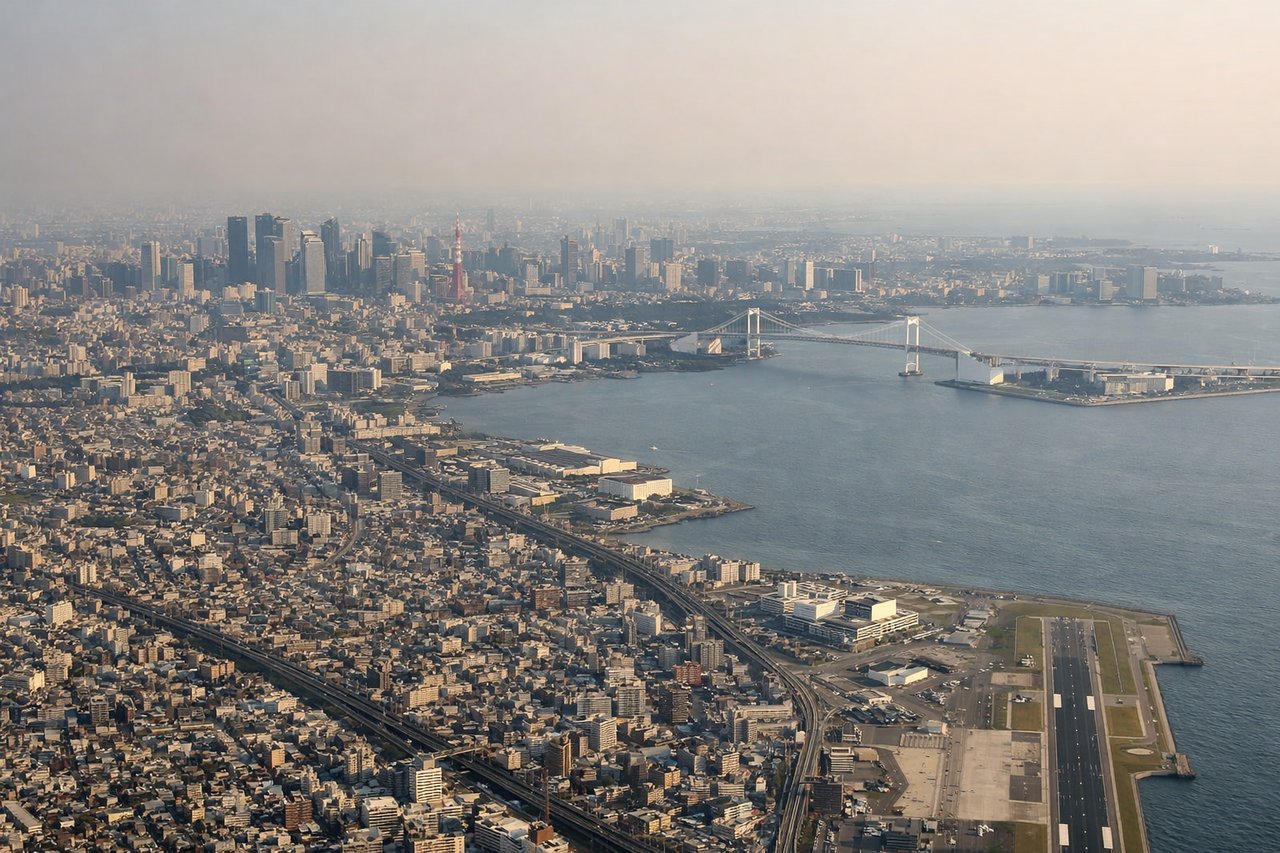
Landing at HND
LEFTLeft-side seats provide excellent views during descent into Haneda, showing Tokyo Bay, the Kanto Plain, and urban Tokyo sprawl. The approach path from the south offers clear sightlines of the bay's geography and the city's major districts.
Landmarks on this routeAll landmarks →
Will your flight be in sunlight?
Pick a date and time in the Sun Map to watch the sun move across your whole flight.
About This Route
Which side of the plane should I sit on flying from Hachijojima (HAC) to Tokyo International (HND)?
Sit on the Left side of the plane for the best views on flights from Hachijojima to Tokyo. While takeoff from Hachijojima offers island and volcanic scenery, the landing approach into Haneda provides more dramatic and varied views—Tokyo Bay's geography, the sprawling Kanto Plain, and Tokyo's urban landscape are more visually distinctive than the relatively small volcanic island at departure.
What can I see during takeoff from Hachijojima in Hachijojima?
During takeoff from Hachijojima (HAC), sit on the Right side for the best views. Right-side seats offer views of Hachijojima's volcanic terrain and the surrounding Izu Islands chain as the aircraft climbs northward toward Tokyo. The island's distinctive topography and nearby smaller islands are clearly visible during the initial climb. Notable sights include: Hachijojima's central volcanic plateau, Izu Islands archipelago to the south and east, Pacific Ocean to the east, Izu Peninsula coastline appearing on the horizon to the north.
What can I see when landing at Tokyo International in Tokyo?
When landing at Tokyo International (HND), sit on the Left side for the best views. Left-side seats provide excellent views during descent into Haneda, showing Tokyo Bay, the Kanto Plain, and urban Tokyo sprawl. The approach path from the south offers clear sightlines of the bay's geography and the city's major districts. Notable sights include: Tokyo Bay with its distinctive shape and artificial islands, Kanto Plain extending inland, Tokyo's urban districts and high-rise clusters, Boso Peninsula across the bay to the east.
How long is the flight from Hachijojima to Tokyo?
The flight from Hachijojima (HAC) to Tokyo International (HND) takes about 55 minutes. The shortest flight path between them is 168 miles (271 km); winds and air traffic control usually add a few percent.
What does the Hachijojima to Tokyo flight path pass over?
During the northbound climb over open ocean, passengers will see the Izu Islands chain receding southward, then the Izu Peninsula's forested mountains appearing to the west as the aircraft tracks toward Tokyo Bay. The transition from open Pacific to the densely developed Kanto region is gradual but notable. No major landmarks dominate the midpoint—the flight path crosses relatively open water and lower-altitude terrain before approaching the Tokyo metropolitan area.