The right side offers a much richer visual sequence: the island-studded Seto Inland Sea at departure, glimpses of the Pacific coastline and Suruga Bay near Mt. Fuji during cruise, and a dramatic Tokyo Bay approach into Haneda. The left side mostly shows inland mountains and flatter terrain with fewer standout features.
Flight Path
Route roughly follows the southern Honshu coastline, passing near Osaka Bay, the Kii Peninsula, and Suruga Bay, with Mt. Fuji sometimes visible to the south on clear days before descent into Tokyo Bay.
Great circle distance and headings ›

Phase by phase
Takeoff from HIJ
RIGHTDeparting HIJ to the east, the right side looks south over the Seto Inland Sea, with its scattered green islands and fishing villages spread out below during the climb. The left side only shows the forested Chugoku mountains, which are less distinctive from altitude.
Landing at HND
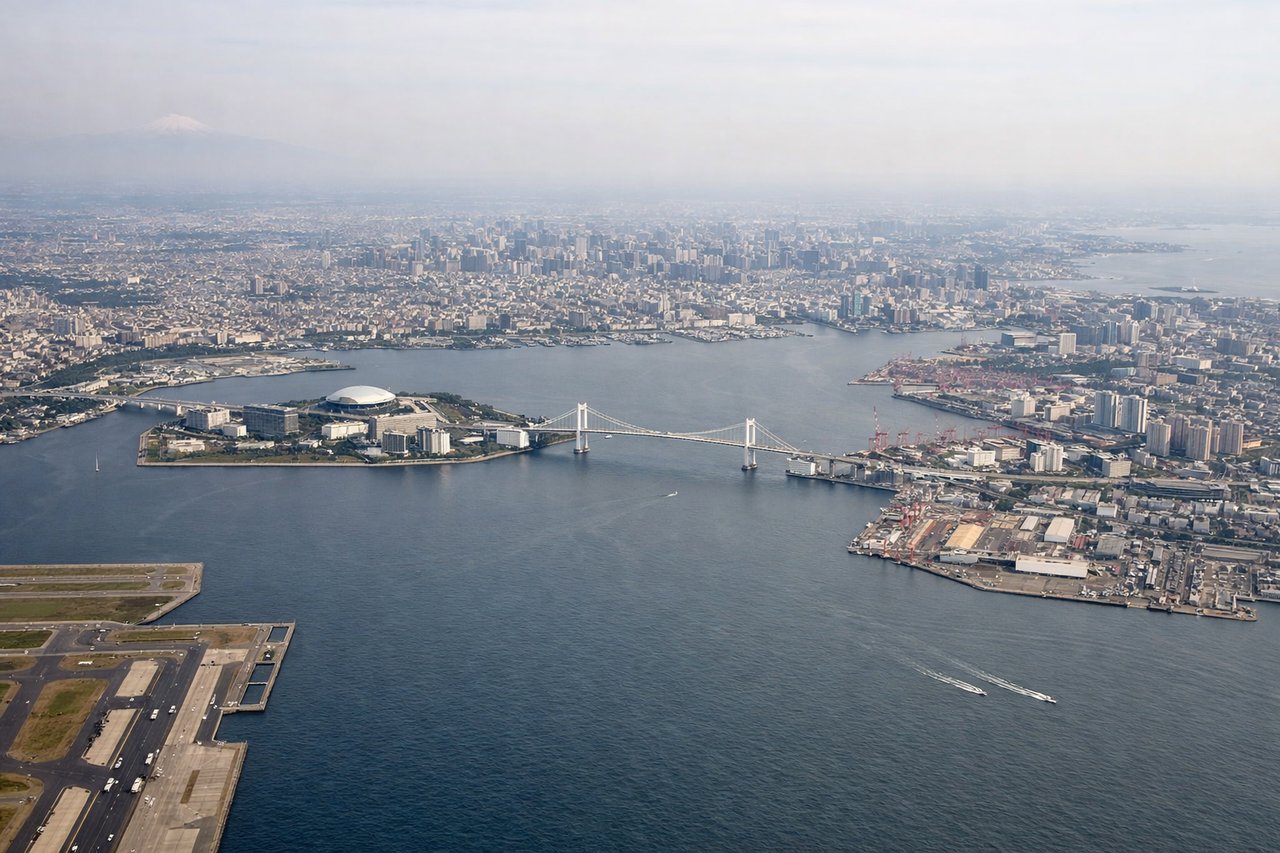
RIGHTOn the typical south-wind arrival into HND, aircraft descend over Tokyo Bay before turning onto final for runways 34L/34R. Right-side passengers get a sweeping view of the bay, the artificial islands, and the dense Tokyo skyline including the Rainbow Bridge area, while the left side mostly faces open water or the flatter Chiba shoreline.
Landmarks on this routeAll landmarks →
Will your flight be in sunlight?
See exactly which side of the plane gets sun and shade at your departure time.
About This Route
Which side of the plane should I sit on flying from Hiroshima (HIJ) to Tokyo International (HND)?
Sit on the Right side of the plane for the best views on flights from Hiroshima to Tokyo. The right side offers a much richer visual sequence: the island-studded Seto Inland Sea at departure, glimpses of the Pacific coastline and Suruga Bay near Mt. Fuji during cruise, and a dramatic Tokyo Bay approach into Haneda. The left side mostly shows inland mountains and flatter terrain with fewer standout features.
What can I see during takeoff from Hiroshima in Hiroshima?
During takeoff from Hiroshima (HIJ), sit on the Right side for the best views. Departing HIJ to the east, the right side looks south over the Seto Inland Sea, with its scattered green islands and fishing villages spread out below during the climb. The left side only shows the forested Chugoku mountains, which are less distinctive from altitude. Notable sights include: Seto Inland Sea islands, Itsukushima area coastline, Chugoku mountain foothills.
What can I see when landing at Tokyo International in Tokyo?
When landing at Tokyo International (HND), sit on the Right side for the best views. On the typical south-wind arrival into HND, aircraft descend over Tokyo Bay before turning onto final for runways 34L/34R. Right-side passengers get a sweeping view of the bay, the artificial islands, and the dense Tokyo skyline including the Rainbow Bridge area, while the left side mostly faces open water or the flatter Chiba shoreline. Notable sights include: Tokyo Bay, Rainbow Bridge, Odaiba artificial islands, Tokyo skyline.
How long is the flight from Hiroshima to Tokyo?
The flight from Hiroshima (HIJ) to Tokyo International (HND) takes 1h 25m.
What does the Hiroshima to Tokyo flight path pass over?
Route roughly follows the southern Honshu coastline, passing near Osaka Bay, the Kii Peninsula, and Suruga Bay, with Mt. Fuji sometimes visible to the south on clear days before descent into Tokyo Bay.