The takeoff scenery over the Seto Inland Sea is more visually distinctive and dramatic than the landing approach. While the Thames and London offer urban interest, the intricate island geography and coastal mountains of western Japan provide more varied and memorable views during the critical first 30 minutes of flight.
Flight Path
The flight path crosses the Eurasian continent over Russia and Central Asia. Notable features include the Ural Mountains (visible during mid-flight if daylight permits), the Caspian Sea region, and the vast steppes of Kazakhstan and southern Russia. Over Europe, the Alps appear as a dramatic snow-capped ridge before descent into the Thames Valley. Most of the 11+ hour journey occurs over featureless ocean and cloud, with limited ground visibility during the extended night portion.
Great circle distance and headings ›Phase by phase
Takeoff from HIJ
RIGHTRight side offers views of the Seto Inland Sea and its island chains immediately after departure. The aircraft climbs eastward initially before turning west, so right-side passengers see the intricate waterway and mountainous coastline of western Honshu.
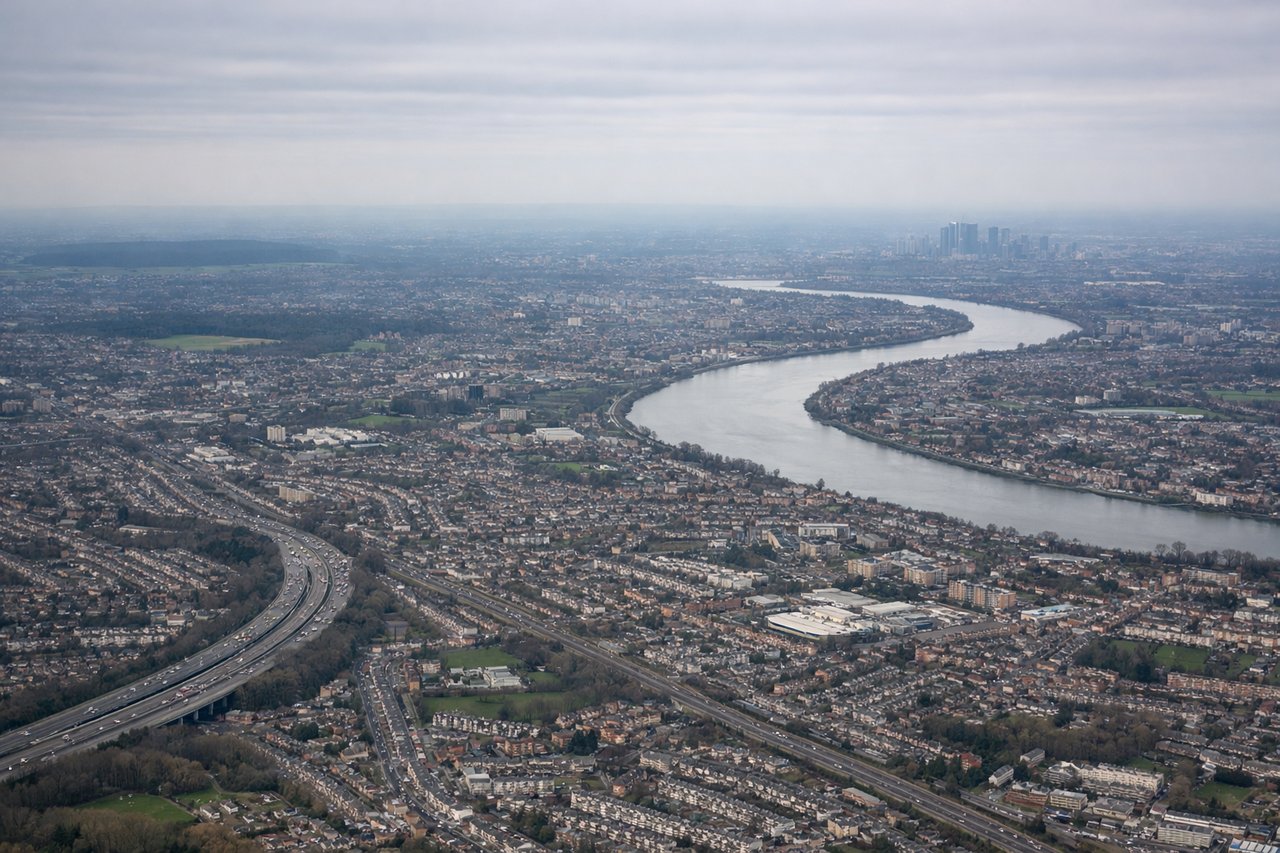
Landing at LHR
LEFTLeft side provides extended views of the Thames estuary, London's urban sprawl, and the approach corridor over southern England. The standard descent into Heathrow from the east means left-side passengers see the city's landmarks and the final approach over the Home Counties.
Landmarks on this routeAll landmarks →
Will your flight be in sunlight?
See exactly which side of the plane gets sun and shade at your departure time.
About This Route
Which side of the plane should I sit on flying from Hiroshima (HIJ) to Heathrow (LHR)?
Sit on the Right side of the plane for the best views on flights from Hiroshima to London. The takeoff scenery over the Seto Inland Sea is more visually distinctive and dramatic than the landing approach. While the Thames and London offer urban interest, the intricate island geography and coastal mountains of western Japan provide more varied and memorable views during the critical first 30 minutes of flight.
What can I see during takeoff from Hiroshima in Hiroshima?
During takeoff from Hiroshima (HIJ), sit on the Right side for the best views. Right side offers views of the Seto Inland Sea and its island chains immediately after departure. The aircraft climbs eastward initially before turning west, so right-side passengers see the intricate waterway and mountainous coastline of western Honshu. Notable sights include: Seto Inland Sea (island-dotted waters), Chugoku Mountains (distant ridgeline to the north), Hiroshima Bay (immediate foreground), coastal cities of Onomichi and Imabari (visible on islands and peninsulas).
What can I see when landing at Heathrow in London?
When landing at Heathrow (LHR), sit on the Left side for the best views. Left side provides extended views of the Thames estuary, London's urban sprawl, and the approach corridor over southern England. The standard descent into Heathrow from the east means left-side passengers see the city's landmarks and the final approach over the Home Counties. Notable sights include: Thames estuary and river bends (silver ribbon through the landscape), London's central districts and the City (dense urban grid), Chiltern Hills (low forested ridges to the northwest), Windsor and surrounding Thames Valley towns (scattered settlements below).
How long is the flight from Hiroshima to London?
The flight from Hiroshima (HIJ) to Heathrow (LHR) takes 11h 50m.
What does the Hiroshima to London flight path pass over?
The flight path crosses the Eurasian continent over Russia and Central Asia. Notable features include the Ural Mountains (visible during mid-flight if daylight permits), the Caspian Sea region, and the vast steppes of Kazakhstan and southern Russia. Over Europe, the Alps appear as a dramatic snow-capped ridge before descent into the Thames Valley. Most of the 11+ hour journey occurs over featureless ocean and cloud, with limited ground visibility during the extended night portion.