Right-side seats capture the more dramatic scenery at both ends of the journey—Victoria Harbour and Hong Kong's urban landscape during takeoff provide stronger visual interest than the Adelaide approach. While the landing views are pleasant, the takeoff experience over one of the world's most distinctive harbors gives right-side the edge overall.
Flown HKG to ADL? Did we get it right?
Flight Path
Hong Kong to Adelaide is 4,273 miles (6,876 km), a flight of about 8 hours 45 minutes.
The flight path crosses the South China Sea, passing over or near the Philippines (Luzon visible on some routes), then continues south over the Coral Sea. Notable midpoint features include the Philippine archipelago's mountainous terrain, the Coral Sea's deep blue water, and the Great Barrier Reef region (visible as lighter turquoise water and reef structures if the aircraft passes close enough). The descent into Adelaide crosses the Australian interior—the Flinders Ranges may be visible as a distant ridge line during the final approach phase, along with the Murray River valley in South Australia.
Great circle distance and headings ›


Phase by phase
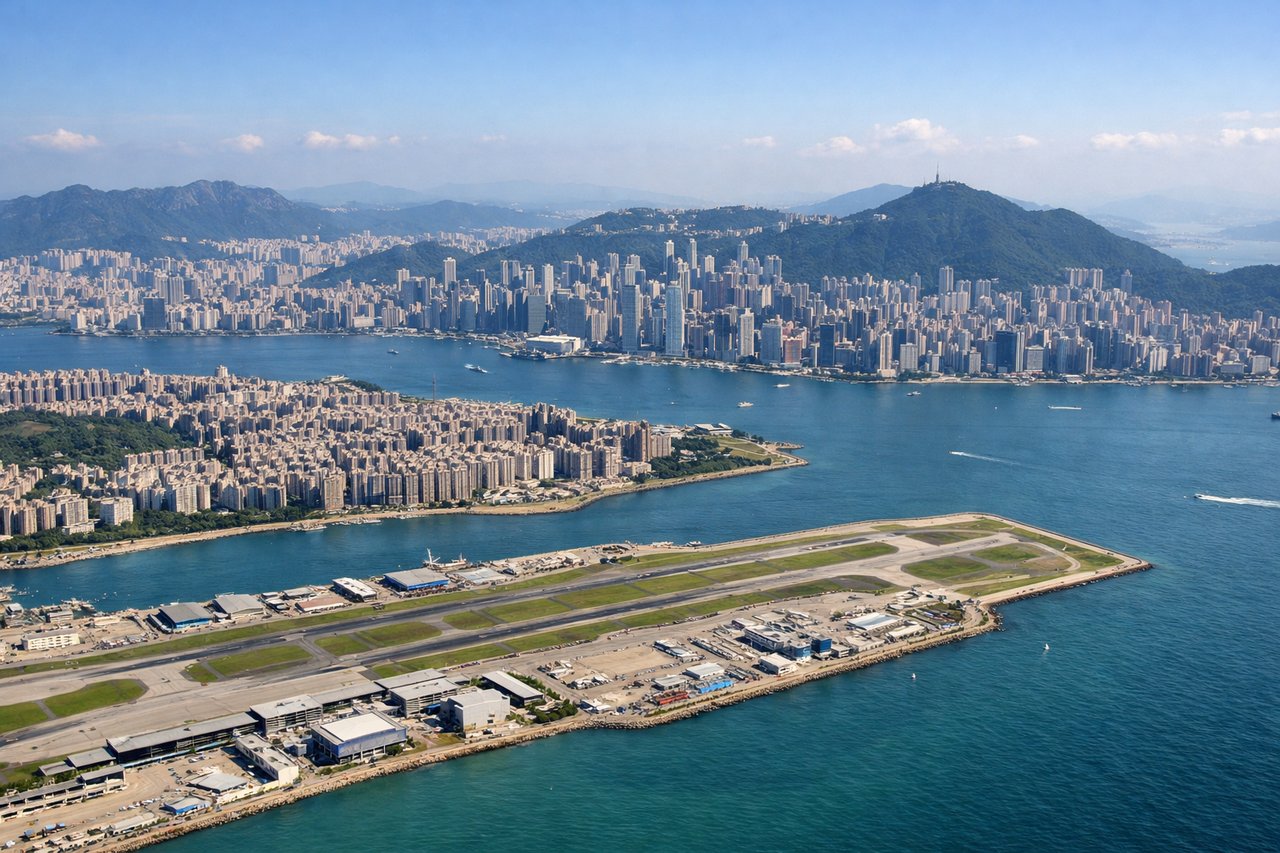
Takeoff from HKG
RIGHTRight-side seats offer views of Victoria Harbour and Kowloon Peninsula during the initial climb-out. The aircraft departs eastward over water, giving right-side passengers clear sightlines of Hong Kong's urban waterfront and the surrounding hills before turning south.
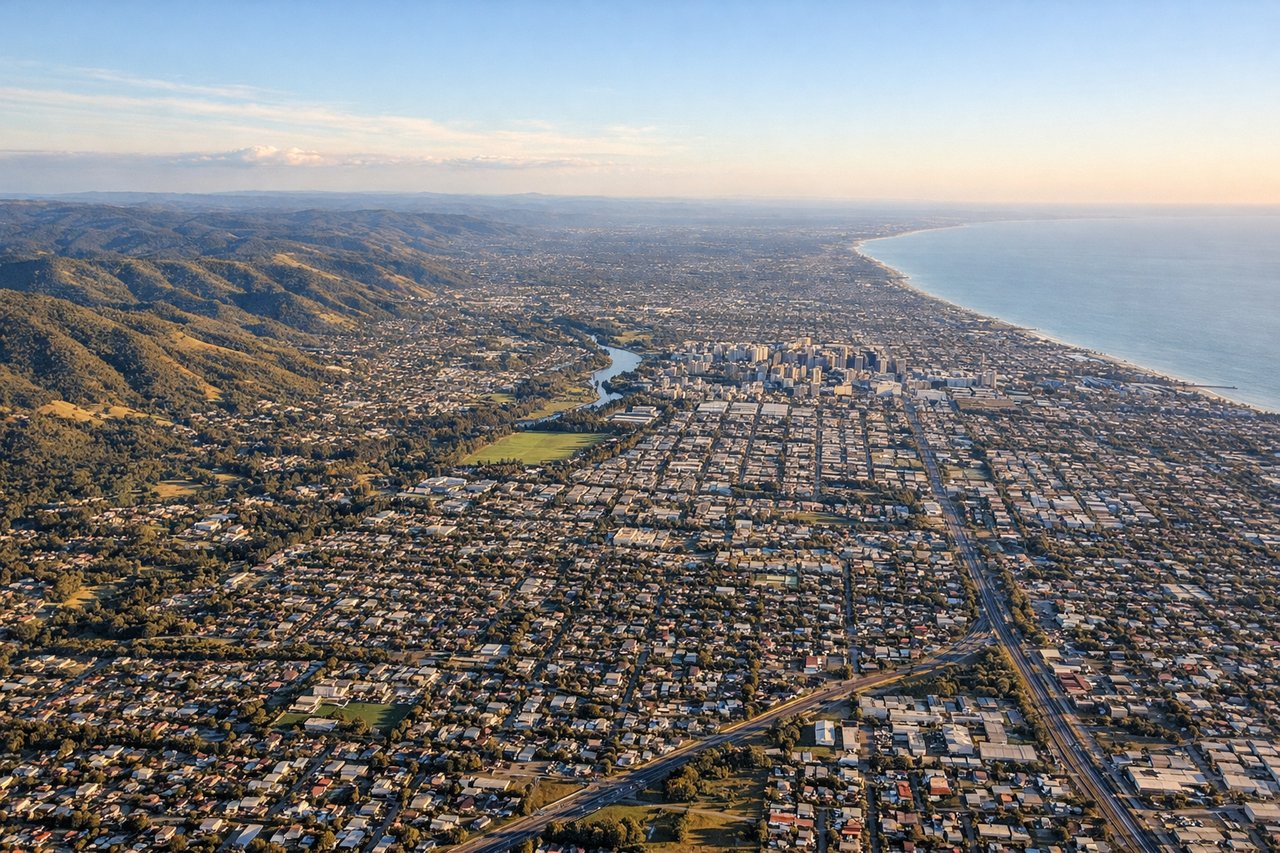
Landing at ADL
LEFTLeft-side seats provide views of the Adelaide Hills and the Barossa Valley region during descent. The aircraft approaches from the northwest, and left-side passengers see the undulating terrain, vineyards, and rural landscape that characterize South Australia's interior before reaching the coastal plains where Adelaide Airport sits.
Will your flight be in sunlight?
Pick a date and time in the Sun Map to watch the sun move across your whole flight.
About This Route
Which side of the plane should I sit on flying from Hong Kong International (HKG) to Adelaide International (ADL)?
Sit on the Right side of the plane for the best views on flights from Hong Kong to Adelaide. Right-side seats capture the more dramatic scenery at both ends of the journey—Victoria Harbour and Hong Kong's urban landscape during takeoff provide stronger visual interest than the Adelaide approach. While the landing views are pleasant, the takeoff experience over one of the world's most distinctive harbors gives right-side the edge overall.
What can I see during takeoff from Hong Kong International in Hong Kong?
During takeoff from Hong Kong International (HKG), sit on the Right side for the best views. Right-side seats offer views of Victoria Harbour and Kowloon Peninsula during the initial climb-out. The aircraft departs eastward over water, giving right-side passengers clear sightlines of Hong Kong's urban waterfront and the surrounding hills before turning south. Notable sights include: Victoria Harbour, Kowloon Peninsula, Hong Kong Island skyline, New Territories hills.
What can I see when landing at Adelaide International in Adelaide?
When landing at Adelaide International (ADL), sit on the Left side for the best views. Left-side seats provide views of the Adelaide Hills and the Barossa Valley region during descent. The aircraft approaches from the northwest, and left-side passengers see the undulating terrain, vineyards, and rural landscape that characterize South Australia's interior before reaching the coastal plains where Adelaide Airport sits. Notable sights include: Adelaide Hills, Barossa Valley wine region, Mount Lofty, coastal plains approaching Adelaide.
How long is the flight from Hong Kong to Adelaide?
The flight from Hong Kong International (HKG) to Adelaide International (ADL) takes about 8 hours 45 minutes. The shortest flight path between them is 4,273 miles (6,876 km); winds and air traffic control usually add a few percent.
What does the Hong Kong to Adelaide flight path pass over?
The flight path crosses the South China Sea, passing over or near the Philippines (Luzon visible on some routes), then continues south over the Coral Sea. Notable midpoint features include the Philippine archipelago's mountainous terrain, the Coral Sea's deep blue water, and the Great Barrier Reef region (visible as lighter turquoise water and reef structures if the aircraft passes close enough). The descent into Adelaide crosses the Australian interior—the Flinders Ranges may be visible as a distant ridge line during the final approach phase, along with the Murray River valley in South Australia.