The right side captures Hong Kong's harbor skyline on departure and Ise Bay with the Chita Peninsula on arrival, while the left side mostly faces open water and flat coastal plain with fewer distinct landmarks during this route's cruise and transition phases.
Flight Path
The route crosses the Taiwan Strait region and the northern Ryukyu Islands chain before making landfall over Kyushu and Shikoku on the way to central Japan.
Great circle distance and headings ›Phase by phase
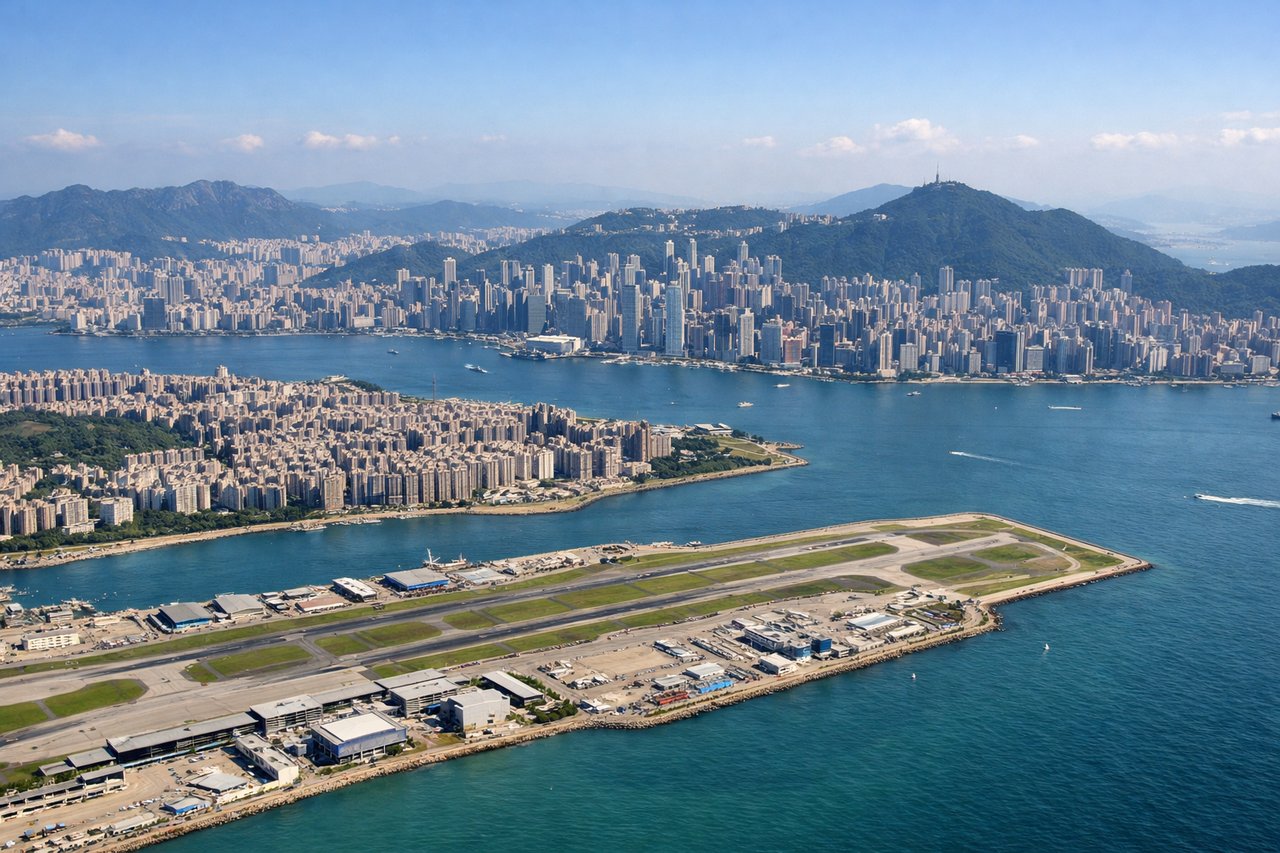
Takeoff from HKG
RIGHTDeparting HKG toward the northeast (typical winter runway 07 configuration), the initial climb and turn put Hong Kong Island, Victoria Harbour, and the dense Kowloon skyline on the right side of the aircraft before the route heads out over the Pearl River Delta and South China Sea.
Landing at NGO
RIGHTArrivals into Centrair commonly approach from the south over Ise Bay, giving right-side passengers a clear view of the bay, the Chita Peninsula, and the Nagoya urban sprawl just before touchdown on the north-south runway.
Landmarks on this routeAll landmarks →
Will your flight be in sunlight?
See exactly which side of the plane gets sun and shade at your departure time.
About This Route
Which side of the plane should I sit on flying from Hong Kong International (HKG) to Chubu Centrair International Airport (NGO)?
Sit on the Right side of the plane for the best views on flights from Hong Kong to Nagoya. The right side captures Hong Kong's harbor skyline on departure and Ise Bay with the Chita Peninsula on arrival, while the left side mostly faces open water and flat coastal plain with fewer distinct landmarks during this route's cruise and transition phases.
What can I see during takeoff from Hong Kong International in Hong Kong?
During takeoff from Hong Kong International (HKG), sit on the Right side for the best views. Departing HKG toward the northeast (typical winter runway 07 configuration), the initial climb and turn put Hong Kong Island, Victoria Harbour, and the dense Kowloon skyline on the right side of the aircraft before the route heads out over the Pearl River Delta and South China Sea. Notable sights include: Victoria Harbour, Hong Kong Island skyline, Lantau Island, Pearl River Delta.
What can I see when landing at Chubu Centrair International Airport in Nagoya?
When landing at Chubu Centrair International Airport (NGO), sit on the Right side for the best views. Arrivals into Centrair commonly approach from the south over Ise Bay, giving right-side passengers a clear view of the bay, the Chita Peninsula, and the Nagoya urban sprawl just before touchdown on the north-south runway. Notable sights include: Ise Bay, Chita Peninsula, Nagoya city skyline, Centrair's man-made island runway.
How long is the flight from Hong Kong to Nagoya?
The flight from Hong Kong International (HKG) to Chubu Centrair International Airport (NGO) takes 3h 15m.
What does the Hong Kong to Nagoya flight path pass over?
The route crosses the Taiwan Strait region and the northern Ryukyu Islands chain before making landfall over Kyushu and Shikoku on the way to central Japan.