Left side scores higher due to the exceptional takeoff experience over the Andaman Sea and Phang Nga Bay's dramatic limestone karsts—a genuinely distinctive geographic feature. While the landing on the right side offers good coastal views, the takeoff advantage and the full-flight variety (tropical coastline, island formations, open water) outweighs the right side's primarily ocean-dominated cruise phase. Left captures more terrain drama and landmark density across the full journey.
Flown HKT to LAX? Did we get it right?
Flight Path
Phuket to Los Angeles is 8,665 miles (13,945 km), a flight of about 15 hours 20 minutes.
Northern Thailand and Laos (Mekong River valley, Shan Plateau), Myanmar highlands, Bay of Bengal, Indian subcontinent (Deccan Plateau, Western Ghats), Arabian Sea, Middle East (Oman, Persian Gulf region), Central Asia (Iranian plateau, Hindu Kush foothills), Afghanistan-Tajikistan border mountains, Caspian Sea region, southern Russia steppes, North Atlantic (Greenland ice sheet on far northern routes), Canadian Arctic archipelago, Alaska Range, Pacific Northwest coast (British Columbia, Washington), Sierra Nevada and Cascade ranges, Great Basin desert, Rocky Mountains (Colorado, Utah), Colorado Plateau, Mojave Desert approach to Southern California
Great circle distance and headings ›Phase by phase
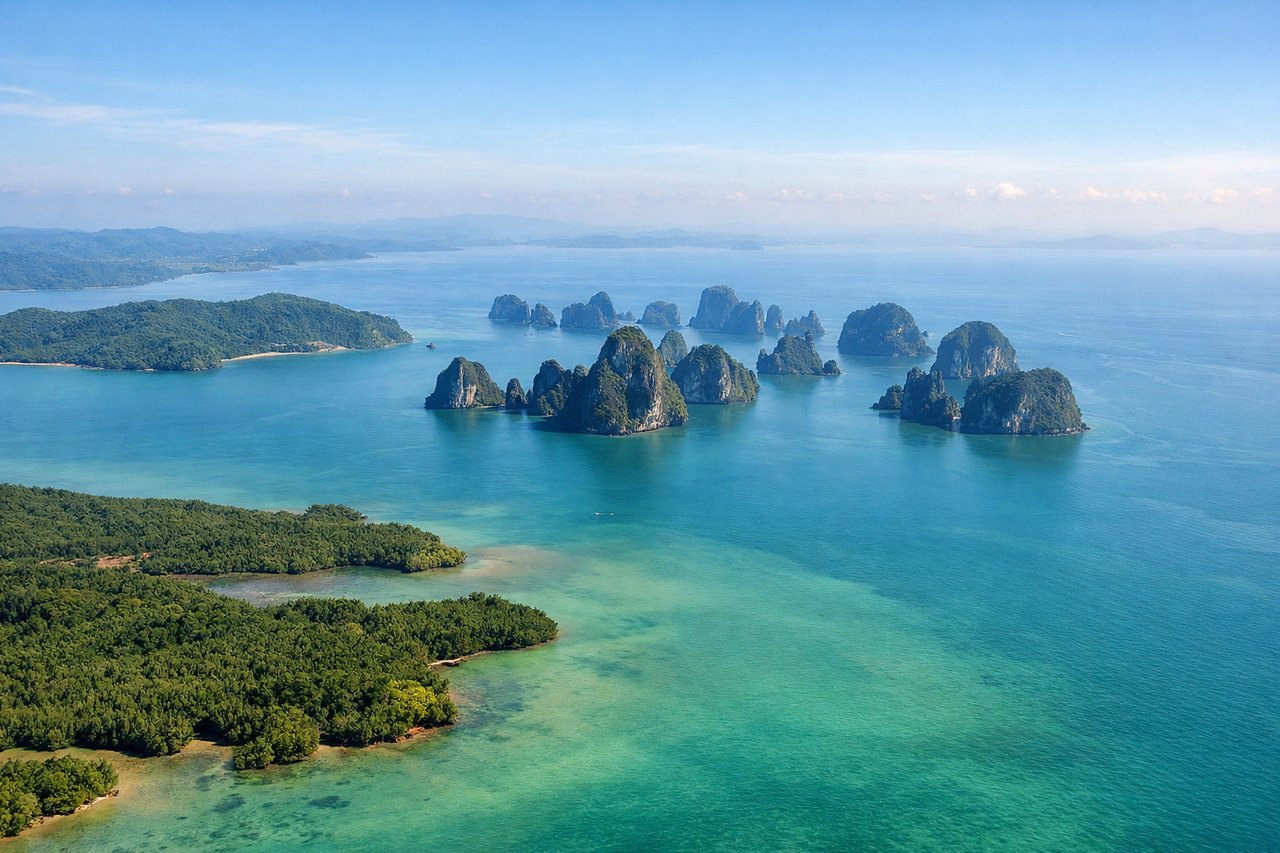
Takeoff from HKT
LEFTLeft side captures the dramatic Andaman Sea coastline and Mai Khao Beach during the typical westbound departure from runway 27, with immediate views of Thailand's coastal geography and island formations.
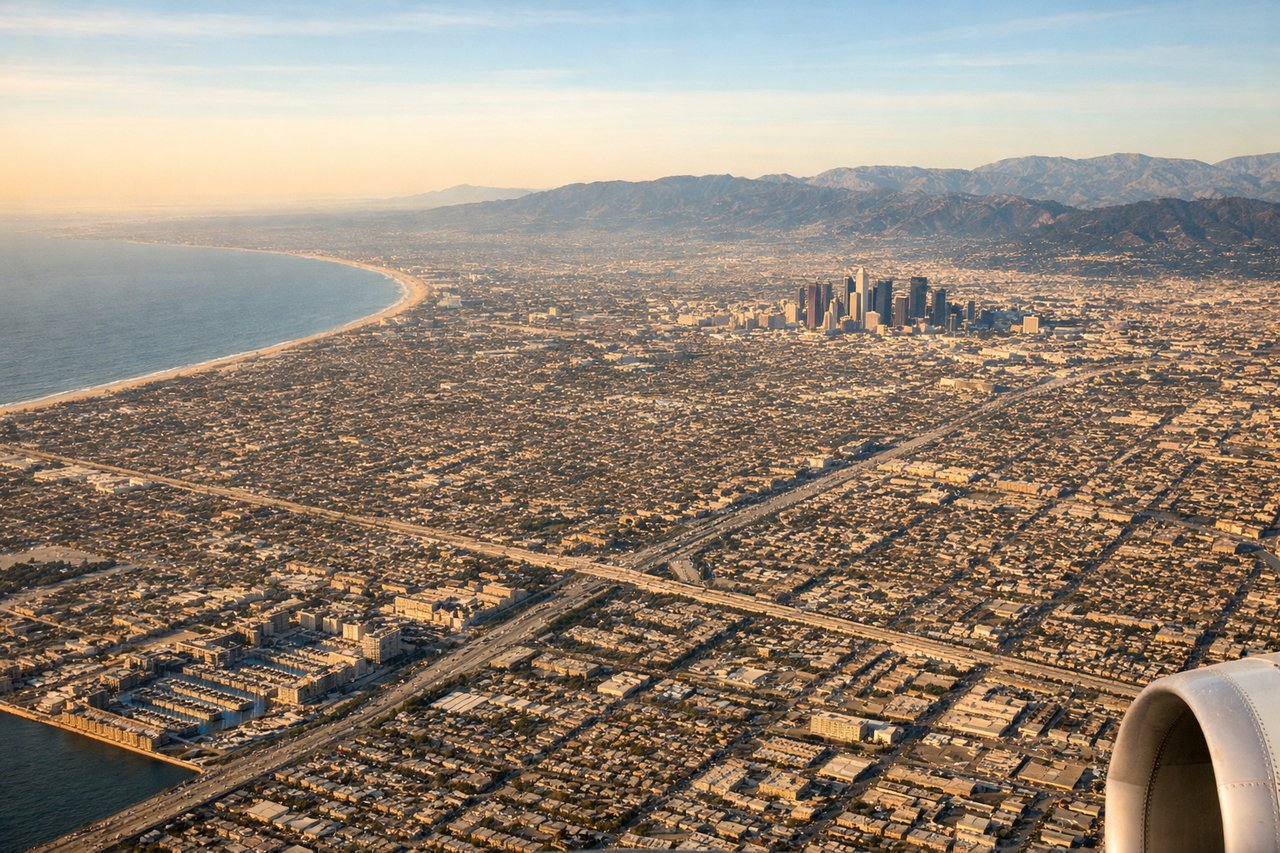
Landing at LAX
RIGHTRight side offers superior approach scenery during typical west-flow arrivals at LAX. The descent path over the Pacific provides views of the Southern California coastline, Santa Monica Bay, and the Los Angeles basin sprawl before landing on the outer runways (24R/25L).
Will your flight be in sunlight?
Pick a date and time in the Sun Map to watch the sun move across your whole flight.
About This Route
Which side of the plane should I sit on flying from Phuket International (HKT) to Los Angeles International (LAX)?
Sit on the Left side of the plane for the best views on flights from Phuket to Los Angeles. Left side scores higher due to the exceptional takeoff experience over the Andaman Sea and Phang Nga Bay's dramatic limestone karsts—a genuinely distinctive geographic feature. While the landing on the right side offers good coastal views, the takeoff advantage and the full-flight variety (tropical coastline, island formations, open water) outweighs the right side's primarily ocean-dominated cruise phase. Left captures more terrain drama and landmark density across the full journey.
What can I see during takeoff from Phuket International in Phuket?
During takeoff from Phuket International (HKT), sit on the Left side for the best views. Left side captures the dramatic Andaman Sea coastline and Mai Khao Beach during the typical westbound departure from runway 27, with immediate views of Thailand's coastal geography and island formations. Notable sights include: Andaman Sea, Mai Khao Beach, Phang Nga Bay limestone karsts, Phuket town harbor.
What can I see when landing at Los Angeles International in Los Angeles?
When landing at Los Angeles International (LAX), sit on the Right side for the best views. Right side offers superior approach scenery during typical west-flow arrivals at LAX. The descent path over the Pacific provides views of the Southern California coastline, Santa Monica Bay, and the Los Angeles basin sprawl before landing on the outer runways (24R/25L). Notable sights include: Santa Monica Bay, Malibu coastline, Santa Monica Pier, Los Angeles downtown skyline.
How long is the flight from Phuket to Los Angeles?
The flight from Phuket International (HKT) to Los Angeles International (LAX) takes about 15 hours 20 minutes. The shortest flight path between them is 8,665 miles (13,945 km); winds and air traffic control usually add a few percent.
What does the Phuket to Los Angeles flight path pass over?
Northern Thailand and Laos (Mekong River valley, Shan Plateau), Myanmar highlands, Bay of Bengal, Indian subcontinent (Deccan Plateau, Western Ghats), Arabian Sea, Middle East (Oman, Persian Gulf region), Central Asia (Iranian plateau, Hindu Kush foothills), Afghanistan-Tajikistan border mountains, Caspian Sea region, southern Russia steppes, North Atlantic (Greenland ice sheet on far northern routes), Canadian Arctic archipelago, Alaska Range, Pacific Northwest coast (British Columbia, Washington), Sierra Nevada and Cascade ranges, Great Basin desert, Rocky Mountains (Colorado, Utah), Colorado Plateau, Mojave Desert approach to Southern California