The right side delivers the more dramatic and memorable single moment of the flight — the sweeping view of central Tokyo with its iconic towers and dense urban fabric during departure. The landing view from the left at MCO is pleasant but Orlando's flat terrain and modest skyline are less visually striking than Tokyo's urban density. For the long transpacific cruise, neither side offers significant advantages as the route passes over open Pacific Ocean and Alaska's remote coastline.
Flown HND to MCO? Did we get it right?
Flight Path
Tokyo to Orlando is 7,270 miles (11,699 km), a flight of about 13 hours 30 minutes.
The great circle route from HND to MCO tracks northeast over the North Pacific, passing south of the Aleutian Islands chain, then crossing the Gulf of Alaska before making landfall over the Pacific Northwest coast of North America near British Columbia or Washington State. The route then tracks southeast over the Rocky Mountains, the Great Plains, and the Gulf Coast states before arriving in Florida. Mid-flight passengers see open ocean for roughly 8 hours, with possible views of Aleutian island peaks emerging from cloud and fog, and the snow-capped Cascades and Rockies during the North American overland segment.
Great circle distance and headings ›


Phase by phase
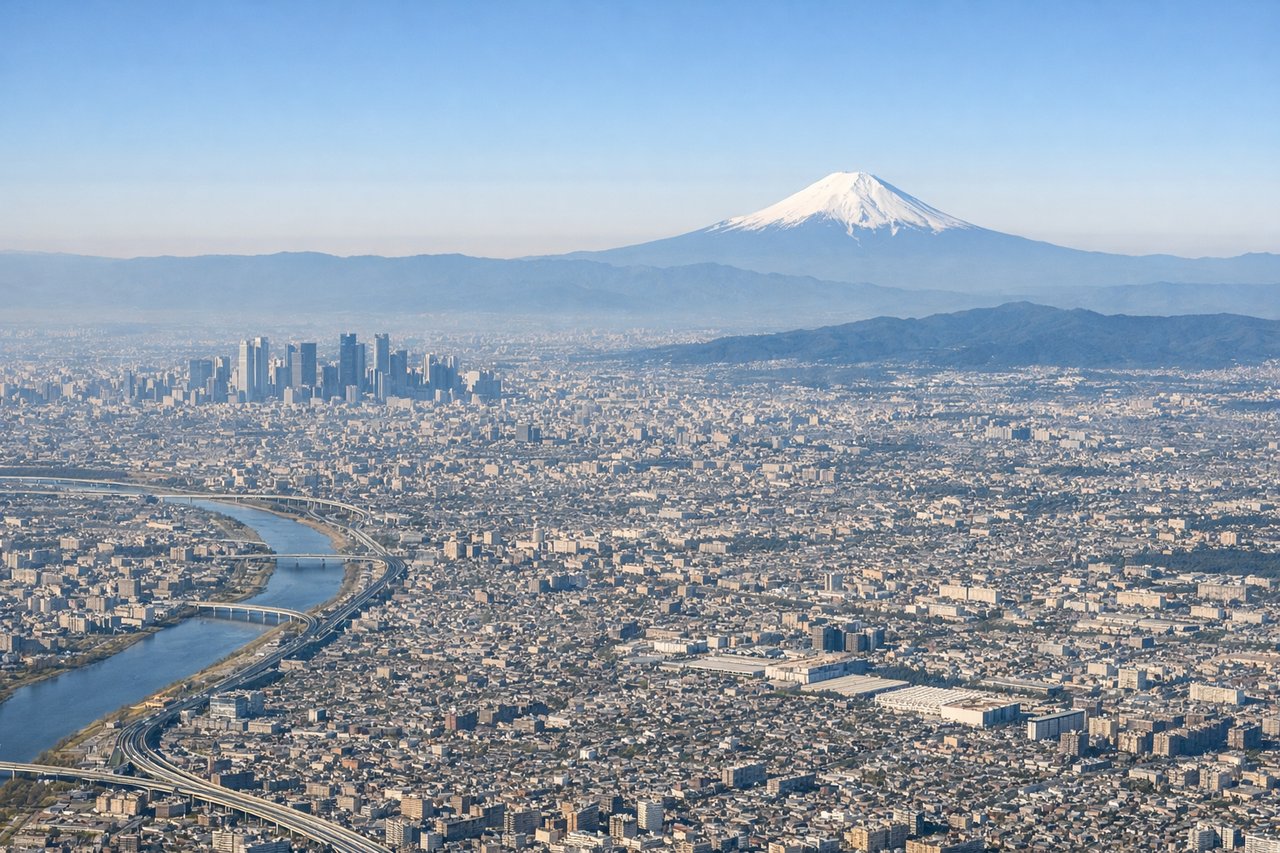
Takeoff from HND
RIGHTHND typically departs on Runway 34R/34L heading northwest, then turns east over Tokyo Bay. Right side passengers get a clear view of central Tokyo, the dense urban grid of Shinjuku and Shibuya, and Tokyo Tower before the aircraft banks over the bay. Left side faces the bay and Kawasaki industrial waterfront.
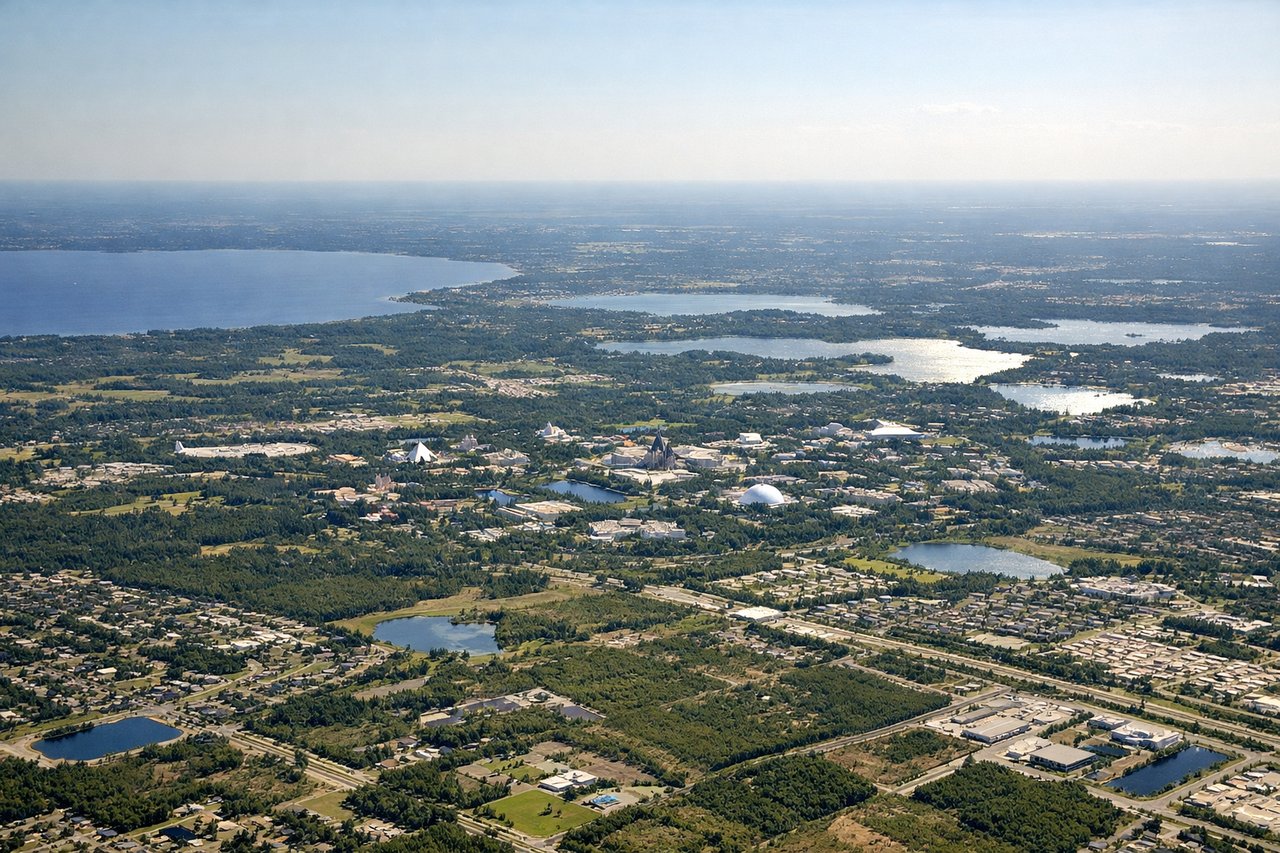
Landing at MCO
LEFTMCO typically lands on Runway 18L/18R heading south, with the approach coming from the north over the Orlando metro area. Left side passengers get a view of downtown Orlando's skyline and the chain of lakes that define the city, while right side looks toward mostly flat suburban sprawl and the airport's own terminals.
Will your flight be in sunlight?
Pick a date and time in the Sun Map to watch the sun move across your whole flight.
About This Route
Which side of the plane should I sit on flying from Tokyo International (HND) to Orlando International (MCO)?
Sit on the Right side of the plane for the best views on flights from Tokyo to Orlando. The right side delivers the more dramatic and memorable single moment of the flight — the sweeping view of central Tokyo with its iconic towers and dense urban fabric during departure. The landing view from the left at MCO is pleasant but Orlando's flat terrain and modest skyline are less visually striking than Tokyo's urban density. For the long transpacific cruise, neither side offers significant advantages as the route passes over open Pacific Ocean and Alaska's remote coastline.
What can I see during takeoff from Tokyo International in Tokyo?
During takeoff from Tokyo International (HND), sit on the Right side for the best views. HND typically departs on Runway 34R/34L heading northwest, then turns east over Tokyo Bay. Right side passengers get a clear view of central Tokyo, the dense urban grid of Shinjuku and Shibuya, and Tokyo Tower before the aircraft banks over the bay. Left side faces the bay and Kawasaki industrial waterfront. Notable sights include: Tokyo Tower (visible as a red lattice structure amid the dense urban grid), Shinjuku skyscraper cluster, Tokyo Bay and its reclaimed island network, Rainbow Bridge spanning the bay entrance.
What can I see when landing at Orlando International in Orlando?
When landing at Orlando International (MCO), sit on the Left side for the best views. MCO typically lands on Runway 18L/18R heading south, with the approach coming from the north over the Orlando metro area. Left side passengers get a view of downtown Orlando's skyline and the chain of lakes that define the city, while right side looks toward mostly flat suburban sprawl and the airport's own terminals. Notable sights include: Downtown Orlando skyline and its cluster of office towers, the chain of lakes threading through the city (Lake Eola, Lake Ivanhoe), Walt Disney World resort complex visible as a large developed area to the southwest, Florida's characteristic flat green landscape with countless small lakes.
How long is the flight from Tokyo to Orlando?
The flight from Tokyo International (HND) to Orlando International (MCO) takes about 13 hours 30 minutes. The shortest flight path between them is 7,270 miles (11,699 km); winds and air traffic control usually add a few percent.
What does the Tokyo to Orlando flight path pass over?
The great circle route from HND to MCO tracks northeast over the North Pacific, passing south of the Aleutian Islands chain, then crossing the Gulf of Alaska before making landfall over the Pacific Northwest coast of North America near British Columbia or Washington State. The route then tracks southeast over the Rocky Mountains, the Great Plains, and the Gulf Coast states before arriving in Florida. Mid-flight passengers see open ocean for roughly 8 hours, with possible views of Aleutian island peaks emerging from cloud and fog, and the snow-capped Cascades and Rockies during the North American overland segment.