Tokyo to Matsuyama is 420 miles (676 km), a flight of about 1 hour.
Right side wins both ends of the flight. During the cruise over the Seto Inland Sea corridor, the right side also faces the island-scattered sea rather than the Chugoku mountain interior, giving you more visual interest throughout the entire flight.
Flight Path
The flight tracks southwest over Osaka Bay and the Kii Channel, then crosses the northern coast of Shikoku or the eastern Seto Inland Sea. Key features along the route include the Osaka urban area and Kansai coastline, the Akashi Kaikyo Bridge area near Kobe, the scattered islands of the Seto Inland Sea including Awaji-shima, and the mountainous interior of Shikoku visible to the south.
Great circle distance and headings ›

Phase by phase
Takeoff from HND
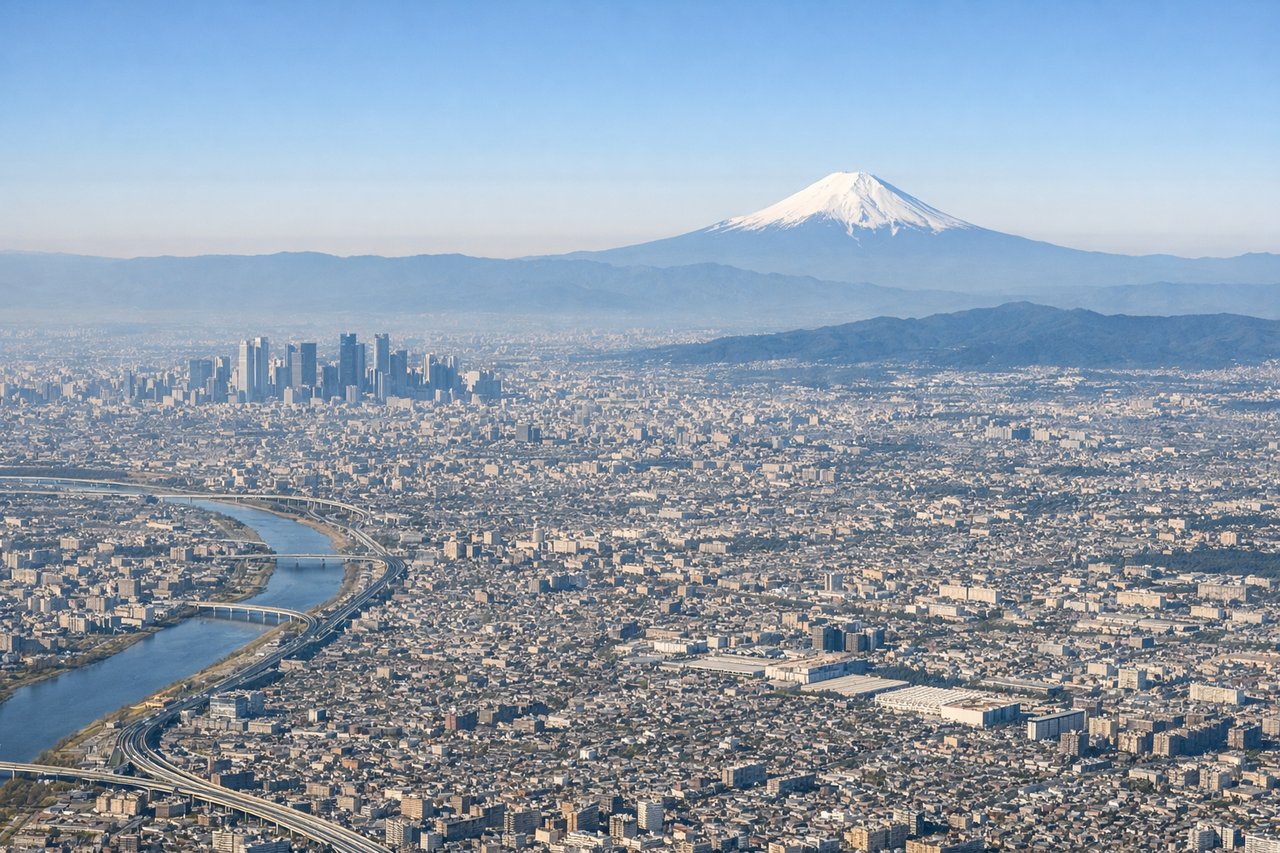
RIGHTHND typically departs westbound on Runway 34R/16L or uses the D runway complex. A westbound or southwestbound departure puts Tokyo Bay and the urban sprawl of central Tokyo on the right side. You get a clear look at the bay, the Rainbow Bridge area, and the dense city grid before climbing out over Kanagawa.
Landing at MYJ
RIGHTMatsuyama Airport sits on the northwest coast of Shikoku, and aircraft typically approach from the northeast over the Seto Inland Sea. On a right-side seat, you get sustained views of the Seto Inland Sea's island-dotted waters during descent, plus a look at the Matsuyama city basin and Iyo-Nada bay on final approach.
Landmarks on this routeAll landmarks →
Will your flight be in sunlight?
Pick a date and time in the Sun Map to watch the sun move across your whole flight.
About This Route
Which side of the plane should I sit on flying from Tokyo International (HND) to Matsuyama (MYJ)?
Sit on the Right side of the plane for the best views on flights from Tokyo to Matsuyama. Right side wins both ends of the flight. During the cruise over the Seto Inland Sea corridor, the right side also faces the island-scattered sea rather than the Chugoku mountain interior, giving you more visual interest throughout the entire flight.
What can I see during takeoff from Tokyo International in Tokyo?
During takeoff from Tokyo International (HND), sit on the Right side for the best views. HND typically departs westbound on Runway 34R/16L or uses the D runway complex. A westbound or southwestbound departure puts Tokyo Bay and the urban sprawl of central Tokyo on the right side. You get a clear look at the bay, the Rainbow Bridge area, and the dense city grid before climbing out over Kanagawa. Notable sights include: Tokyo Bay, Rainbow Bridge and Odaiba waterfront, Yokohama port and harbor, Kawasaki industrial waterfront.
What can I see when landing at Matsuyama in Matsuyama?
When landing at Matsuyama (MYJ), sit on the Right side for the best views. Matsuyama Airport sits on the northwest coast of Shikoku, and aircraft typically approach from the northeast over the Seto Inland Sea. On a right-side seat, you get sustained views of the Seto Inland Sea's island-dotted waters during descent, plus a look at the Matsuyama city basin and Iyo-Nada bay on final approach. Notable sights include: Seto Inland Sea with scattered islands, Matsuyama city and Dogo Onsen district, Iyo-Nada bay, Shikoku mountain ranges to the south.
How long is the flight from Tokyo to Matsuyama?
The flight from Tokyo International (HND) to Matsuyama (MYJ) takes about 1 hour. The shortest flight path between them is 420 miles (676 km); winds and air traffic control usually add a few percent.
What does the Tokyo to Matsuyama flight path pass over?
The flight tracks southwest over Osaka Bay and the Kii Channel, then crosses the northern coast of Shikoku or the eastern Seto Inland Sea. Key features along the route include the Osaka urban area and Kansai coastline, the Akashi Kaikyo Bridge area near Kobe, the scattered islands of the Seto Inland Sea including Awaji-shima, and the mountainous interior of Shikoku visible to the south.