While left offers coastal scenery during departure, right provides the dramatic Andes mountain views during the final descent into Santiago—a more visually striking and memorable experience for the longer southern leg of the flight.
Flown HOU to SCL? Did we get it right?
Flight Path
Houston to Santiago is 4,641 miles (7,468 km), a flight of about 8 hours 45 minutes.
The flight path crosses the Caribbean Sea, passes over Central America (Guatemala/Honduras region), crosses the Pacific Ocean, and approaches the South American continent over Peru before descending into the Chilean Andes. Notable features include the Yucatan Peninsula area, the Pacific coastline of Central America, and the high Andean peaks visible during final approach to Santiago.
Great circle distance and headings ›

Phase by phase
Takeoff from HOU
LEFTLeft side offers views of Galveston Bay and the Texas Gulf Coast as the aircraft climbs southeastward. Right side faces inland toward flat Houston suburbs with minimal visual interest.
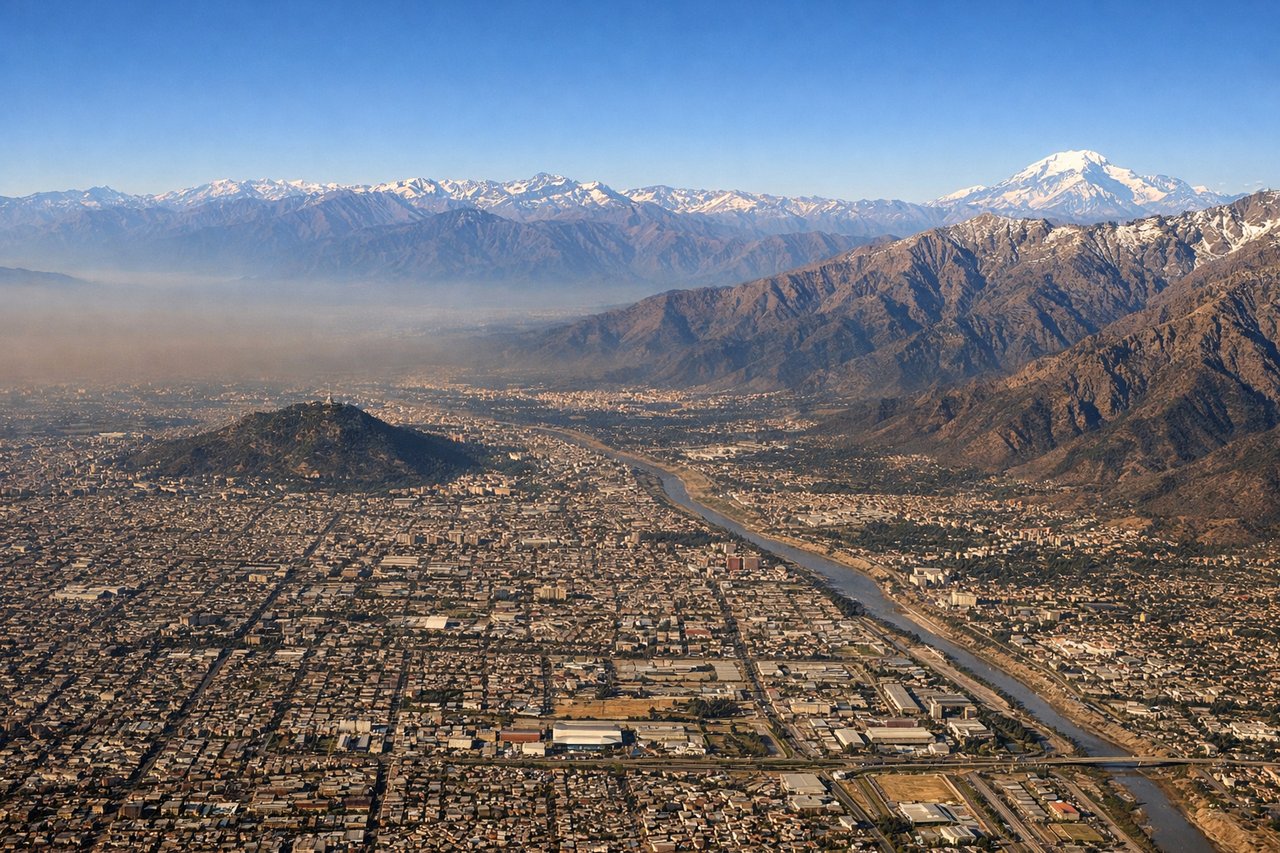
Landing at SCL
RIGHTRight side provides views of the Andes Mountains during descent into Santiago, particularly the main cordillera peaks that dominate the approach. Left side faces the Argentine plains with minimal elevation change.
Will your flight be in sunlight?
Pick a date and time in the Sun Map to watch the sun move across your whole flight.
About This Route
Which side of the plane should I sit on flying from William P Hobby (HOU) to Arturo Merino Benitez International (SCL)?
Sit on the Right side of the plane for the best views on flights from Houston to Santiago. While left offers coastal scenery during departure, right provides the dramatic Andes mountain views during the final descent into Santiago—a more visually striking and memorable experience for the longer southern leg of the flight.
What can I see during takeoff from William P Hobby in Houston?
During takeoff from William P Hobby (HOU), sit on the Left side for the best views. Left side offers views of Galveston Bay and the Texas Gulf Coast as the aircraft climbs southeastward. Right side faces inland toward flat Houston suburbs with minimal visual interest. Notable sights include: Galveston Bay, Trinity River delta, Bolivar Flats, Gulf of Mexico coastline.
What can I see when landing at Arturo Merino Benitez International in Santiago?
When landing at Arturo Merino Benitez International (SCL), sit on the Right side for the best views. Right side provides views of the Andes Mountains during descent into Santiago, particularly the main cordillera peaks that dominate the approach. Left side faces the Argentine plains with minimal elevation change. Notable sights include: Andes Mountains (main cordillera), Maipo River valley, Santiago urban basin, Aconcagua region peaks.
How long is the flight from Houston to Santiago?
The flight from William P Hobby (HOU) to Arturo Merino Benitez International (SCL) takes about 8 hours 45 minutes. The shortest flight path between them is 4,641 miles (7,468 km); winds and air traffic control usually add a few percent.
What does the Houston to Santiago flight path pass over?
The flight path crosses the Caribbean Sea, passes over Central America (Guatemala/Honduras region), crosses the Pacific Ocean, and approaches the South American continent over Peru before descending into the Chilean Andes. Notable features include the Yucatan Peninsula area, the Pacific coastline of Central America, and the high Andean peaks visible during final approach to Santiago.