The left side offers a modest but real bonus at both ends of the flight: a glimpse of Indianapolis and its Speedway on departure, and a much stronger payoff on arrival with Dublin Bay, the city, and the Wicklow Mountains during the looped approach to runway 28. The right side, by contrast, mostly overlooks featureless Midwest farmland on departure and open ocean or the less distinctive northern coastline on arrival.
Flown IND to DUB? Did we get it right?
Flight Path
Indianapolis to Dublin is 3,708 miles (5,967 km), a flight of about 7 hours 40 minutes.
The route crosses the Great Lakes region near Lake Erie, then eastern Canada (Quebec and Newfoundland), before a long stretch over the North Atlantic. Landfall in Ireland typically occurs over the west coast near Connemara or Galway Bay, with the aircraft then crossing the Irish midlands, including glimpses of the River Shannon, before reaching the Dublin area.
Great circle distance and headings ›Phase by phase

Takeoff from IND
LEFTIND typically departs on runway 23 heading southwest, away from the city, then banks around toward the northeast track for the Atlantic crossing. That turn puts downtown Indianapolis's compact skyline and the distinctive oval of the Indianapolis Motor Speedway briefly into view on the left side before the flat farmland of central Indiana takes over.
Landing at DUB
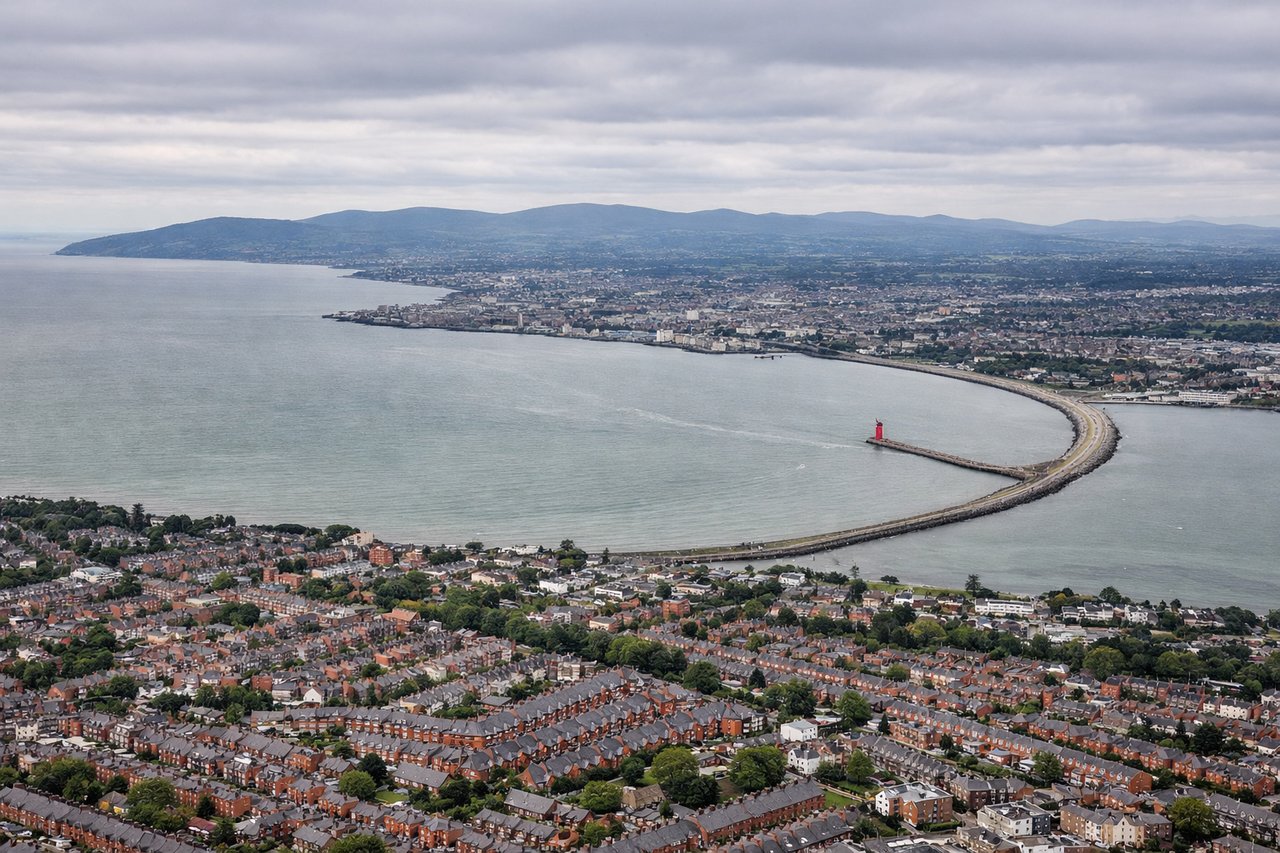
LEFTDublin's runway 28 approach typically requires the aircraft to loop back and land heading west, meaning the final descent comes in from over Dublin Bay and the city. On the left side, passengers get a clear view of the Liffey estuary, the city center, and the Wicklow Mountains rising to the south before touchdown.
Will your flight be in sunlight?
Pick a date and time in the Sun Map to watch the sun move across your whole flight.
About This Route
Which side of the plane should I sit on flying from Indianapolis International (IND) to Dublin (DUB)?
Sit on the Left side of the plane for the best views on flights from Indianapolis to Dublin. The left side offers a modest but real bonus at both ends of the flight: a glimpse of Indianapolis and its Speedway on departure, and a much stronger payoff on arrival with Dublin Bay, the city, and the Wicklow Mountains during the looped approach to runway 28. The right side, by contrast, mostly overlooks featureless Midwest farmland on departure and open ocean or the less distinctive northern coastline on arrival.
What can I see during takeoff from Indianapolis International in Indianapolis?
During takeoff from Indianapolis International (IND), sit on the Left side for the best views. IND typically departs on runway 23 heading southwest, away from the city, then banks around toward the northeast track for the Atlantic crossing. That turn puts downtown Indianapolis's compact skyline and the distinctive oval of the Indianapolis Motor Speedway briefly into view on the left side before the flat farmland of central Indiana takes over. Notable sights include: Downtown Indianapolis skyline, Indianapolis Motor Speedway, White River, checkerboard farmland of central Indiana.
What can I see when landing at Dublin in Dublin?
When landing at Dublin (DUB), sit on the Left side for the best views. Dublin's runway 28 approach typically requires the aircraft to loop back and land heading west, meaning the final descent comes in from over Dublin Bay and the city. On the left side, passengers get a clear view of the Liffey estuary, the city center, and the Wicklow Mountains rising to the south before touchdown. Notable sights include: Dublin Bay, River Liffey and city center, Wicklow Mountains, Howth Head peninsula.
How long is the flight from Indianapolis to Dublin?
The flight from Indianapolis International (IND) to Dublin (DUB) takes about 7 hours 40 minutes. The shortest flight path between them is 3,708 miles (5,967 km); winds and air traffic control usually add a few percent.
What does the Indianapolis to Dublin flight path pass over?
The route crosses the Great Lakes region near Lake Erie, then eastern Canada (Quebec and Newfoundland), before a long stretch over the North Atlantic. Landfall in Ireland typically occurs over the west coast near Connemara or Galway Bay, with the aircraft then crossing the Irish midlands, including glimpses of the River Shannon, before reaching the Dublin area.