Right side scores 3.5 versus left's 2.5 due to superior scenery on both legs. Takeoff offers Indianapolis's urban core and Indiana's rolling terrain. The cruise phase over the Atlantic and European interior is equally flat on both sides (ocean dominates, limiting both to ~2.0). Landing decisively favors right: the approach over the Tagus valley, Sierra de Guadarrama, and Madrid's metropolitan expanse provides genuine visual drama absent on the left side's approach over flat central Spanish plains.
Flown IND to MAD? Did we get it right?
Flight Path
Indianapolis to Madrid is 4,195 miles (6,752 km), a flight of about 8 hours 45 minutes.
North Atlantic Ocean (5+ hours of open water with minimal visual interest), Irish coastline and Celtic Sea during initial eastbound climb, Iberian Peninsula interior (central Spanish plateau with sparse vegetation and occasional river valleys), approach to Madrid basin with Tagus River system and Sierra de Guadarrama foothills
Great circle distance and headings ›Phase by phase

Takeoff from IND
RIGHTRight side captures Indianapolis's urban sprawl and the initial climb over central Indiana's rolling terrain. Left side departs over flat farmland with minimal visual interest during the critical first 10 minutes.
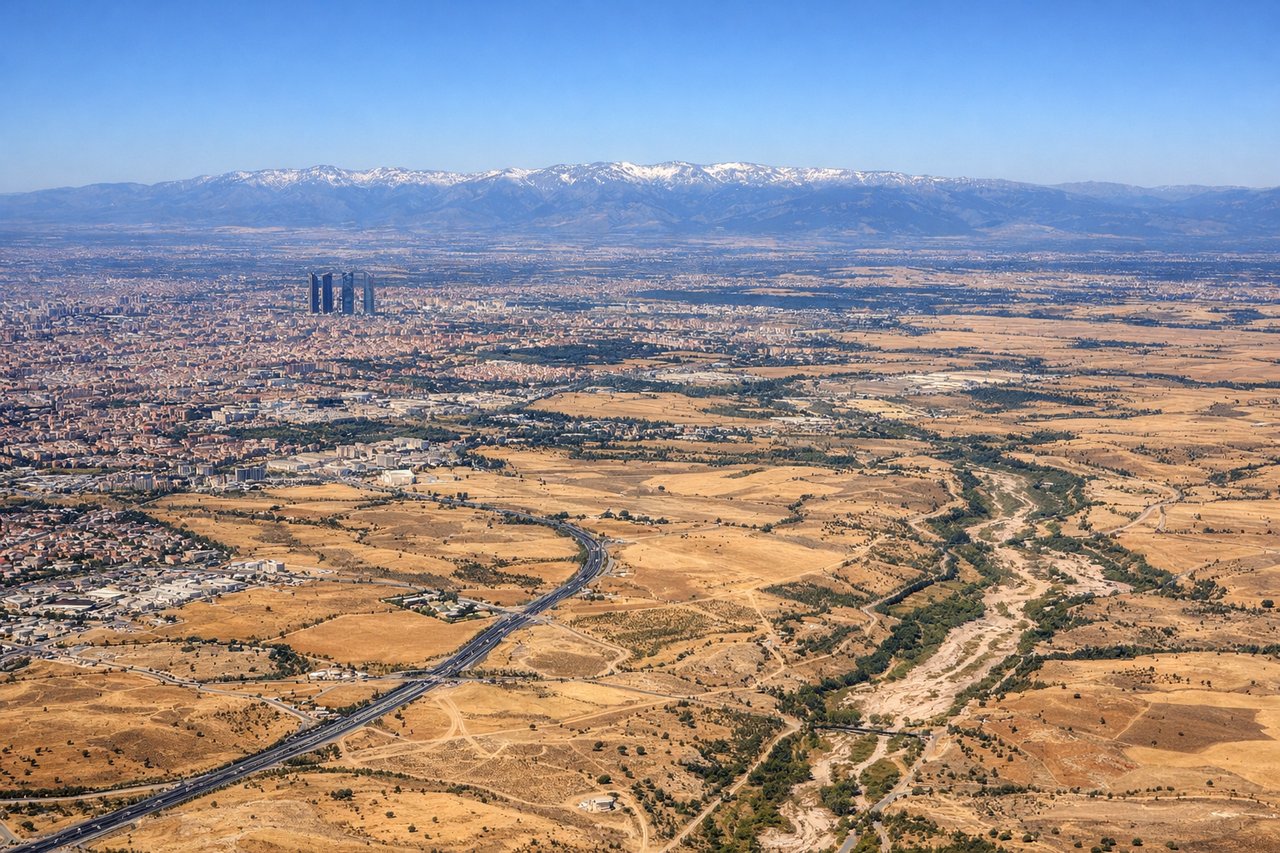
Landing at MAD
RIGHTRight side offers the superior Madrid approach. Aircraft typically descend from the northeast and turn southwest for landing on the 32L/32R runways (north configuration, most common). Right-side passengers see the Tagus River valley, the Sierra de Guadarrama mountains to the north, and Madrid's sprawling urban landscape before touchdown.
Will your flight be in sunlight?
Pick a date and time in the Sun Map to watch the sun move across your whole flight.
About This Route
Which side of the plane should I sit on flying from Indianapolis International (IND) to Barajas (MAD)?
Sit on the Right side of the plane for the best views on flights from Indianapolis to Madrid. Right side scores 3.5 versus left's 2.5 due to superior scenery on both legs. Takeoff offers Indianapolis's urban core and Indiana's rolling terrain. The cruise phase over the Atlantic and European interior is equally flat on both sides (ocean dominates, limiting both to ~2.0). Landing decisively favors right: the approach over the Tagus valley, Sierra de Guadarrama, and Madrid's metropolitan expanse provides genuine visual drama absent on the left side's approach over flat central Spanish plains.
What can I see during takeoff from Indianapolis International in Indianapolis?
During takeoff from Indianapolis International (IND), sit on the Right side for the best views. Right side captures Indianapolis's urban sprawl and the initial climb over central Indiana's rolling terrain. Left side departs over flat farmland with minimal visual interest during the critical first 10 minutes. Notable sights include: Indianapolis downtown skyline, White River valley, Indiana farmland grid pattern.
What can I see when landing at Barajas in Madrid?
When landing at Barajas (MAD), sit on the Right side for the best views. Right side offers the superior Madrid approach. Aircraft typically descend from the northeast and turn southwest for landing on the 32L/32R runways (north configuration, most common). Right-side passengers see the Tagus River valley, the Sierra de Guadarrama mountains to the north, and Madrid's sprawling urban landscape before touchdown. Notable sights include: Sierra de Guadarrama mountains, Tagus River valley, Madrid metropolitan area, Barajas airport complex.
How long is the flight from Indianapolis to Madrid?
The flight from Indianapolis International (IND) to Barajas (MAD) takes about 8 hours 45 minutes. The shortest flight path between them is 4,195 miles (6,752 km); winds and air traffic control usually add a few percent.
What does the Indianapolis to Madrid flight path pass over?
North Atlantic Ocean (5+ hours of open water with minimal visual interest), Irish coastline and Celtic Sea during initial eastbound climb, Iberian Peninsula interior (central Spanish plateau with sparse vegetation and occasional river valleys), approach to Madrid basin with Tagus River system and Sierra de Guadarrama foothills