The right side bookends the flight with two standout landmarks—Istanbul's Bosphorus at departure and Mount Fuji with the Tokyo Bay skyline at arrival—while the left side mostly offers Black Sea coastline and Chiba's flatter suburbs, giving the right a clear edge in landmark density and drama.
Flight Path
The route crosses the Caucasus foothills and the Caspian Sea's northern shore, then traverses the vast steppes of Kazakhstan and southern Siberia, skirting the Altai Mountains before crossing Mongolia's Gobi Desert and northeastern China en route to the Sea of Japan.
Great circle distance and headings ›_in_Istanbul.jpg?width=600)


Phase by phase
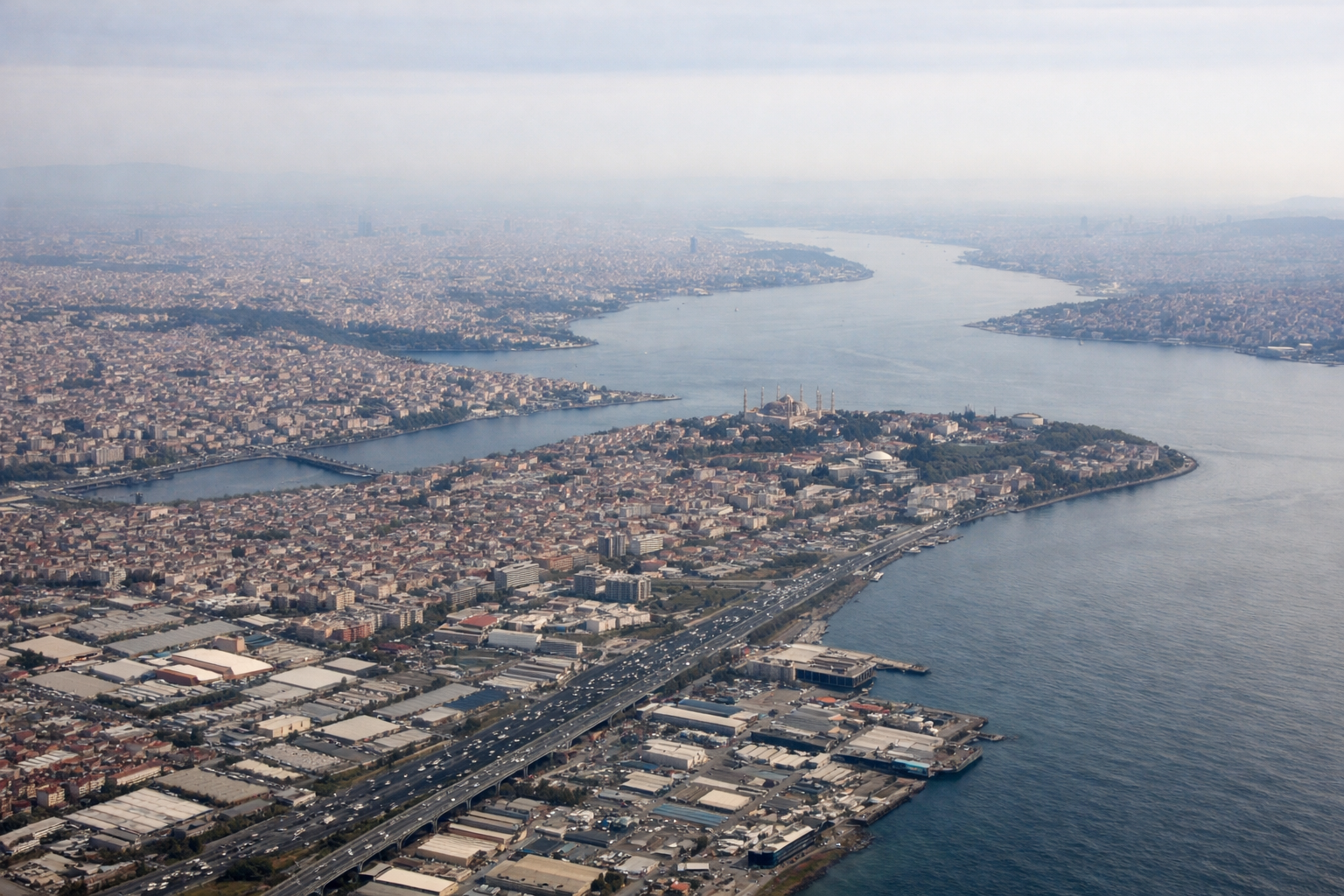
Takeoff from IST
RIGHTDeparting IST toward the north/northeast, a turn onto the eastbound track puts the Bosphorus, historic Istanbul peninsula, and the Sea of Marmara on the right side, offering one of the most recognizable urban/water landmarks in the world during initial climb.
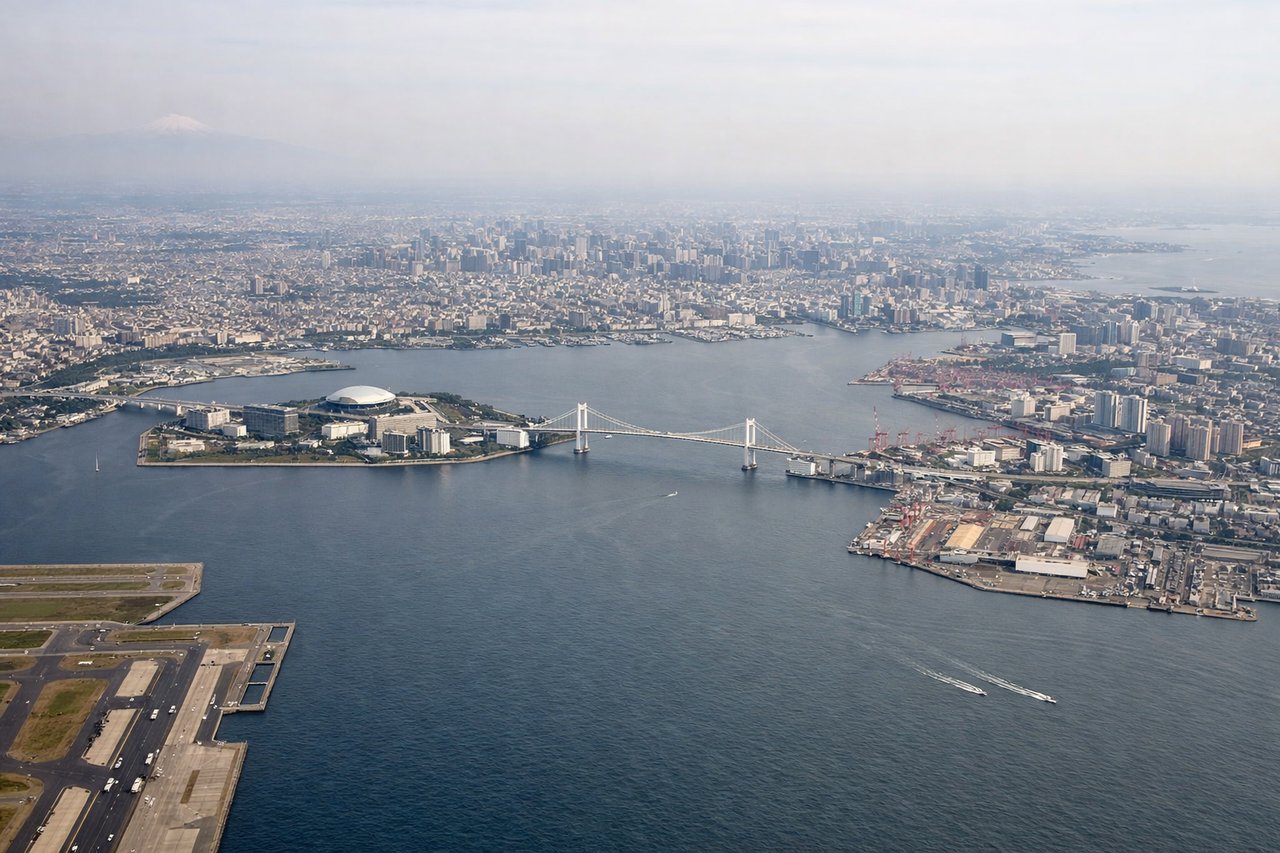
Landing at HND
RIGHTOn the common south-flow arrival into Haneda, aircraft descend from the north over Tokyo Bay before turning onto final for runway 34; this puts the western horizon—where Mount Fuji stands clear on a good day—on the right side, along with glimpses of the Tokyo skyline and bay.
Landmarks on this routeAll landmarks →
Will your flight be in sunlight?
See exactly which side of the plane gets sun and shade at your departure time.
About This Route
Which side of the plane should I sit on flying from İstanbul Airport (IST) to Tokyo International (HND)?
Sit on the Right side of the plane for the best views on flights from Istanbul to Tokyo. The right side bookends the flight with two standout landmarks—Istanbul's Bosphorus at departure and Mount Fuji with the Tokyo Bay skyline at arrival—while the left side mostly offers Black Sea coastline and Chiba's flatter suburbs, giving the right a clear edge in landmark density and drama.
What can I see during takeoff from İstanbul Airport in Istanbul?
During takeoff from İstanbul Airport (IST), sit on the Right side for the best views. Departing IST toward the north/northeast, a turn onto the eastbound track puts the Bosphorus, historic Istanbul peninsula, and the Sea of Marmara on the right side, offering one of the most recognizable urban/water landmarks in the world during initial climb. Notable sights include: Bosphorus Strait, Istanbul's historic peninsula (Hagia Sophia/Topkapi area), Sea of Marmara, Princes' Islands.
What can I see when landing at Tokyo International in Tokyo?
When landing at Tokyo International (HND), sit on the Right side for the best views. On the common south-flow arrival into Haneda, aircraft descend from the north over Tokyo Bay before turning onto final for runway 34; this puts the western horizon—where Mount Fuji stands clear on a good day—on the right side, along with glimpses of the Tokyo skyline and bay. Notable sights include: Mount Fuji, Tokyo Bay, Tokyo skyline (Odaiba/Minato area), Rainbow Bridge.
How long is the flight from Istanbul to Tokyo?
The flight from İstanbul Airport (IST) to Tokyo International (HND) takes 10h 55m.
What does the Istanbul to Tokyo flight path pass over?
The route crosses the Caucasus foothills and the Caspian Sea's northern shore, then traverses the vast steppes of Kazakhstan and southern Siberia, skirting the Altai Mountains before crossing Mongolia's Gobi Desert and northeastern China en route to the Sea of Japan.