The left side wins both ends of the flight: Tokyo Bay and a possible Fuji glimpse at departure, and the Bosphorus/Istanbul skyline at arrival, while the right side spends both phases looking at comparatively featureless coastline and open water.
Flown HND to IST? Did we get it right?
Flight Path
Tokyo to Istanbul is 5,567 miles (8,959 km), a flight of about 11 hours 55 minutes.
The great-circle track curves through the Mongolian steppe and southern Gobi Desert, across the Kazakh steppe, and near the northern shore of the Caspian Sea before descending toward the Caucasus and northeastern Turkey.
Great circle distance and headings ›


Phase by phase

Takeoff from HND
LEFTHaneda's south-wind departure sends aircraft out over Tokyo Bay before curving northwest toward the continent, and on the left side passengers get the bay, the Yokohama waterfront, and on a clear day a distant view of Mt. Fuji's silhouette as the plane banks onto its northwest heading. The right side mostly shows open bay water and the flatter Chiba/Boso coastline with less to look at.
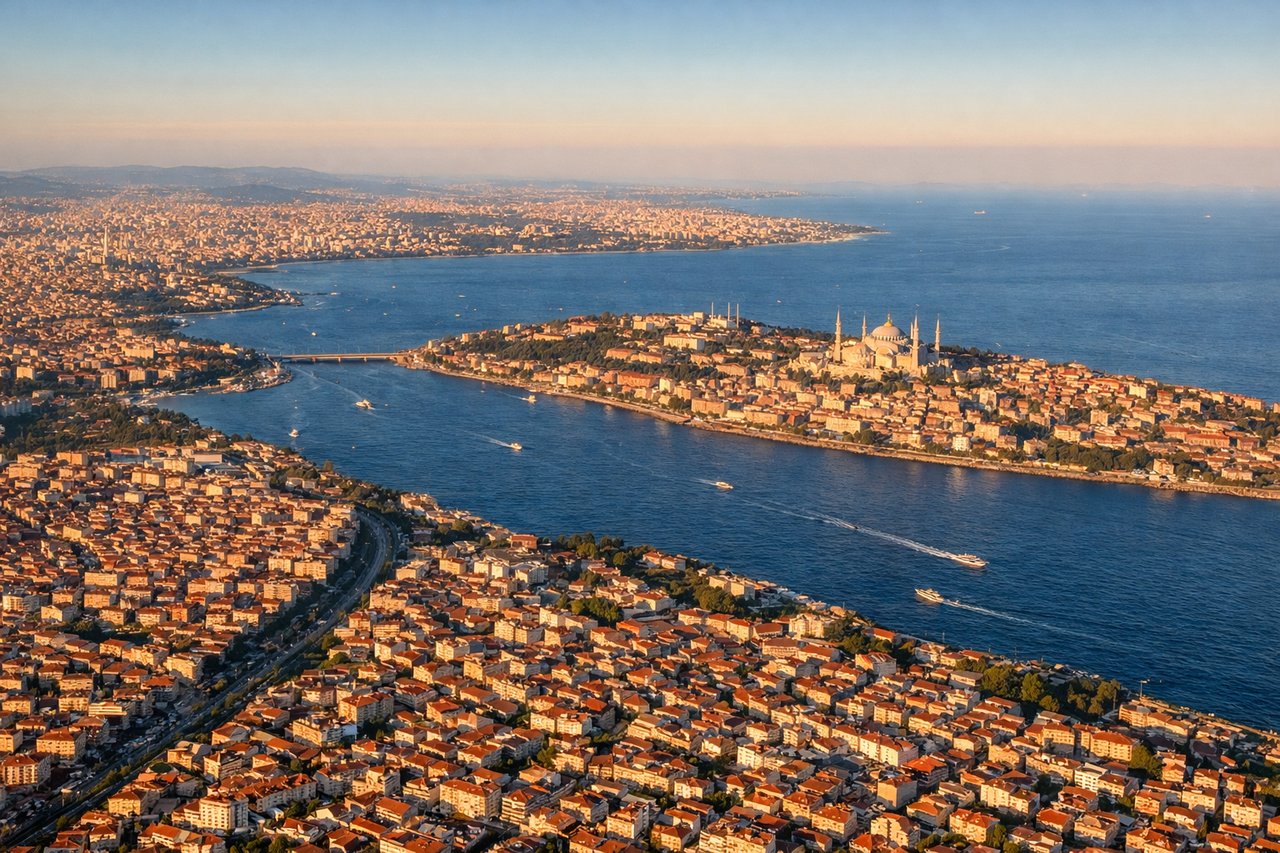
Landing at IST
LEFTArriving from the northeast across the Black Sea/Caucasus corridor, the aircraft typically swings toward Istanbul with the Bosphorus and the historic city on the left during the final descent and turn onto the runway, giving a clear look at the strait separating Europe and Asia along with the Sea of Marmara. The right side during this turn mostly faces open water or the less distinctive northern suburbs.
Will your flight be in sunlight?
Pick a date and time in the Sun Map to watch the sun move across your whole flight.
About This Route
Which side of the plane should I sit on flying from Tokyo International (HND) to İstanbul Airport (IST)?
Sit on the Left side of the plane for the best views on flights from Tokyo to Istanbul. The left side wins both ends of the flight: Tokyo Bay and a possible Fuji glimpse at departure, and the Bosphorus/Istanbul skyline at arrival, while the right side spends both phases looking at comparatively featureless coastline and open water.
What can I see during takeoff from Tokyo International in Tokyo?
During takeoff from Tokyo International (HND), sit on the Left side for the best views. Haneda's south-wind departure sends aircraft out over Tokyo Bay before curving northwest toward the continent, and on the left side passengers get the bay, the Yokohama waterfront, and on a clear day a distant view of Mt. Fuji's silhouette as the plane banks onto its northwest heading. The right side mostly shows open bay water and the flatter Chiba/Boso coastline with less to look at. Notable sights include: Tokyo Bay, Yokohama port and skyline, Mt. Fuji (distant, weather permitting), Miura Peninsula.
What can I see when landing at İstanbul Airport in Istanbul?
When landing at İstanbul Airport (IST), sit on the Left side for the best views. Arriving from the northeast across the Black Sea/Caucasus corridor, the aircraft typically swings toward Istanbul with the Bosphorus and the historic city on the left during the final descent and turn onto the runway, giving a clear look at the strait separating Europe and Asia along with the Sea of Marmara. The right side during this turn mostly faces open water or the less distinctive northern suburbs. Notable sights include: Bosphorus Strait, Istanbul historic peninsula, Sea of Marmara, Princes' Islands.
How long is the flight from Tokyo to Istanbul?
The flight from Tokyo International (HND) to İstanbul Airport (IST) takes about 11 hours 55 minutes. The shortest flight path between them is 5,567 miles (8,959 km); winds and air traffic control usually add a few percent.
What does the Tokyo to Istanbul flight path pass over?
The great-circle track curves through the Mongolian steppe and southern Gobi Desert, across the Kazakh steppe, and near the northern shore of the Caspian Sea before descending toward the Caucasus and northeastern Turkey.