Right-side seats capture the most dramatic scenery: Osaka Bay and coastal Japan during departure, then the North Sea and Scottish coastline during the long oceanic crossing, followed by the Pennine approach into Manchester. Left seats offer good landing views but miss the opening act.
Flown ITM to MAN? Did we get it right?
Flight Path
Osaka to Manchester is 5,842 miles (9,402 km), a flight of about 12 hours 15 minutes.
The flight path crosses the East China Sea, then the Korean Peninsula (weather permitting), the Yellow Sea, and continues northwest over Russia (Siberia and the Urals remain distant to the north). The aircraft then crosses the Arctic regions before descending toward the North Atlantic. Over the Atlantic, passengers may see the Scottish Hebrides and the west coast of Scotland approaching the UK. The North Sea is crossed during final descent toward Manchester. Right-side passengers enjoy the best views of the Scottish coastline and Hebridean islands as the aircraft makes its final approach from the northwest.
Great circle distance and headings ›Phase by phase
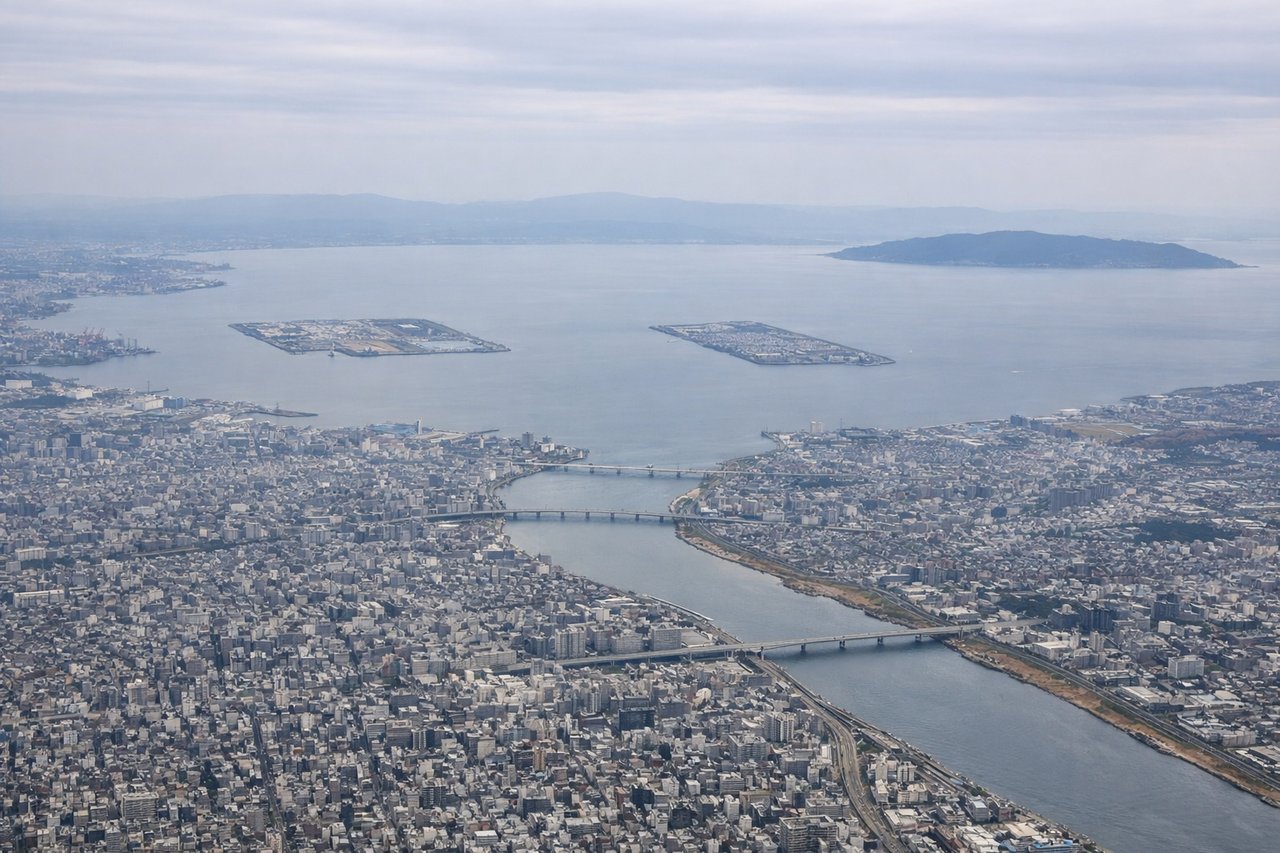
Takeoff from ITM
RIGHTRight-side seats offer views of Osaka Bay and the Kobe-Osaka urban corridor as the aircraft climbs northwestward. The bay's distinctive shape and the coastal industrial landscape provide clear visual reference points during the initial climb.
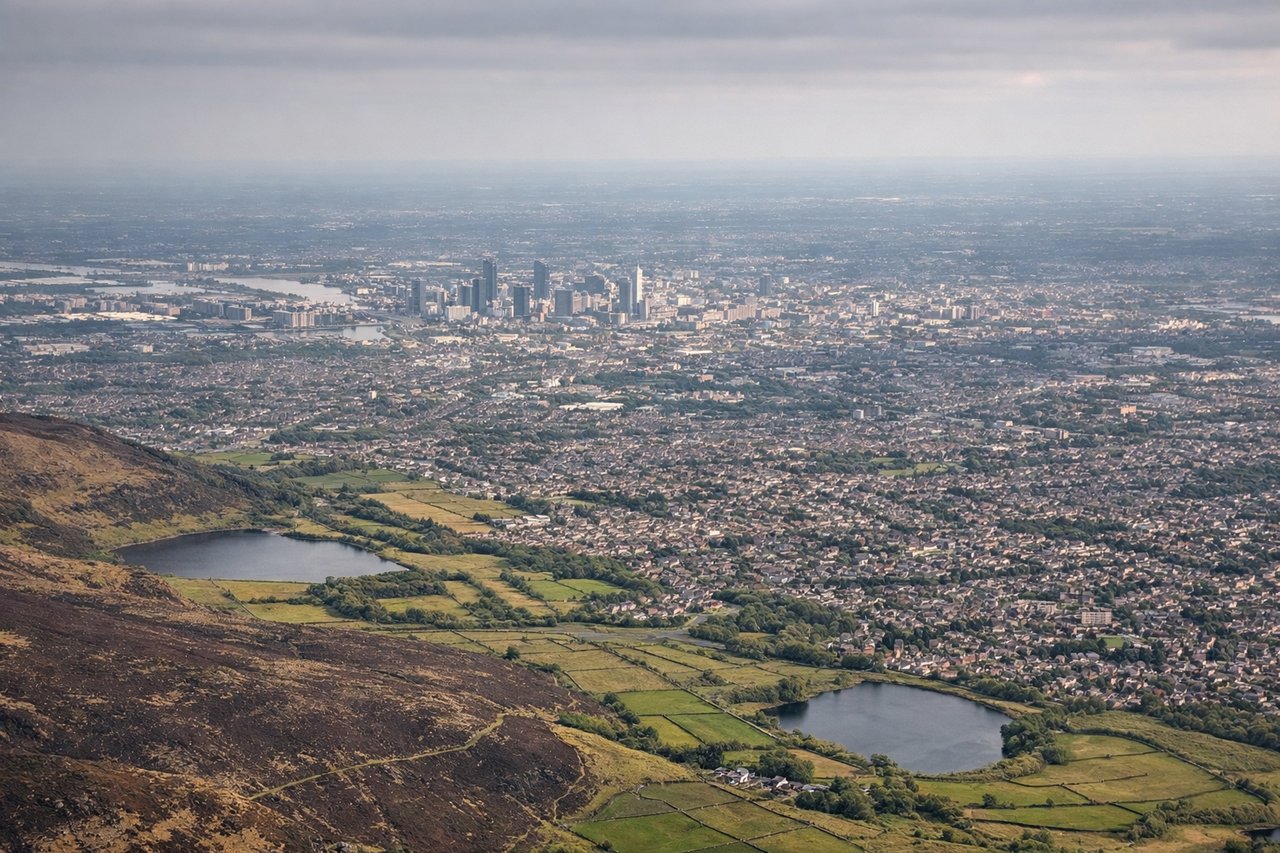
Landing at MAN
LEFTLeft-side seats provide excellent views during descent into Manchester. The aircraft approaches from the east, and left-side passengers see the Pennine Hills, the Peak District's moorlands, and the Greater Manchester conurbation spreading across the landscape before touchdown.
Will your flight be in sunlight?
Pick a date and time in the Sun Map to watch the sun move across your whole flight.
About This Route
Which side of the plane should I sit on flying from Osaka International (ITM) to Manchester (MAN)?
Sit on the Right side of the plane for the best views on flights from Osaka to Manchester. Right-side seats capture the most dramatic scenery: Osaka Bay and coastal Japan during departure, then the North Sea and Scottish coastline during the long oceanic crossing, followed by the Pennine approach into Manchester. Left seats offer good landing views but miss the opening act.
What can I see during takeoff from Osaka International in Osaka?
During takeoff from Osaka International (ITM), sit on the Right side for the best views. Right-side seats offer views of Osaka Bay and the Kobe-Osaka urban corridor as the aircraft climbs northwestward. The bay's distinctive shape and the coastal industrial landscape provide clear visual reference points during the initial climb. Notable sights include: Osaka Bay, Kobe city waterfront, Akashi Strait, Rokko Mountains (distant).
What can I see when landing at Manchester in Manchester?
When landing at Manchester (MAN), sit on the Left side for the best views. Left-side seats provide excellent views during descent into Manchester. The aircraft approaches from the east, and left-side passengers see the Pennine Hills, the Peak District's moorlands, and the Greater Manchester conurbation spreading across the landscape before touchdown. Notable sights include: Pennine Hills, Peak District moorlands, Manchester city center, Cheshire Plain.
How long is the flight from Osaka to Manchester?
The flight from Osaka International (ITM) to Manchester (MAN) takes about 12 hours 15 minutes. The shortest flight path between them is 5,842 miles (9,402 km); winds and air traffic control usually add a few percent.
What does the Osaka to Manchester flight path pass over?
The flight path crosses the East China Sea, then the Korean Peninsula (weather permitting), the Yellow Sea, and continues northwest over Russia (Siberia and the Urals remain distant to the north). The aircraft then crosses the Arctic regions before descending toward the North Atlantic. Over the Atlantic, passengers may see the Scottish Hebrides and the west coast of Scotland approaching the UK. The North Sea is crossed during final descent toward Manchester. Right-side passengers enjoy the best views of the Scottish coastline and Hebridean islands as the aircraft makes its final approach from the northwest.