While landing views favor the left, the takeoff experience from Osaka is more visually distinctive and geographically dramatic. Right-side seats capture the industrial waterfront, bay geography, and coastal features that are sharper and more photogenic than the approach corridor. For a full transpacific flight, the takeoff scenery provides the stronger opening impression.
Flight Path
The flight path crosses the Pacific Ocean with no significant visible landmarks for approximately 8 hours. Passengers may glimpse the Aleutian Islands or their southern approaches depending on routing, though these typically appear as distant, low landmasses. The vast majority of the journey is open ocean with occasional cloud formations and the curvature of the Earth becoming apparent at cruise altitude.
Great circle distance and headings ›Phase by phase
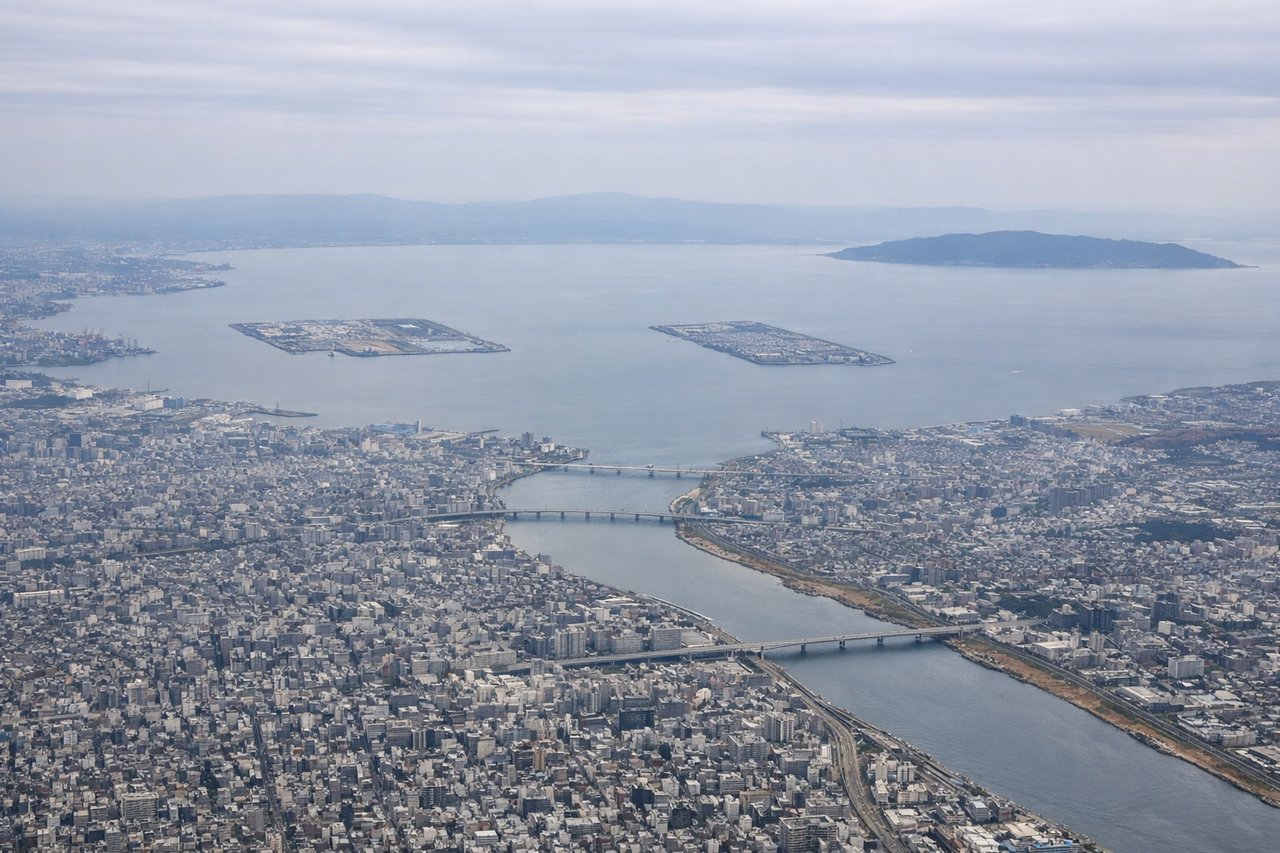
Takeoff from ITM
RIGHTRight-side seats offer views of Osaka Bay and the Kobe-Osaka urban corridor during the initial climb. The aircraft departs ITM heading generally east-southeast before turning northwest over water, so right seats capture the industrial waterfront and coastal geography immediately after liftoff.
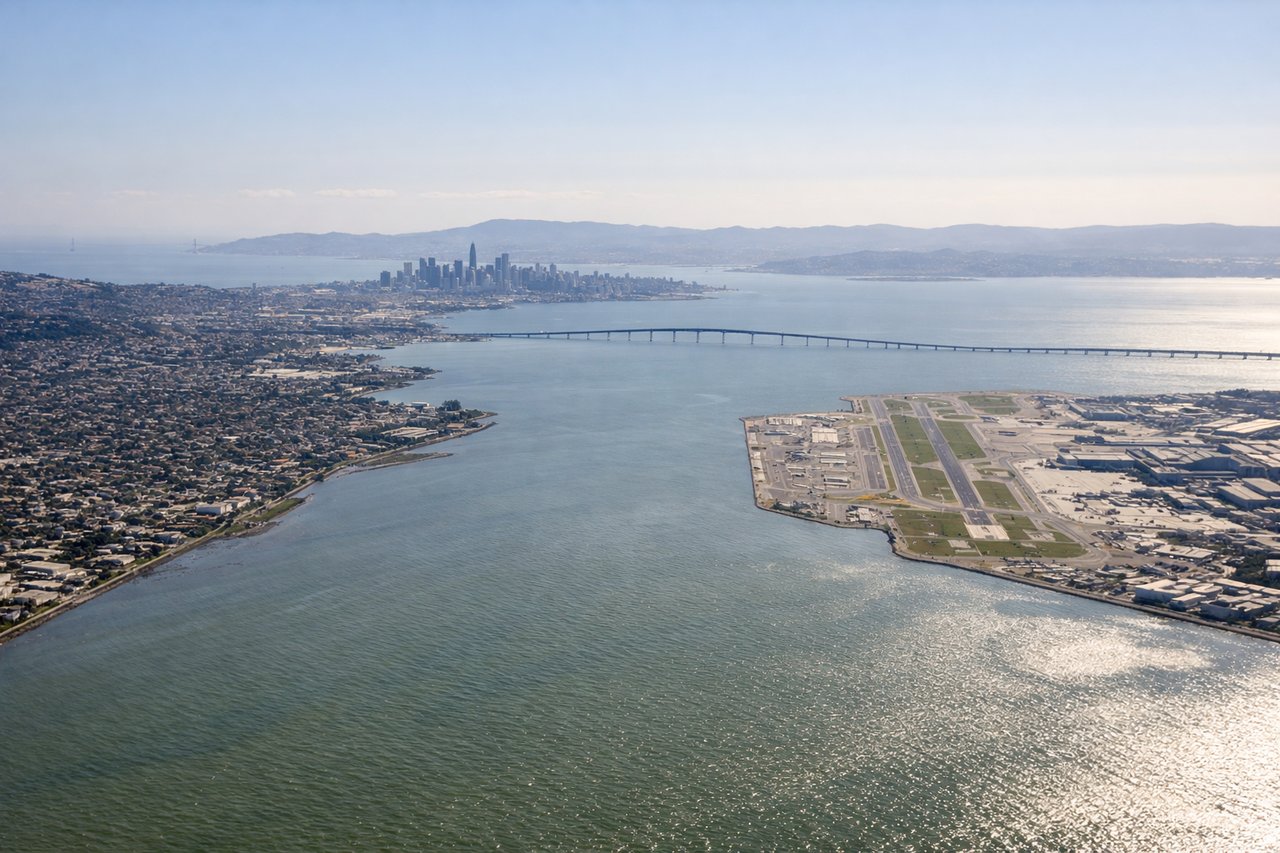
Landing at SFO
LEFTLeft-side seats provide excellent views during the approach to SFO. Aircraft typically descend over the Pacific and approach from the west, giving left-side passengers clear sightlines of the Golden Gate Bridge, the San Francisco Peninsula, and the Bay Area's distinctive geography as the plane turns toward the runway.
Landmarks on this routeAll landmarks →
Will your flight be in sunlight?
See exactly which side of the plane gets sun and shade at your departure time.
About This Route
Which side of the plane should I sit on flying from Osaka International (ITM) to San Francisco International (SFO)?
Sit on the Right side of the plane for the best views on flights from Osaka to San Francisco. While landing views favor the left, the takeoff experience from Osaka is more visually distinctive and geographically dramatic. Right-side seats capture the industrial waterfront, bay geography, and coastal features that are sharper and more photogenic than the approach corridor. For a full transpacific flight, the takeoff scenery provides the stronger opening impression.
What can I see during takeoff from Osaka International in Osaka?
During takeoff from Osaka International (ITM), sit on the Right side for the best views. Right-side seats offer views of Osaka Bay and the Kobe-Osaka urban corridor during the initial climb. The aircraft departs ITM heading generally east-southeast before turning northwest over water, so right seats capture the industrial waterfront and coastal geography immediately after liftoff. Notable sights include: Osaka Bay, Kobe skyline to the west, Akashi Strait, Awaji Island.
What can I see when landing at San Francisco International in San Francisco?
When landing at San Francisco International (SFO), sit on the Left side for the best views. Left-side seats provide excellent views during the approach to SFO. Aircraft typically descend over the Pacific and approach from the west, giving left-side passengers clear sightlines of the Golden Gate Bridge, the San Francisco Peninsula, and the Bay Area's distinctive geography as the plane turns toward the runway. Notable sights include: Golden Gate Bridge, San Francisco Bay, Marin Headlands, San Francisco Peninsula skyline.
How long is the flight from Osaka to San Francisco?
The flight from Osaka International (ITM) to San Francisco International (SFO) takes 10h 25m.
What does the Osaka to San Francisco flight path pass over?
The flight path crosses the Pacific Ocean with no significant visible landmarks for approximately 8 hours. Passengers may glimpse the Aleutian Islands or their southern approaches depending on routing, though these typically appear as distant, low landmasses. The vast majority of the journey is open ocean with occasional cloud formations and the curvature of the Earth becoming apparent at cruise altitude.