While right seats dominate the dramatic departure from Osaka, left seats provide superior views for the majority of the flight and especially the scenic final approach over the North Sea and Dutch polders. The landing sequence is more visually distinctive than the takeoff.
Flight Path
The flight path crosses the Eurasian continent heading northwest. Notable features include the Caspian Sea (visible around 5-6 hours into flight), the Caucasus Mountains to its south, the Black Sea region, and Eastern European plains. The route typically passes south of Moscow and over Poland/Germany before descending into the Netherlands. Depending on exact routing and weather, passengers may see the Ural Mountains in the early-to-mid portion of the flight, though these are often at the edge of visibility. The transition from Asian to European geography is gradual; the most dramatic shift occurs over the Caspian region where the landscape transitions from Central Asian steppes to more temperate European terrain.
Great circle distance and headings ›

Phase by phase
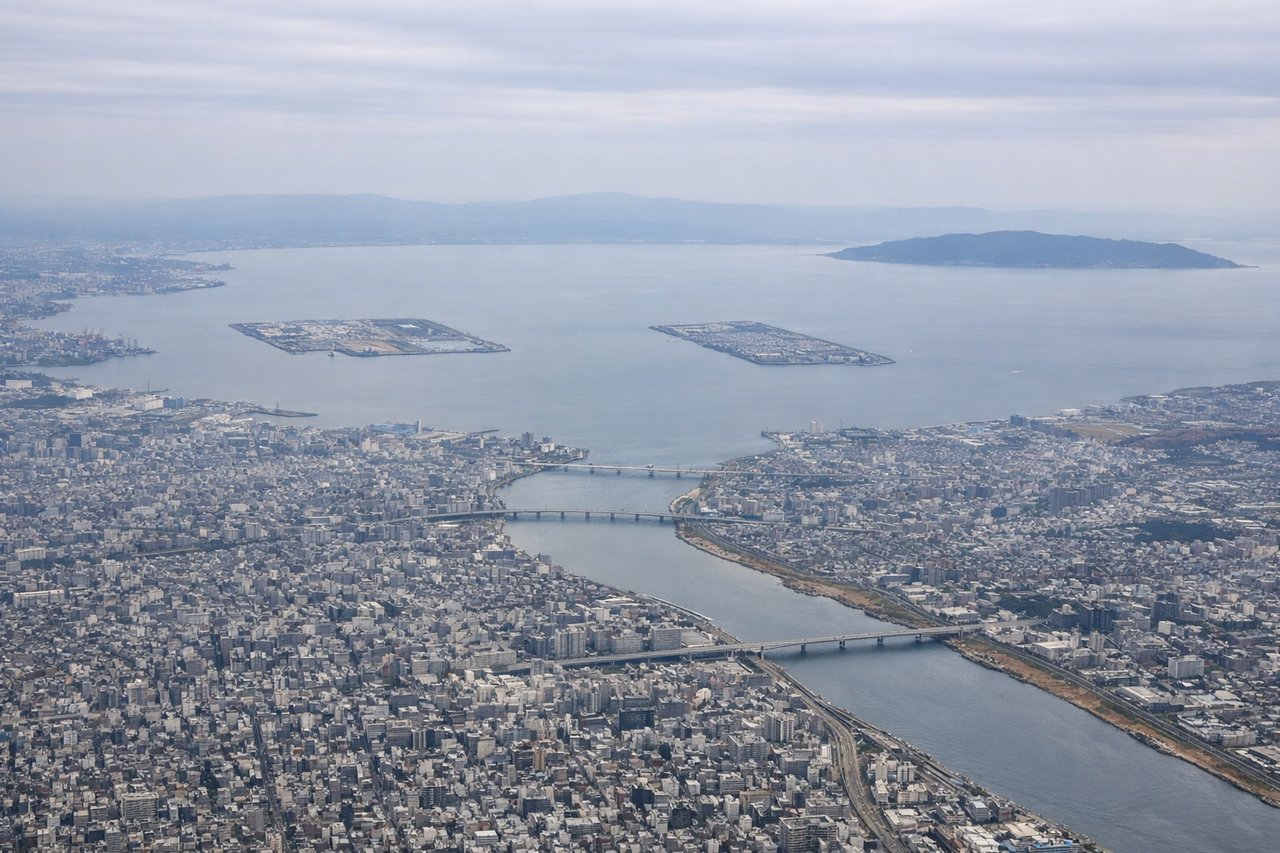
Takeoff from ITM
RIGHTRight-side seats capture the Kobe-Osaka urban sprawl and Osaka Bay immediately after departure. The aircraft climbs northwestward, so right windows show the densely populated coastal plain and industrial waterfront that dominate the initial 10-15 minutes of flight.
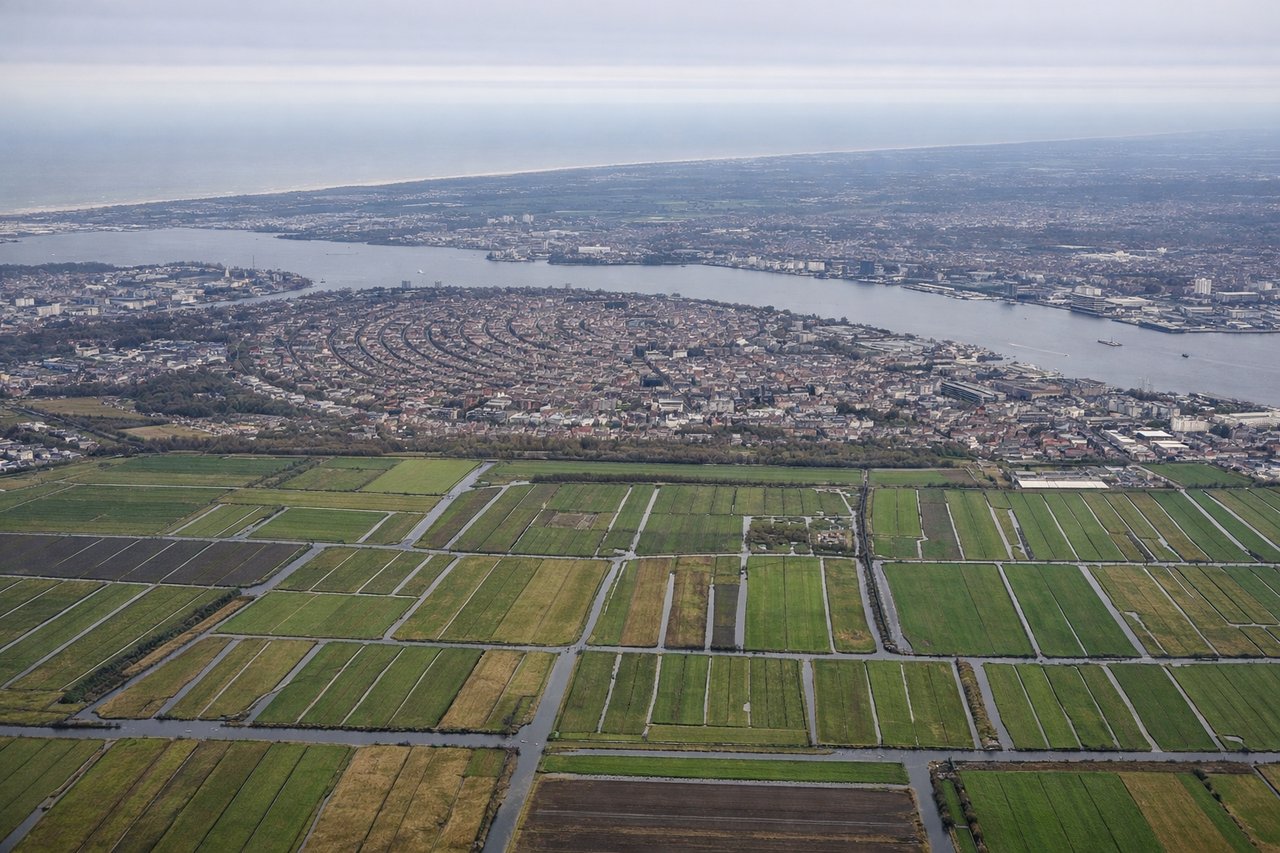
Landing at AMS
LEFTLeft-side seats offer the best views during the final approach into Amsterdam. The aircraft descends from the southeast over the Dutch polder landscape, and left windows frame the characteristic flat fields, canal networks, and the North Sea coast as you approach Schiphol.
Landmarks on this routeAll landmarks →
Will your flight be in sunlight?
See exactly which side of the plane gets sun and shade at your departure time.
About This Route
Which side of the plane should I sit on flying from Osaka International (ITM) to Schiphol (AMS)?
Sit on the Left side of the plane for the best views on flights from Osaka to Amsterdam. While right seats dominate the dramatic departure from Osaka, left seats provide superior views for the majority of the flight and especially the scenic final approach over the North Sea and Dutch polders. The landing sequence is more visually distinctive than the takeoff.
What can I see during takeoff from Osaka International in Osaka?
During takeoff from Osaka International (ITM), sit on the Right side for the best views. Right-side seats capture the Kobe-Osaka urban sprawl and Osaka Bay immediately after departure. The aircraft climbs northwestward, so right windows show the densely populated coastal plain and industrial waterfront that dominate the initial 10-15 minutes of flight. Notable sights include: Osaka Bay (dark water with port infrastructure), Kobe's linear coastal development to the southwest, Osaka city grid sprawling inland, Rokko Mountains forming the inland horizon.
What can I see when landing at Schiphol in Amsterdam?
When landing at Schiphol (AMS), sit on the Left side for the best views. Left-side seats offer the best views during the final approach into Amsterdam. The aircraft descends from the southeast over the Dutch polder landscape, and left windows frame the characteristic flat fields, canal networks, and the North Sea coast as you approach Schiphol. Notable sights include: North Sea coastline with beach and dunes, Dutch polder fields with geometric canal patterns, Ijsselmeer (large inland lake), Amsterdam city visible inland.
How long is the flight from Osaka to Amsterdam?
The flight from Osaka International (ITM) to Schiphol (AMS) takes Approximately 11.5 to 12.5 hours.
What does the Osaka to Amsterdam flight path pass over?
The flight path crosses the Eurasian continent heading northwest. Notable features include the Caspian Sea (visible around 5-6 hours into flight), the Caucasus Mountains to its south, the Black Sea region, and Eastern European plains. The route typically passes south of Moscow and over Poland/Germany before descending into the Netherlands. Depending on exact routing and weather, passengers may see the Ural Mountains in the early-to-mid portion of the flight, though these are often at the edge of visibility. The transition from Asian to European geography is gradual; the most dramatic shift occurs over the Caspian region where the landscape transitions from Central Asian steppes to more temperate European terrain.