Right side wins at both ends of the flight. During the cruise over Russia and the Sea of Japan the views are largely featureless tundra or open water regardless of side, so the departure and arrival phases are the deciding factor, and right delivers meaningfully better views at both.
Flight Path
The route tracks northeast over Germany and Poland, then across Belarus and Russia, passing south of Moscow before crossing the Ural Mountains — visible as a low, broad ridge — then continuing over the West Siberian Plain, Lake Baikal region to the south, and eventually descending over the Sea of Japan toward the Kansai coast. The Urals and the coastline of the Korean Peninsula are the most visually distinctive features at cruise altitude.
Great circle distance and headings ›

Phase by phase
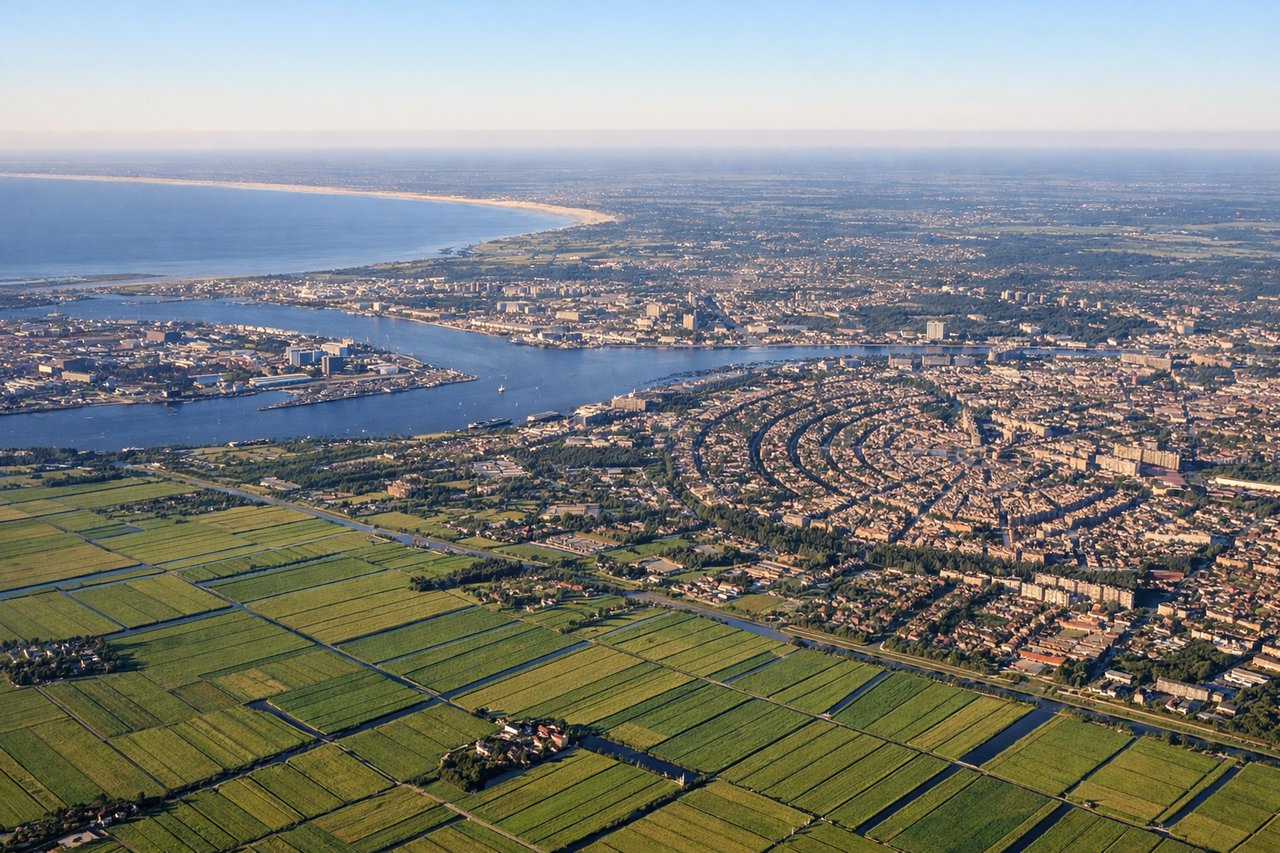
Takeoff from AMS
RIGHTSchiphol departures on runway 36C/36L head roughly northward, putting Amsterdam city center and the IJ waterway to the right. You get a clear view of the canal ring, the harbor, and the open polders stretching east. Left side faces the flat agricultural land west of the city with little of interest.
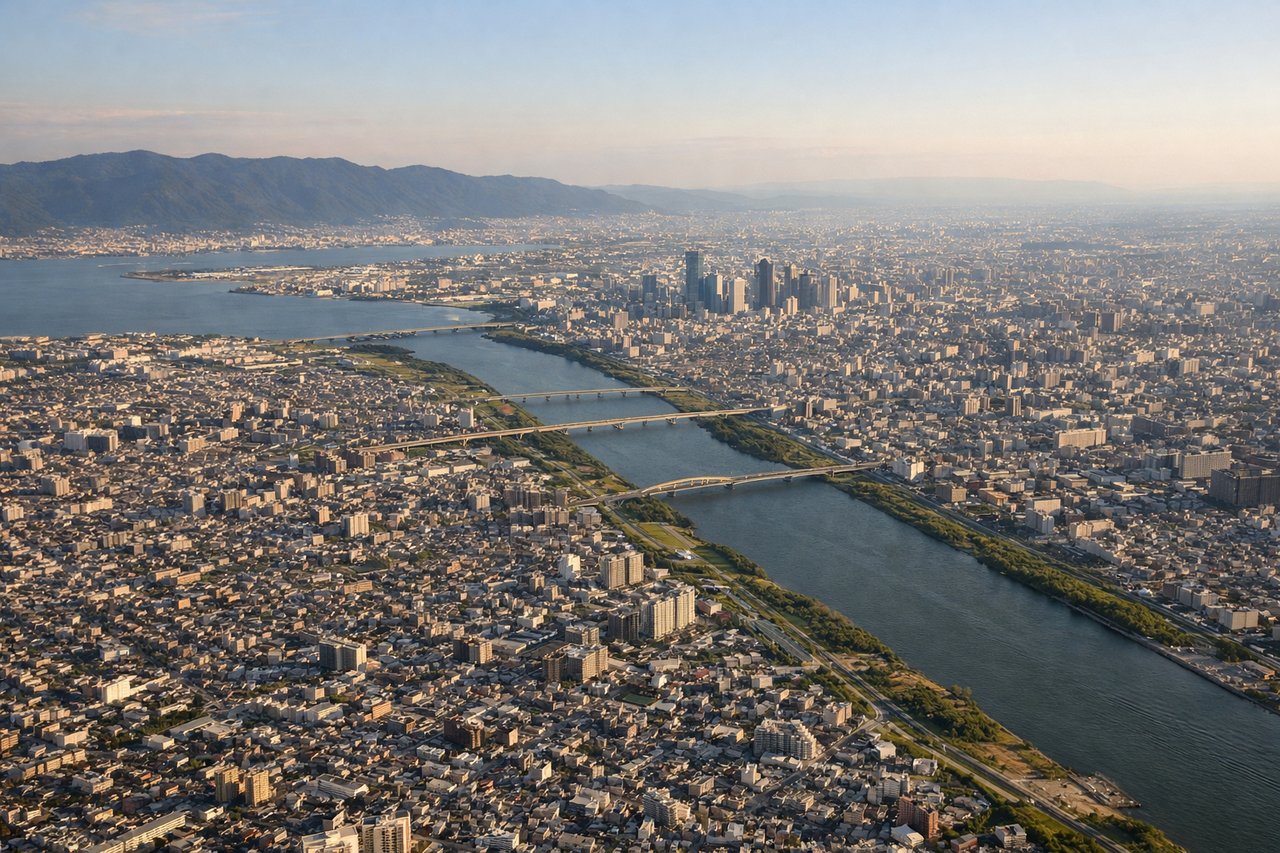
Landing at ITM
RIGHTITM runway 32L/32R approaches from the southeast over Osaka Bay, so the right side faces inland toward central Osaka, the Yodo River delta, and the urban grid of the city. Left side looks out over open Osaka Bay water with little to see on final approach.
Landmarks on this routeAll landmarks →
Will your flight be in sunlight?
See exactly which side of the plane gets sun and shade at your departure time.
About This Route
Which side of the plane should I sit on flying from Schiphol (AMS) to Osaka International (ITM)?
Sit on the Right side of the plane for the best views on flights from Amsterdam to Osaka. Right side wins at both ends of the flight. During the cruise over Russia and the Sea of Japan the views are largely featureless tundra or open water regardless of side, so the departure and arrival phases are the deciding factor, and right delivers meaningfully better views at both.
What can I see during takeoff from Schiphol in Amsterdam?
During takeoff from Schiphol (AMS), sit on the Right side for the best views. Schiphol departures on runway 36C/36L head roughly northward, putting Amsterdam city center and the IJ waterway to the right. You get a clear view of the canal ring, the harbor, and the open polders stretching east. Left side faces the flat agricultural land west of the city with little of interest. Notable sights include: Amsterdam canal ring, IJ harbor and waterway, Almere new town across the IJmeer, Flevoland polder grid.
What can I see when landing at Osaka International in Osaka?
When landing at Osaka International (ITM), sit on the Right side for the best views. ITM runway 32L/32R approaches from the southeast over Osaka Bay, so the right side faces inland toward central Osaka, the Yodo River delta, and the urban grid of the city. Left side looks out over open Osaka Bay water with little to see on final approach. Notable sights include: Osaka city center grid, Yodo River delta channels, Kobe waterfront and Port Island to the northwest, Rokko Mountains ridge behind Kobe.
How long is the flight from Amsterdam to Osaka?
The flight from Schiphol (AMS) to Osaka International (ITM) takes Approximately 11 to 12 hours.
What does the Amsterdam to Osaka flight path pass over?
The route tracks northeast over Germany and Poland, then across Belarus and Russia, passing south of Moscow before crossing the Ural Mountains — visible as a low, broad ridge — then continuing over the West Siberian Plain, Lake Baikal region to the south, and eventually descending over the Sea of Japan toward the Kansai coast. The Urals and the coastline of the Korean Peninsula are the most visually distinctive features at cruise altitude.