The left side wins overall because the SFO departure view — San Francisco skyline, Bay Bridge, and Golden Gate — is one of the most iconic urban departures in aviation. The landing advantage on the right is real but more modest. For the long transoceanic cruise, neither side has a meaningful advantage over the open North Pacific.
Flight Path
The great circle route arcs northward over the North Pacific, passing south of the Aleutian Islands chain. The midpoint is roughly over the open North Pacific Ocean near 45-50°N latitude. Passengers may see the Aleutian Islands as distant dark landmasses if the route passes close enough and visibility is good. As the flight descends toward Japan, the Japanese coastline of Honshu becomes visible, and on clear days the volcanic cone of Mount Fuji may be visible to the south if the routing passes near central Honshu.
Great circle distance and headings ›Phase by phase
Takeoff from SFO
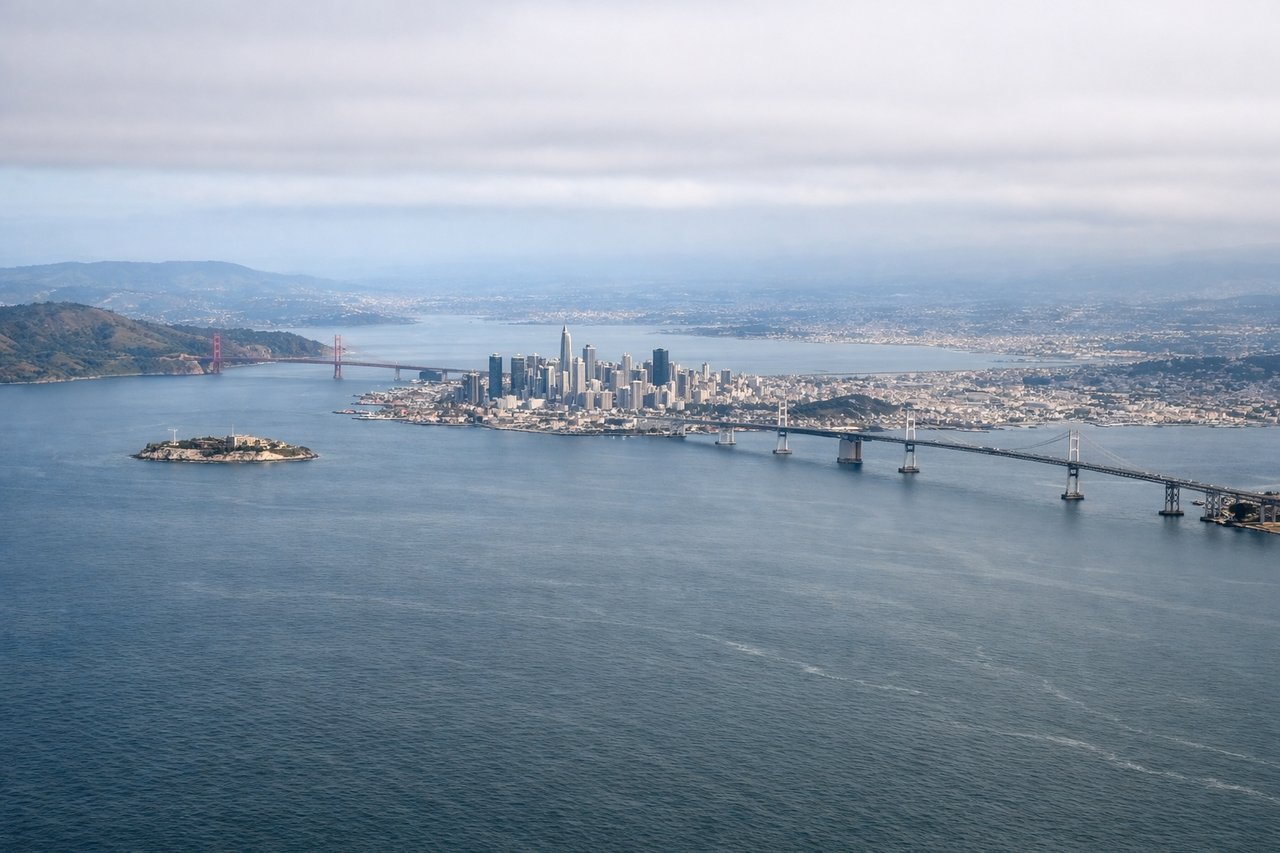
LEFTSFO's primary departure runways (28L/28R) head west over the Bay then curve northwest. A left-side seat gives you the San Francisco Peninsula, the city skyline, and the Bay Bridge as you climb out. Right side faces the East Bay hills and Oakland, which is less dramatic.
Landing at ITM
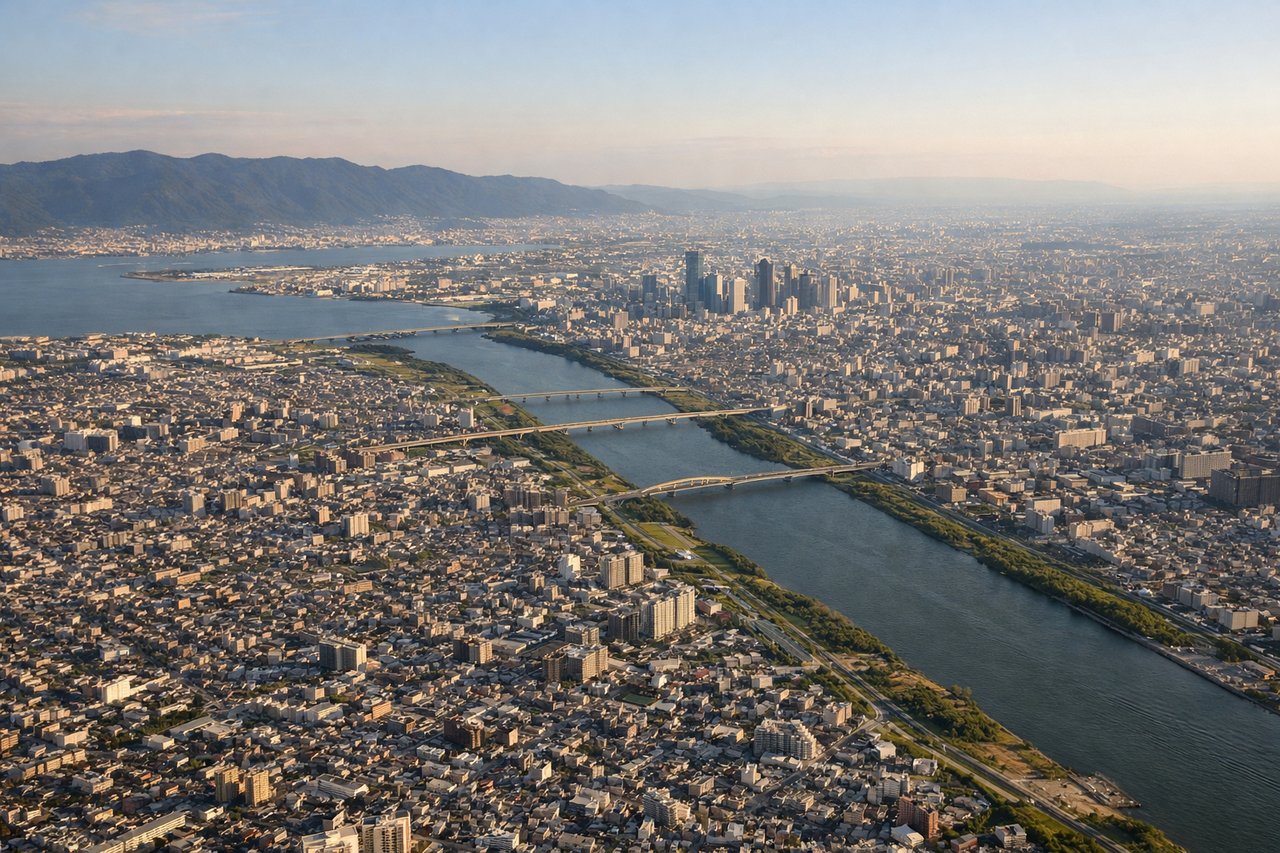
RIGHTITM's primary landing approach is from the east on runway 32L/32R, meaning the aircraft tracks over Osaka Bay before touching down. A right-side seat gives you Osaka Bay, the city of Osaka, and Kobe along the bay shore. Left side faces inland toward the Rokko Mountains.
Landmarks on this routeAll landmarks →
Will your flight be in sunlight?
See exactly which side of the plane gets sun and shade at your departure time.
About This Route
Which side of the plane should I sit on flying from San Francisco International (SFO) to Osaka International (ITM)?
Sit on the Left side of the plane for the best views on flights from San Francisco to Osaka. The left side wins overall because the SFO departure view — San Francisco skyline, Bay Bridge, and Golden Gate — is one of the most iconic urban departures in aviation. The landing advantage on the right is real but more modest. For the long transoceanic cruise, neither side has a meaningful advantage over the open North Pacific.
What can I see during takeoff from San Francisco International in San Francisco?
During takeoff from San Francisco International (SFO), sit on the Left side for the best views. SFO's primary departure runways (28L/28R) head west over the Bay then curve northwest. A left-side seat gives you the San Francisco Peninsula, the city skyline, and the Bay Bridge as you climb out. Right side faces the East Bay hills and Oakland, which is less dramatic. Notable sights include: San Francisco skyline and Financial District, Bay Bridge, Golden Gate Bridge (visible to the northwest as you climb), San Francisco Bay.
What can I see when landing at Osaka International in Osaka?
When landing at Osaka International (ITM), sit on the Right side for the best views. ITM's primary landing approach is from the east on runway 32L/32R, meaning the aircraft tracks over Osaka Bay before touching down. A right-side seat gives you Osaka Bay, the city of Osaka, and Kobe along the bay shore. Left side faces inland toward the Rokko Mountains. Notable sights include: Osaka Bay, Osaka city grid and urban sprawl, Kobe waterfront and port, Rokko Mountains (visible to the left/north as a backdrop).
How long is the flight from San Francisco to Osaka?
The flight from San Francisco International (SFO) to Osaka International (ITM) takes Approximately 11 to 12 hours.
What does the San Francisco to Osaka flight path pass over?
The great circle route arcs northward over the North Pacific, passing south of the Aleutian Islands chain. The midpoint is roughly over the open North Pacific Ocean near 45-50°N latitude. Passengers may see the Aleutian Islands as distant dark landmasses if the route passes close enough and visibility is good. As the flight descends toward Japan, the Japanese coastline of Honshu becomes visible, and on clear days the volcanic cone of Mount Fuji may be visible to the south if the routing passes near central Honshu.