Perth to Melbourne is 1,679 miles (2,701 km), a flight of about 3 hours 15 minutes.
Right-side seats offer superior views on both legs: the Swan River and Perth coastline during departure, and during cruise at altitude, right-side passengers face the interior route across South Australia and Victoria with views of the Grampians and Great Dividing Range foothills.
Flight Path
The flight path crosses the Nullarbor Plain's eastern edge and enters South Australia near the border, then progresses over the volcanic plains of western Victoria. Notable features include the Grampians National Park (visible as elevated terrain with distinctive ridges), the volcanic landscape around the Hamilton area, and the transition into the forested foothills of the Great Dividing Range as the aircraft approaches Victoria's western border. The landscape transitions from semi-arid scrubland to grassland to increasingly vegetated terrain. Port Campbell area with its limestone cliffs may be visible to the south if the flight path allows.
Great circle distance and headings ›Phase by phase
Takeoff from JAD
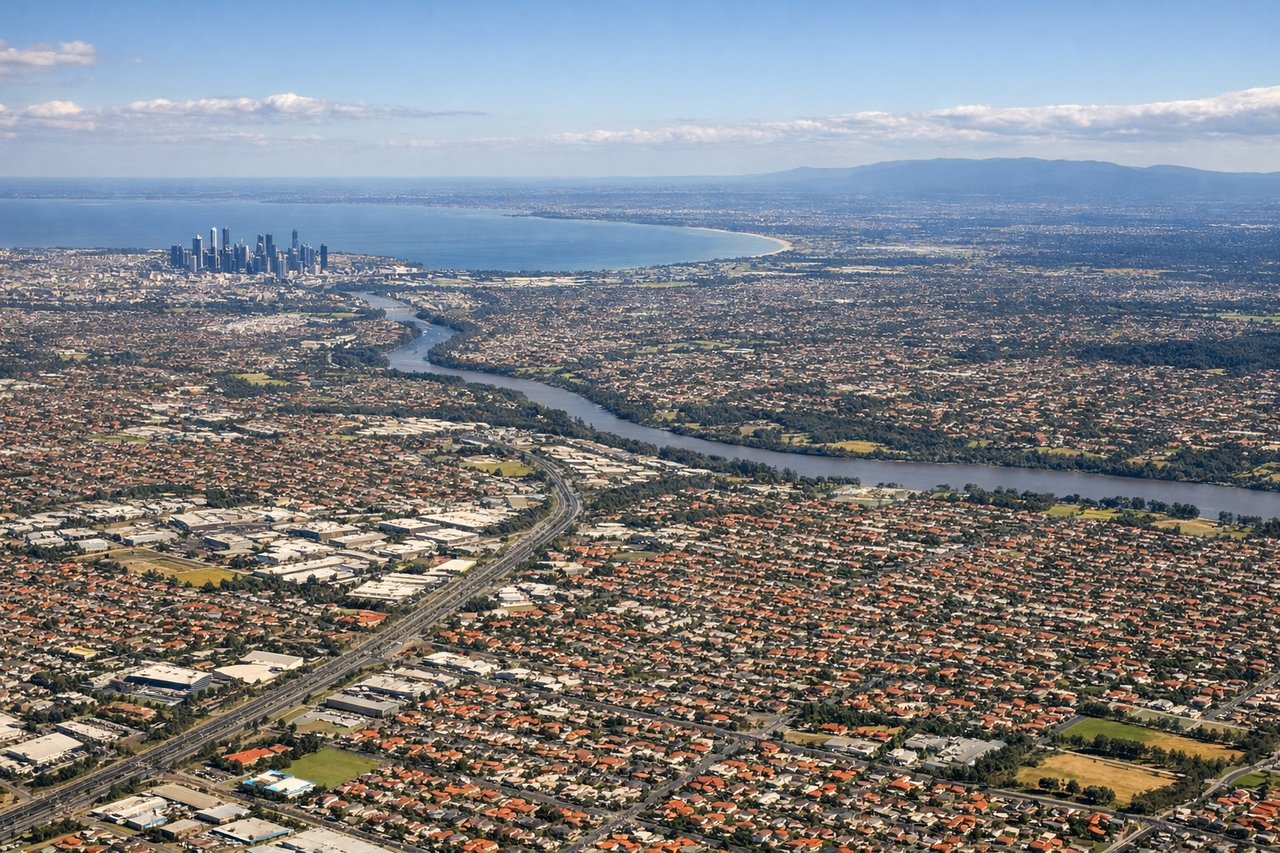
RIGHTRight-side seats capture the Swan River estuary and Perth's western suburbs during the initial climb. Jandakot typically departs to the north or northeast, and right-side views show the river's distinctive meanders and the Indian Ocean coastline receding westward.
Landing at MEL
LEFTLeft-side seats provide views of Port Phillip Bay and Melbourne's eastern suburbs during descent into Melbourne. Approaching from the west (typical for westerly runways), left-side passengers see the bay's distinctive shape and the Dandenong Ranges as a forested ridge on the horizon.
Landmarks on this routeAll landmarks →
Will your flight be in sunlight?
Pick a date and time in the Sun Map to watch the sun move across your whole flight.
About This Route
Which side of the plane should I sit on flying from Perth Jandakot (JAD) to Melbourne International (MEL)?
Sit on the Right side of the plane for the best views on flights from Perth to Melbourne. Right-side seats offer superior views on both legs: the Swan River and Perth coastline during departure, and during cruise at altitude, right-side passengers face the interior route across South Australia and Victoria with views of the Grampians and Great Dividing Range foothills.
What can I see during takeoff from Perth Jandakot in Perth?
During takeoff from Perth Jandakot (JAD), sit on the Right side for the best views. Right-side seats capture the Swan River estuary and Perth's western suburbs during the initial climb. Jandakot typically departs to the north or northeast, and right-side views show the river's distinctive meanders and the Indian Ocean coastline receding westward. Notable sights include: Swan River estuary, Perth city skyline (distant), Fremantle Harbour area, Indian Ocean coastline.
What can I see when landing at Melbourne International in Melbourne?
When landing at Melbourne International (MEL), sit on the Left side for the best views. Left-side seats provide views of Port Phillip Bay and Melbourne's eastern suburbs during descent into Melbourne. Approaching from the west (typical for westerly runways), left-side passengers see the bay's distinctive shape and the Dandenong Ranges as a forested ridge on the horizon. Notable sights include: Port Phillip Bay, Dandenong Ranges, Melbourne CBD skyline, Yarra River.
How long is the flight from Perth to Melbourne?
The flight from Perth Jandakot (JAD) to Melbourne International (MEL) takes about 3 hours 15 minutes. The shortest flight path between them is 1,679 miles (2,701 km); winds and air traffic control usually add a few percent.
What does the Perth to Melbourne flight path pass over?
The flight path crosses the Nullarbor Plain's eastern edge and enters South Australia near the border, then progresses over the volcanic plains of western Victoria. Notable features include the Grampians National Park (visible as elevated terrain with distinctive ridges), the volcanic landscape around the Hamilton area, and the transition into the forested foothills of the Great Dividing Range as the aircraft approaches Victoria's western border. The landscape transitions from semi-arid scrubland to grassland to increasingly vegetated terrain. Port Campbell area with its limestone cliffs may be visible to the south if the flight path allows.