Jackson to Seoul is 7,072 miles (11,381 km), a flight of about 14 hours 20 minutes.
The landing approach on the right side scores significantly higher due to the dramatic coastal transition, the Han River estuary, and Seoul's sprawling urban landscape set against Korean peninsula mountains. While the Jackson takeoff offers river scenery, the cruise phase over the Pacific and North America is predominantly open ocean (5+ hours), which caps the left side's score. The right side benefits from a visually rich landing sequence that outweighs the modest takeoff advantage.
Flight Path
The flight path crosses the continental United States (Great Plains, Rocky Mountains visible from altitude), then traverses the North Pacific Ocean for approximately 8 hours with no significant landmarks, passes near the Aleutian Islands region (far north, typically not visible on standard routing), and approaches the Korean peninsula from the southwest over the Yellow Sea.
Great circle distance and headings ›
.jpg?width=600)
Phase by phase
Takeoff from JAN
LEFTJackson sits on the Mississippi River with the river visible during climb-out heading northeast. The left side captures the river's meanders and the surrounding Mississippi Delta terrain as the aircraft gains altitude.
Landing at ICN
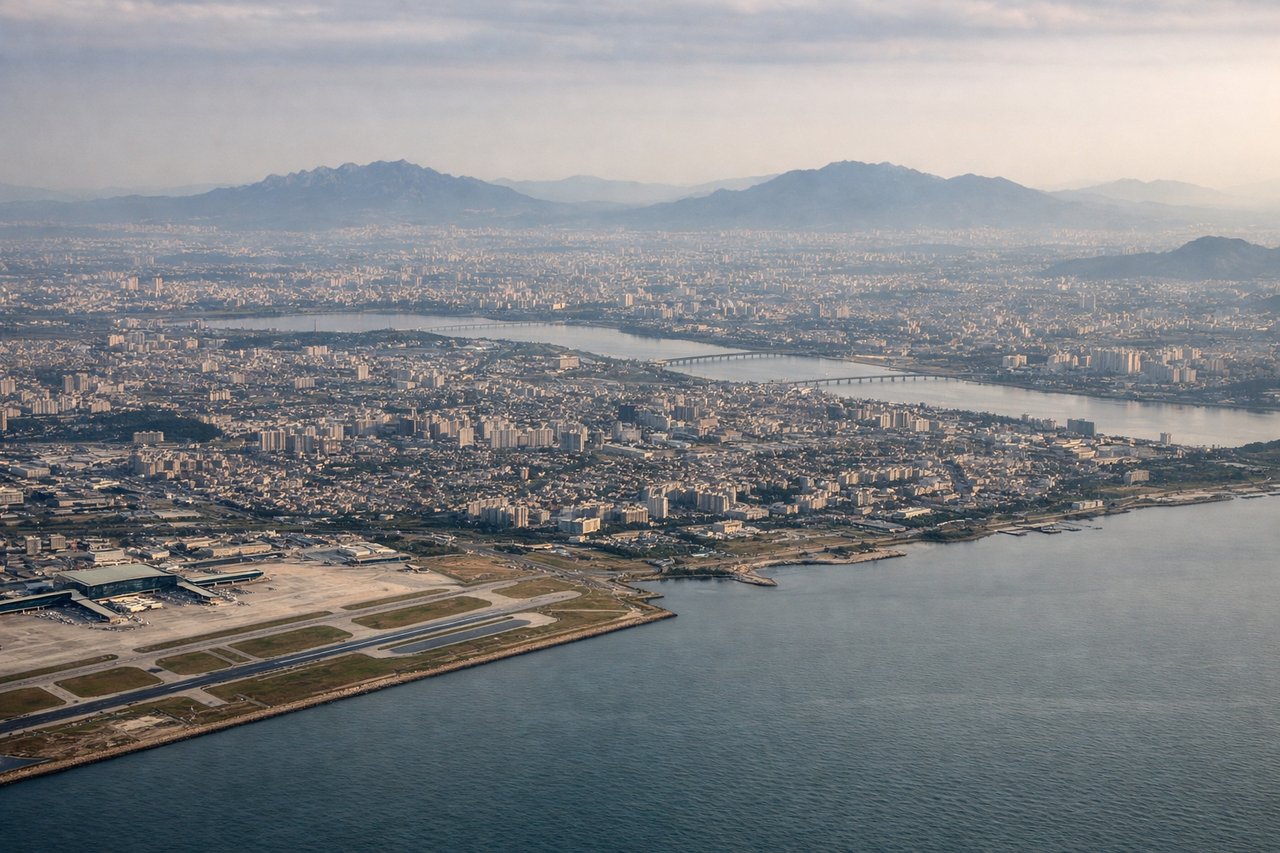
RIGHTThe approach to Incheon from the southwest crosses the Yellow Sea and reveals the Korean peninsula's western coastline, Seoul's urban sprawl, and the Han River estuary. The right side captures the dramatic transition from open water to dense urban development and mountainous terrain inland.
Landmarks on this routeAll landmarks →
Will your flight be in sunlight?
Pick a date and time in the Sun Map to watch the sun move across your whole flight.
About This Route
Which side of the plane should I sit on flying from Jackson International (JAN) to Incheon International (ICN)?
Sit on the Right side of the plane for the best views on flights from Jackson to Seoul. The landing approach on the right side scores significantly higher due to the dramatic coastal transition, the Han River estuary, and Seoul's sprawling urban landscape set against Korean peninsula mountains. While the Jackson takeoff offers river scenery, the cruise phase over the Pacific and North America is predominantly open ocean (5+ hours), which caps the left side's score. The right side benefits from a visually rich landing sequence that outweighs the modest takeoff advantage.
What can I see during takeoff from Jackson International in Jackson?
During takeoff from Jackson International (JAN), sit on the Left side for the best views. Jackson sits on the Mississippi River with the river visible during climb-out heading northeast. The left side captures the river's meanders and the surrounding Mississippi Delta terrain as the aircraft gains altitude. Notable sights include: Mississippi River, Mississippi Delta floodplain, Pearl River to the east.
What can I see when landing at Incheon International in Seoul?
When landing at Incheon International (ICN), sit on the Right side for the best views. The approach to Incheon from the southwest crosses the Yellow Sea and reveals the Korean peninsula's western coastline, Seoul's urban sprawl, and the Han River estuary. The right side captures the dramatic transition from open water to dense urban development and mountainous terrain inland. Notable sights include: Yellow Sea coastline, Han River estuary, Seoul metropolitan area sprawl, Korean peninsula mountains.
How long is the flight from Jackson to Seoul?
The flight from Jackson International (JAN) to Incheon International (ICN) takes about 14 hours 20 minutes. The shortest flight path between them is 7,072 miles (11,381 km); winds and air traffic control usually add a few percent.
What does the Jackson to Seoul flight path pass over?
The flight path crosses the continental United States (Great Plains, Rocky Mountains visible from altitude), then traverses the North Pacific Ocean for approximately 8 hours with no significant landmarks, passes near the Aleutian Islands region (far north, typically not visible on standard routing), and approaches the Korean peninsula from the southwest over the Yellow Sea.