Right side wins on balance: superior takeoff views of the Red Sea and Jeddah coast outweigh the landing advantage on the left. The flight path runs roughly northeast across featureless desert; the departure scenery is more distinctive than the arrival.
Flight Path
The flight crosses the central Saudi Arabian plateau at cruise altitude (typically 35,000-37,000 feet). The terrain below is predominantly flat to gently rolling desert with minimal visual landmarks—sparse vegetation, occasional wadi systems, and scattered low hills. No major cities or water bodies lie directly on the route. The landscape is monotonously tan and ochre with few distinguishing features visible from altitude. Visibility is typically excellent due to low humidity and minimal cloud cover, but the terrain itself offers little variation for window-seat viewers during the cruise phase.
Great circle distance and headings ›Phase by phase
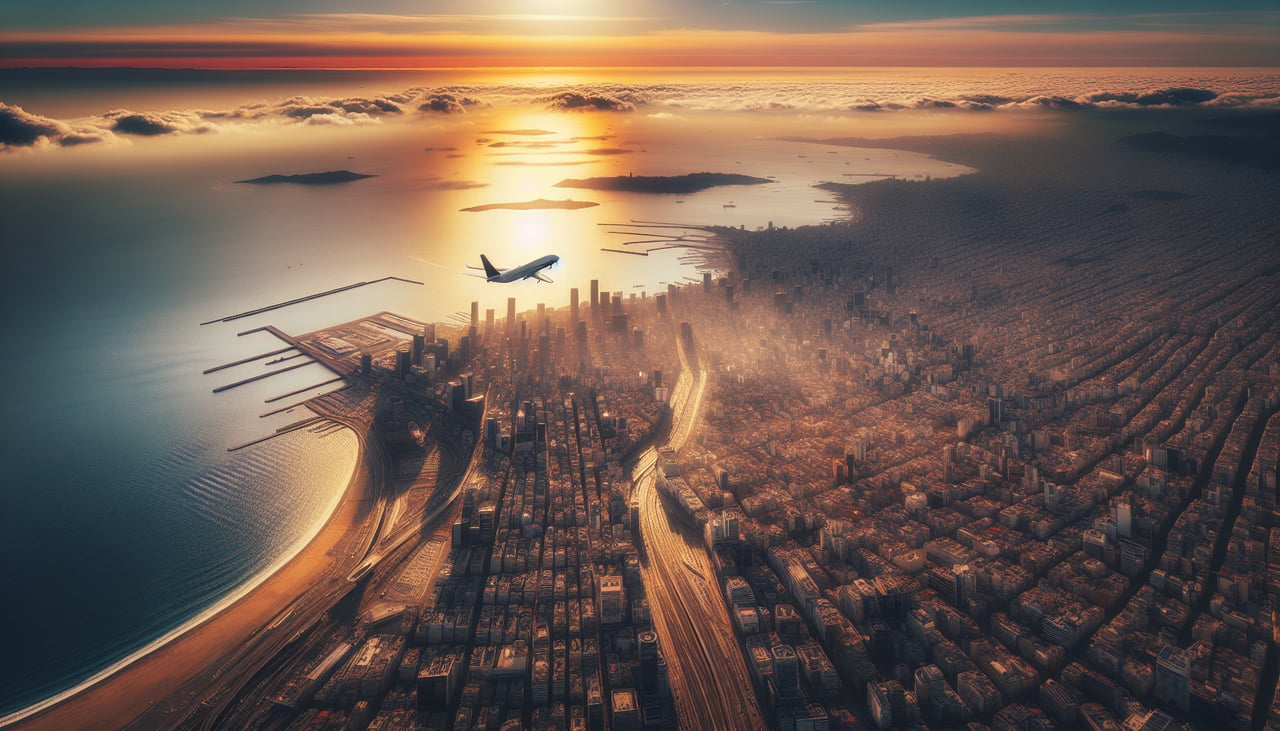
Takeoff from JED
RIGHTRight side captures the Red Sea coastline and the Jeddah waterfront during initial climb. JED typically departs runways 03L/03R or 21L/21R; northbound departures on 03 give right-seaters a clear view of the coastal strip and Jeddah's urban sprawl against the water.
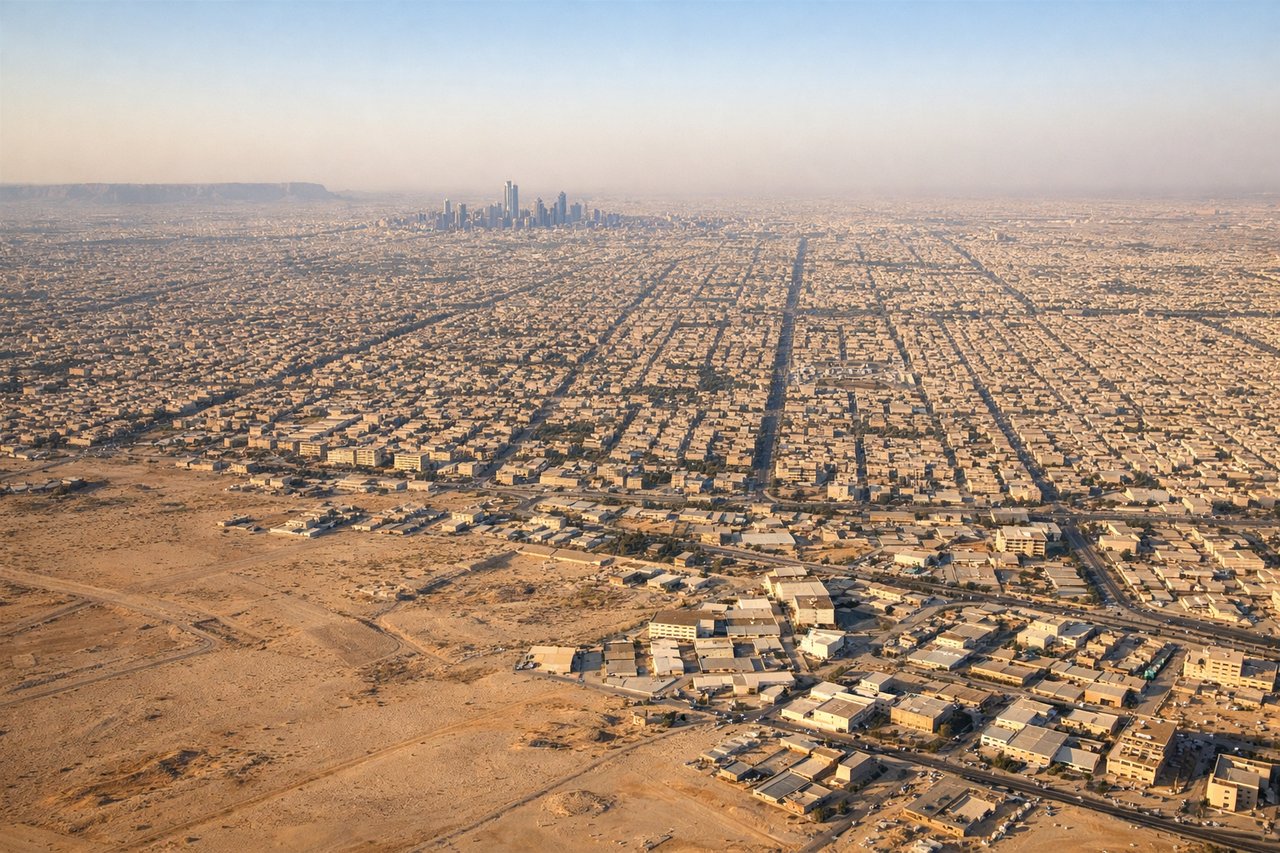
Landing at RUH
LEFTLeft side offers the best approach view into RUH. Riyadh sits on a high plateau; inbound flights typically use runways 03L/03R or 15L/15R. Southwesterly approaches give left-seaters a view of the city's eastern and central districts, the Wadi Hanifah valley system, and the surrounding desert plateau.
Will your flight be in sunlight?
See exactly which side of the plane gets sun and shade at your departure time.
About This Route
Which side of the plane should I sit on flying from King Abdulaziz International (JED) to King Khaled International (RUH)?
Sit on the Right side of the plane for the best views on flights from Jeddah to Riyadh. Right side wins on balance: superior takeoff views of the Red Sea and Jeddah coast outweigh the landing advantage on the left. The flight path runs roughly northeast across featureless desert; the departure scenery is more distinctive than the arrival.
What can I see during takeoff from King Abdulaziz International in Jeddah?
During takeoff from King Abdulaziz International (JED), sit on the Right side for the best views. Right side captures the Red Sea coastline and the Jeddah waterfront during initial climb. JED typically departs runways 03L/03R or 21L/21R; northbound departures on 03 give right-seaters a clear view of the coastal strip and Jeddah's urban sprawl against the water. Notable sights include: Red Sea (western edge), Jeddah city grid and harbor, Corniche waterfront development, coastal salt flats and lagoons south of the city.
What can I see when landing at King Khaled International in Riyadh?
When landing at King Khaled International (RUH), sit on the Left side for the best views. Left side offers the best approach view into RUH. Riyadh sits on a high plateau; inbound flights typically use runways 03L/03R or 15L/15R. Southwesterly approaches give left-seaters a view of the city's eastern and central districts, the Wadi Hanifah valley system, and the surrounding desert plateau. Notable sights include: Riyadh city center and skyline, Wadi Hanifah (dry riverbed valley cutting through the plateau), Eastern Ring Road infrastructure, surrounding desert plateau with sparse vegetation.
How long is the flight from Jeddah to Riyadh?
The flight from King Abdulaziz International (JED) to King Khaled International (RUH) takes Approximately 1 hour 15 minutes.
What does the Jeddah to Riyadh flight path pass over?
The flight crosses the central Saudi Arabian plateau at cruise altitude (typically 35,000-37,000 feet). The terrain below is predominantly flat to gently rolling desert with minimal visual landmarks—sparse vegetation, occasional wadi systems, and scattered low hills. No major cities or water bodies lie directly on the route. The landscape is monotonously tan and ochre with few distinguishing features visible from altitude. Visibility is typically excellent due to low humidity and minimal cloud cover, but the terrain itself offers little variation for window-seat viewers during the cruise phase.