While takeoff offers desert plateau views from the left, the landing approach over the Red Sea and into Jeddah's coastal setting from the right provides more visually distinctive geography. The Red Sea's color contrast and Jeddah's waterfront development are more striking than Riyadh's flat urban sprawl.
Flight Path
The flight path crosses the Nejd plateau's interior, passing over sparse desert with minimal visible landmarks. Around the midpoint, you may see occasional wadis (dry riverbeds) cutting through the plateau, but the landscape is predominantly flat, tan desert with very few distinguishing features. As you approach Jeddah, the terrain gradually transitions from high plateau (around 2,000-3,000 feet elevation) to the lower Tihamah coastal plain. The Red Sea becomes visible approximately 20-30 minutes before landing, appearing as a distinct blue line on the horizon before dominating the view during final descent.
Great circle distance and headings ›Phase by phase
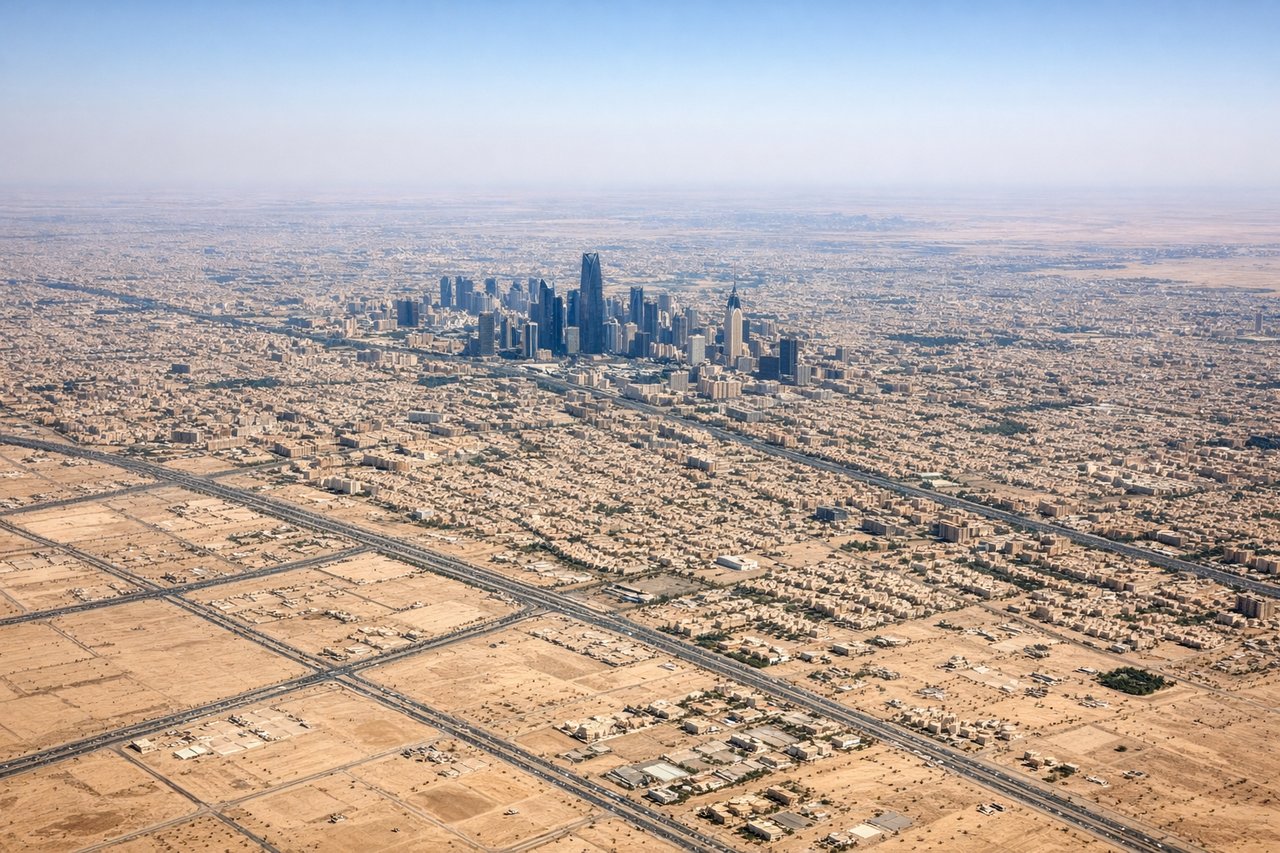
Takeoff from RUH
LEFTRUH typically departs runways 03L/03R (northeast heading) or 21L/21R (southwest heading). Left seats offer the best view of Riyadh's urban sprawl and the surrounding desert plateau during initial climb. If departing northeast, you'll see the city grid expanding below; if southwest, the vast Nejd plateau unfolds to the left.
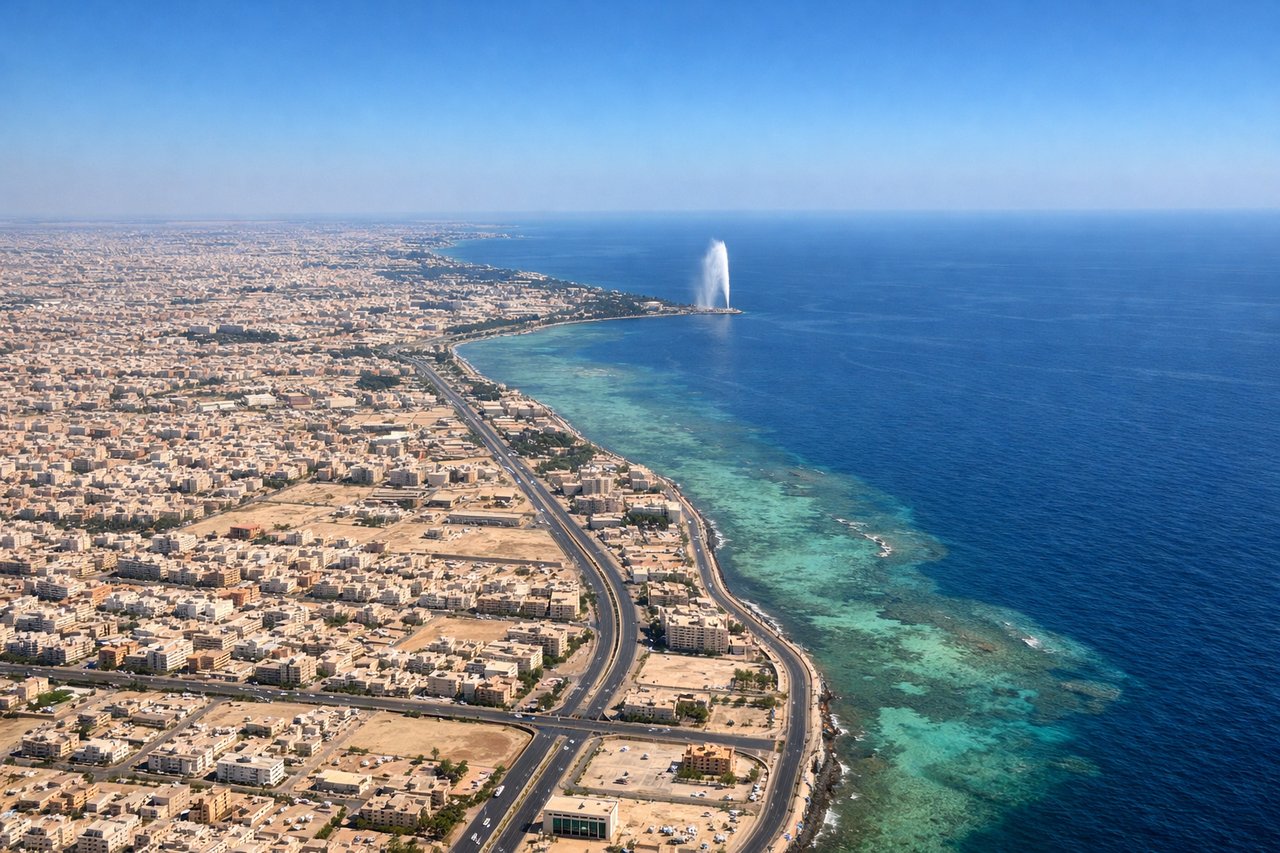
Landing at JED
RIGHTJED typically uses runways 03L/03R (northeast) or 21L/21R (southwest). Right seats provide superior views during descent into Jeddah, particularly of the Red Sea coastline, the city's waterfront development, and the Tihamah coastal plain. The approach path over the Red Sea offers dramatic water and coastal geography.
Will your flight be in sunlight?
See exactly which side of the plane gets sun and shade at your departure time.
About This Route
Which side of the plane should I sit on flying from King Khaled International (RUH) to King Abdulaziz International (JED)?
Sit on the Right side of the plane for the best views on flights from Riyadh to Jeddah. While takeoff offers desert plateau views from the left, the landing approach over the Red Sea and into Jeddah's coastal setting from the right provides more visually distinctive geography. The Red Sea's color contrast and Jeddah's waterfront development are more striking than Riyadh's flat urban sprawl.
What can I see during takeoff from King Khaled International in Riyadh?
During takeoff from King Khaled International (RUH), sit on the Left side for the best views. RUH typically departs runways 03L/03R (northeast heading) or 21L/21R (southwest heading). Left seats offer the best view of Riyadh's urban sprawl and the surrounding desert plateau during initial climb. If departing northeast, you'll see the city grid expanding below; if southwest, the vast Nejd plateau unfolds to the left. Notable sights include: Riyadh city center and grid pattern, Wadi Hanifah valley system cutting through the plateau, flat Nejd desert plateau extending to the horizon, occasional dust storms or haze layers over the Arabian Peninsula interior.
What can I see when landing at King Abdulaziz International in Jeddah?
When landing at King Abdulaziz International (JED), sit on the Right side for the best views. JED typically uses runways 03L/03R (northeast) or 21L/21R (southwest). Right seats provide superior views during descent into Jeddah, particularly of the Red Sea coastline, the city's waterfront development, and the Tihamah coastal plain. The approach path over the Red Sea offers dramatic water and coastal geography. Notable sights include: Red Sea (Bahr al-Ahmar) with its distinctive deep blue color, Jeddah's waterfront and corniche development, Tihamah coastal plain with its flat, arid terrain, occasional coral reef patterns visible in shallow Red Sea waters near the coast.
How long is the flight from Riyadh to Jeddah?
The flight from King Khaled International (RUH) to King Abdulaziz International (JED) takes Approximately 1 hour 15 minutes.
What does the Riyadh to Jeddah flight path pass over?
The flight path crosses the Nejd plateau's interior, passing over sparse desert with minimal visible landmarks. Around the midpoint, you may see occasional wadis (dry riverbeds) cutting through the plateau, but the landscape is predominantly flat, tan desert with very few distinguishing features. As you approach Jeddah, the terrain gradually transitions from high plateau (around 2,000-3,000 feet elevation) to the lower Tihamah coastal plain. The Red Sea becomes visible approximately 20-30 minutes before landing, appearing as a distinct blue line on the horizon before dominating the view during final descent.