Left side delivers the best views at both ends of this short flight — Riyadh's skyline on departure and the Dubai coastline with Palm Jumeirah and Burj Khalifa on approach. The right side sees mostly featureless desert for the majority of the route.
Flight Path
The route crosses the flat gravel and sand plains of the Rub' al Khali (Empty Quarter) northern fringe and the Ad Dahna sand corridor. Over the UAE border region, the Al Hajar Mountains of the northern UAE appear faintly to the north on the left side. The terrain is predominantly flat desert with occasional dry wadis visible from altitude. The Abu Dhabi coastal sabkha flats and the southern edge of the Persian Gulf become visible in the final 20 minutes on the left side.
Great circle distance and headings ›
.jpg?width=600)
_and_the_Dubai_skyline_(25781049892).jpg?width=600)
Phase by phase
Takeoff from RUH
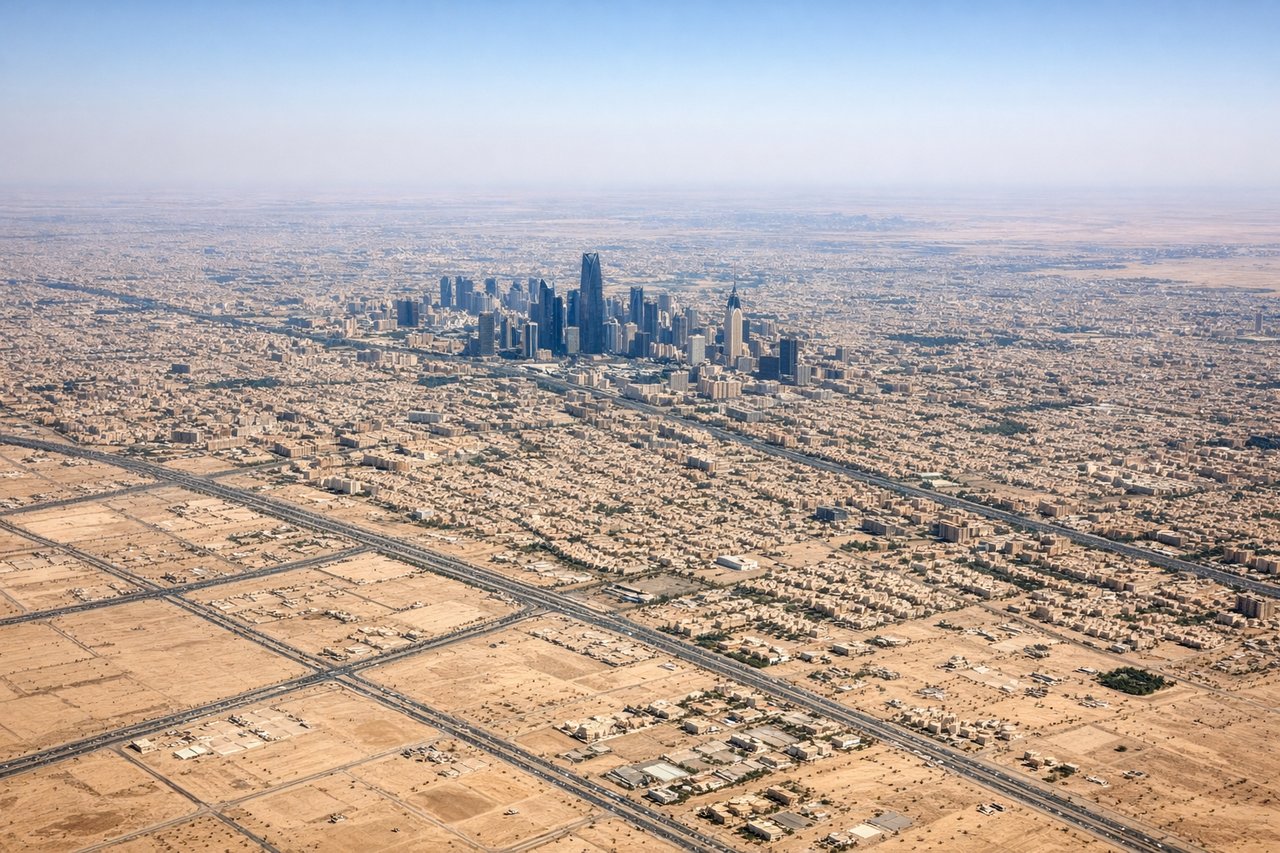
LEFTKing Khalid International's primary departure runway 33L/33R sends aircraft heading northwest before turning east toward Dubai. A left-side seat captures Riyadh's dense urban core and the distinctive skyline of the King Abdullah Financial District as the aircraft banks right onto its eastward track. The city's grid sprawl against the surrounding Najd plateau is clearly visible.
Landing at DXB
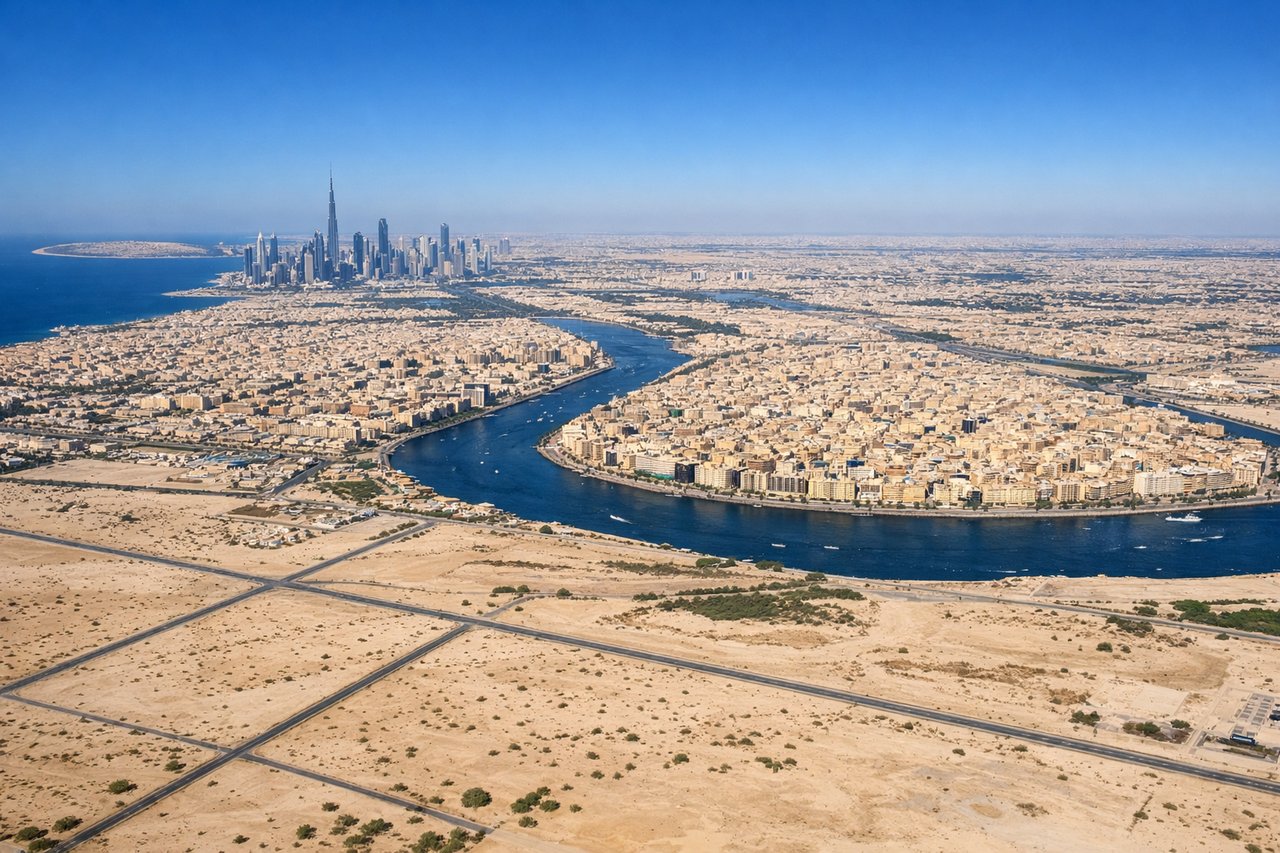
LEFTDubai International's primary arrival runways 30L/30R bring aircraft in from the southeast over the Gulf coast, meaning a left-side seat faces north toward the Dubai shoreline, the Palm Jumeirah, and the downtown skyline including the Burj Khalifa. This is one of the most visually rewarding approaches in the region, with the coastline, reclaimed islands, and city grid all laid out clearly.
Landmarks on this routeAll landmarks →
Will your flight be in sunlight?
See exactly which side of the plane gets sun and shade at your departure time.
About This Route
Which side of the plane should I sit on flying from King Khaled International (RUH) to Dubai International (DXB)?
Sit on the Left side of the plane for the best views on flights from Riyadh to Dubai. Left side delivers the best views at both ends of this short flight — Riyadh's skyline on departure and the Dubai coastline with Palm Jumeirah and Burj Khalifa on approach. The right side sees mostly featureless desert for the majority of the route.
What can I see during takeoff from King Khaled International in Riyadh?
During takeoff from King Khaled International (RUH), sit on the Left side for the best views. King Khalid International's primary departure runway 33L/33R sends aircraft heading northwest before turning east toward Dubai. A left-side seat captures Riyadh's dense urban core and the distinctive skyline of the King Abdullah Financial District as the aircraft banks right onto its eastward track. The city's grid sprawl against the surrounding Najd plateau is clearly visible. Notable sights include: Riyadh city center skyline, King Abdullah Financial District towers, Al Faisaliah Tower, the flat Najd plateau extending south.
What can I see when landing at Dubai International in Dubai?
When landing at Dubai International (DXB), sit on the Left side for the best views. Dubai International's primary arrival runways 30L/30R bring aircraft in from the southeast over the Gulf coast, meaning a left-side seat faces north toward the Dubai shoreline, the Palm Jumeirah, and the downtown skyline including the Burj Khalifa. This is one of the most visually rewarding approaches in the region, with the coastline, reclaimed islands, and city grid all laid out clearly. Notable sights include: Palm Jumeirah, Dubai Marina waterfront, Burj Khalifa and Downtown Dubai, Dubai Creek and Deira district.
How long is the flight from Riyadh to Dubai?
The flight from King Khaled International (RUH) to Dubai International (DXB) takes Approximately 1 hour 30 minutes.
What does the Riyadh to Dubai flight path pass over?
The route crosses the flat gravel and sand plains of the Rub' al Khali (Empty Quarter) northern fringe and the Ad Dahna sand corridor. Over the UAE border region, the Al Hajar Mountains of the northern UAE appear faintly to the north on the left side. The terrain is predominantly flat desert with occasional dry wadis visible from altitude. The Abu Dhabi coastal sabkha flats and the southern edge of the Persian Gulf become visible in the final 20 minutes on the left side.