The left seat wins overall because the JFK departure delivers genuinely spectacular urban geography — Manhattan, the bridges, New York Harbor — which is hard to beat. The landing view from the right is good but Baltra is a flat, scrubby island. Over the flight itself, both sides see open ocean for most of the journey, so the departure experience tips the balance to the left seat.
Flight Path
The route tracks south-southwest over the western Atlantic, crossing Cuba or the Yucatan Peninsula, then over the Pacific coast of Colombia or Ecuador. Midway you pass over the Caribbean Sea with occasional island chains visible on clear days. The Colombian and Ecuadorian Andes are visible as a dramatic north-south mountain spine as you approach the South American coast, with snow-capped peaks including Chimborazo and Cotopaxi potentially visible on the left side during descent toward the Galapagos.
Great circle distance and headings ›.jpg?width=600)


%2C_Punta_Pitt%2C_isla_de_San_Crist%C3%B3bal%2C_islas_Gal%C3%A1pagos%2C_Ecuador%2C_2015-07-24%2C_DD_11.JPG?width=600)
Phase by phase
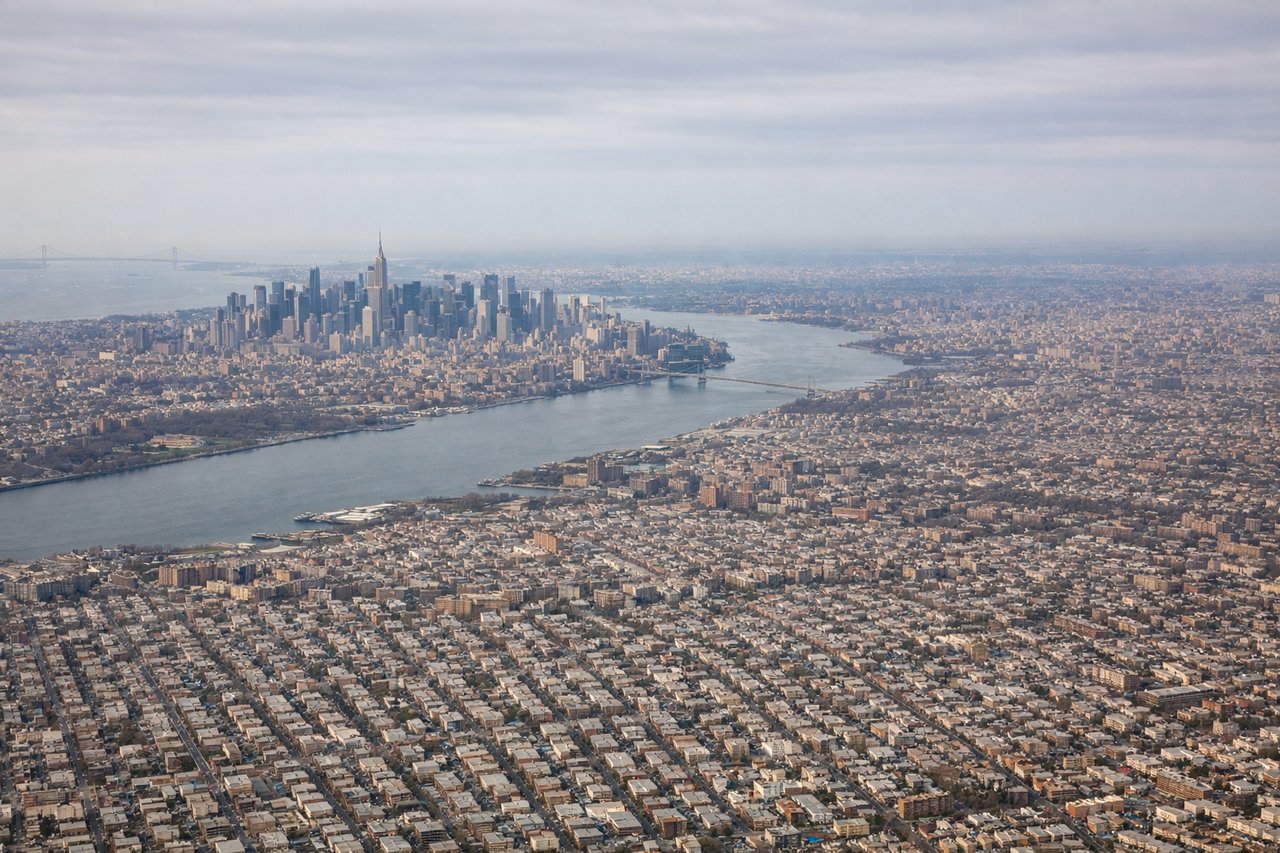
Takeoff from JFK
LEFTJFK's most common departures head east or northeast over Jamaica Bay before turning. A left/south-facing seat gives you Manhattan's skyline receding to the northwest, the Verrazano-Narrows Bridge, and the full sweep of Lower New York Bay. Right seats look mostly over Long Island suburbs.
Landing at GPS
RIGHTSeymour Island (Baltra) sits just north of Santa Cruz. Aircraft typically approach from the east or southeast and land on runway 18 heading south, or from the north heading south. A right/west-facing seat gives you Santa Cruz Island's volcanic highlands and the channel between Baltra and Santa Cruz. Left seats look out over open Pacific.
Landmarks on this routeAll landmarks →
Will your flight be in sunlight?
See exactly which side of the plane gets sun and shade at your departure time.
About This Route
Which side of the plane should I sit on flying from John F Kennedy International (JFK) to Seymour (GPS)?
Sit on the Left side of the plane for the best views on flights from New York to Galapagos. The left seat wins overall because the JFK departure delivers genuinely spectacular urban geography — Manhattan, the bridges, New York Harbor — which is hard to beat. The landing view from the right is good but Baltra is a flat, scrubby island. Over the flight itself, both sides see open ocean for most of the journey, so the departure experience tips the balance to the left seat.
What can I see during takeoff from John F Kennedy International in New York?
During takeoff from John F Kennedy International (JFK), sit on the Left side for the best views. JFK's most common departures head east or northeast over Jamaica Bay before turning. A left/south-facing seat gives you Manhattan's skyline receding to the northwest, the Verrazano-Narrows Bridge, and the full sweep of Lower New York Bay. Right seats look mostly over Long Island suburbs. Notable sights include: Manhattan skyline to the northwest, Verrazano-Narrows Bridge, Jamaica Bay wetlands directly below, Lower New York Bay.
What can I see when landing at Seymour in Galapagos?
When landing at Seymour (GPS), sit on the Right side for the best views. Seymour Island (Baltra) sits just north of Santa Cruz. Aircraft typically approach from the east or southeast and land on runway 18 heading south, or from the north heading south. A right/west-facing seat gives you Santa Cruz Island's volcanic highlands and the channel between Baltra and Santa Cruz. Left seats look out over open Pacific. Notable sights include: Santa Cruz Island highlands, Itabaca Channel between Baltra and Santa Cruz, North Seymour Island, volcanic lava fields of Baltra.
How long is the flight from New York to Galapagos?
The flight from John F Kennedy International (JFK) to Seymour (GPS) takes Approximately 7.5 to 8.5 hours nonstop (most routings connect via Guayaquil or Miami, adding 2-4 hours).
What does the New York to Galapagos flight path pass over?
The route tracks south-southwest over the western Atlantic, crossing Cuba or the Yucatan Peninsula, then over the Pacific coast of Colombia or Ecuador. Midway you pass over the Caribbean Sea with occasional island chains visible on clear days. The Colombian and Ecuadorian Andes are visible as a dramatic north-south mountain spine as you approach the South American coast, with snow-capped peaks including Chimborazo and Cotopaxi potentially visible on the left side during descent toward the Galapagos.