While the takeoff offers unique volcanic island scenery, the landing approach into JFK provides more dramatic and recognizable urban and coastal landmarks visible from a passenger window. The Hudson River, Manhattan skyline, and Jamaica Bay approach are iconic and visually striking.
Flight Path
The flight path crosses the Caribbean Sea and then the Atlantic Ocean. Notable features along the route include the Yucatan Peninsula (visible on westbound departure from Galápagos), the Gulf of Mexico, the southeastern United States coastline (Florida, Georgia, Carolinas), and the Atlantic seaboard approaching New York. Clear-day flights may offer views of the Appalachian Mountains' ridgelines as the aircraft descends toward the northeastern corridor.
Great circle distance and headings ›


.jpg?width=600)
Phase by phase
Takeoff from GPS
RIGHTRight-side seats offer views of the Galápagos archipelago as the aircraft climbs northwestward. You'll see the volcanic islands and surrounding Pacific waters receding beneath the aircraft during the initial climb-out phase.
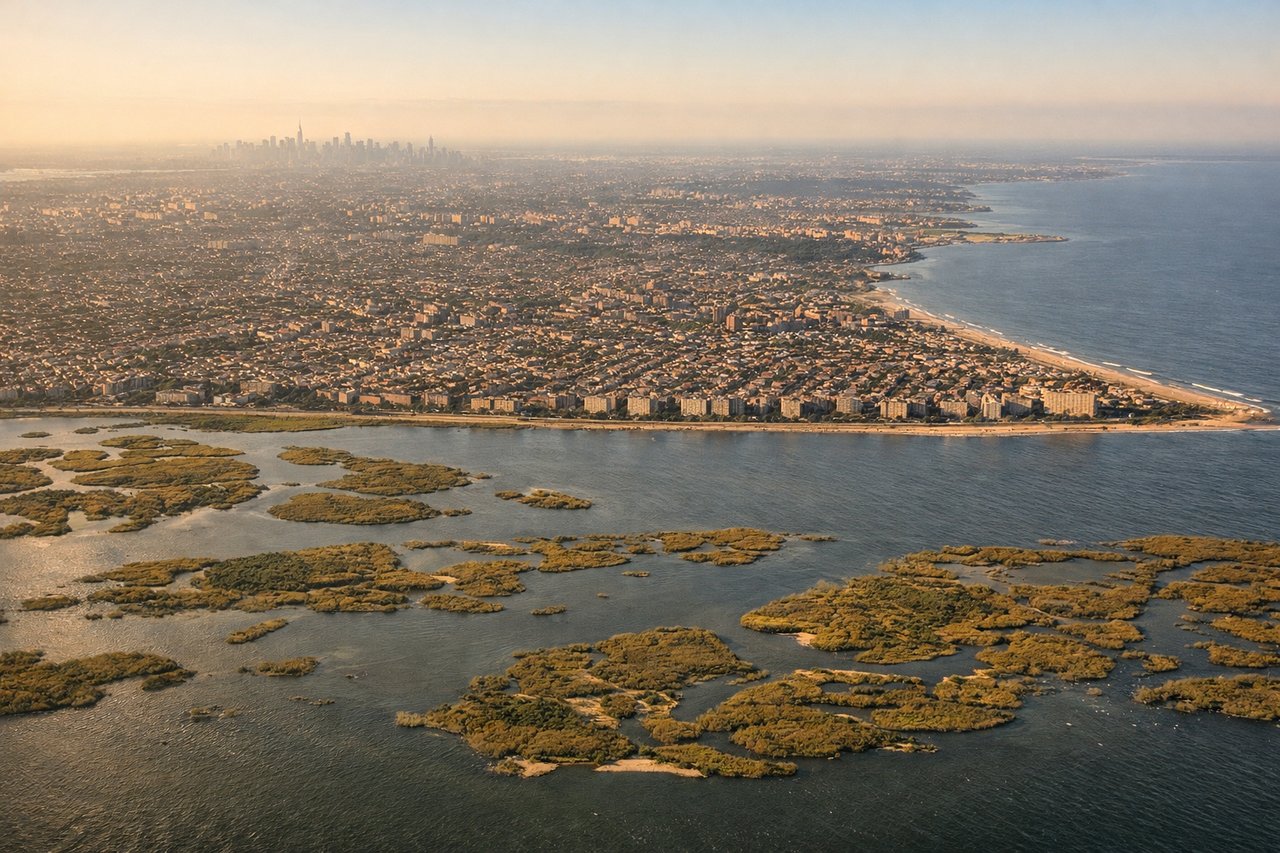
Landing at JFK
LEFTLeft-side seats provide excellent views during the descent into JFK. You'll see the Hudson River, Manhattan's skyline, and the approach over Jamaica Bay and the Atlantic coast as the aircraft descends on its typical westerly approach.
Landmarks on this routeAll landmarks →
Will your flight be in sunlight?
See exactly which side of the plane gets sun and shade at your departure time.
About This Route
Which side of the plane should I sit on flying from Seymour (GPS) to John F Kennedy International (JFK)?
Sit on the Left side of the plane for the best views on flights from Galapagos to New York. While the takeoff offers unique volcanic island scenery, the landing approach into JFK provides more dramatic and recognizable urban and coastal landmarks visible from a passenger window. The Hudson River, Manhattan skyline, and Jamaica Bay approach are iconic and visually striking.
What can I see during takeoff from Seymour in Galapagos?
During takeoff from Seymour (GPS), sit on the Right side for the best views. Right-side seats offer views of the Galápagos archipelago as the aircraft climbs northwestward. You'll see the volcanic islands and surrounding Pacific waters receding beneath the aircraft during the initial climb-out phase. Notable sights include: Isabela Island (distinctive seahorse shape), Fernandina Island, Academy Bay, Pacific Ocean.
What can I see when landing at John F Kennedy International in New York?
When landing at John F Kennedy International (JFK), sit on the Left side for the best views. Left-side seats provide excellent views during the descent into JFK. You'll see the Hudson River, Manhattan's skyline, and the approach over Jamaica Bay and the Atlantic coast as the aircraft descends on its typical westerly approach. Notable sights include: Manhattan skyline, Hudson River, Jamaica Bay, Atlantic coastline.
How long is the flight from Galapagos to New York?
The flight from Seymour (GPS) to John F Kennedy International (JFK) takes Approximately 5 hours 15 minutes.
What does the Galapagos to New York flight path pass over?
The flight path crosses the Caribbean Sea and then the Atlantic Ocean. Notable features along the route include the Yucatan Peninsula (visible on westbound departure from Galápagos), the Gulf of Mexico, the southeastern United States coastline (Florida, Georgia, Carolinas), and the Atlantic seaboard approaching New York. Clear-day flights may offer views of the Appalachian Mountains' ridgelines as the aircraft descends toward the northeastern corridor.