New York to Manila is 8,510 miles (13,696 km), a flight of about 15 hours 55 minutes.
The left side bookends the flight with two strong visual anchors — the New York skyline on departure and Manila Bay with its peninsula on arrival — and during the long cruise phase it faces the higher-latitude landmass side of the great-circle route (Canada, Alaska, Kamchatka), while the right side spends most of the flight over open ocean with little to distinguish it.
Flight Path
The great-circle route runs northwest over Hudson Bay and northern Canada, across Alaska and the Bering Sea, past the volcanic Kamchatka Peninsula, down along Japan's Pacific coast, over the East China Sea near Taiwan, and through the Luzon Strait before descending into the Philippines.
Great circle distance and headings ›.jpg?width=600)
.jpeg?width=600)


Phase by phase
Takeoff from JFK
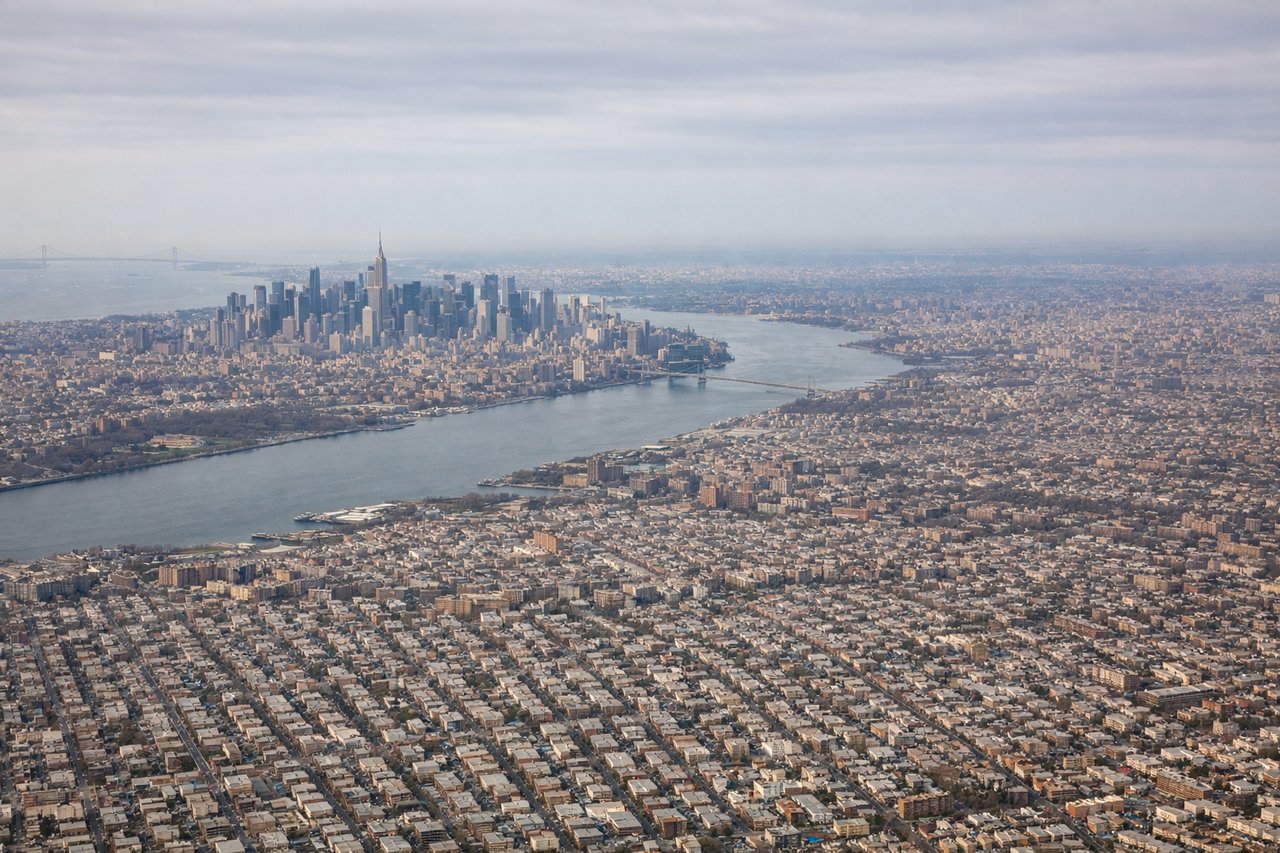
LEFTDepartures from JFK on runway 31L climb out to the northwest, and the initial left turn puts Jamaica Bay, the Rockaway Peninsula, and the Manhattan skyline on the left side of the aircraft. The right side mostly faces Long Island and open Atlantic water, which is far less distinctive.
Landing at MNL
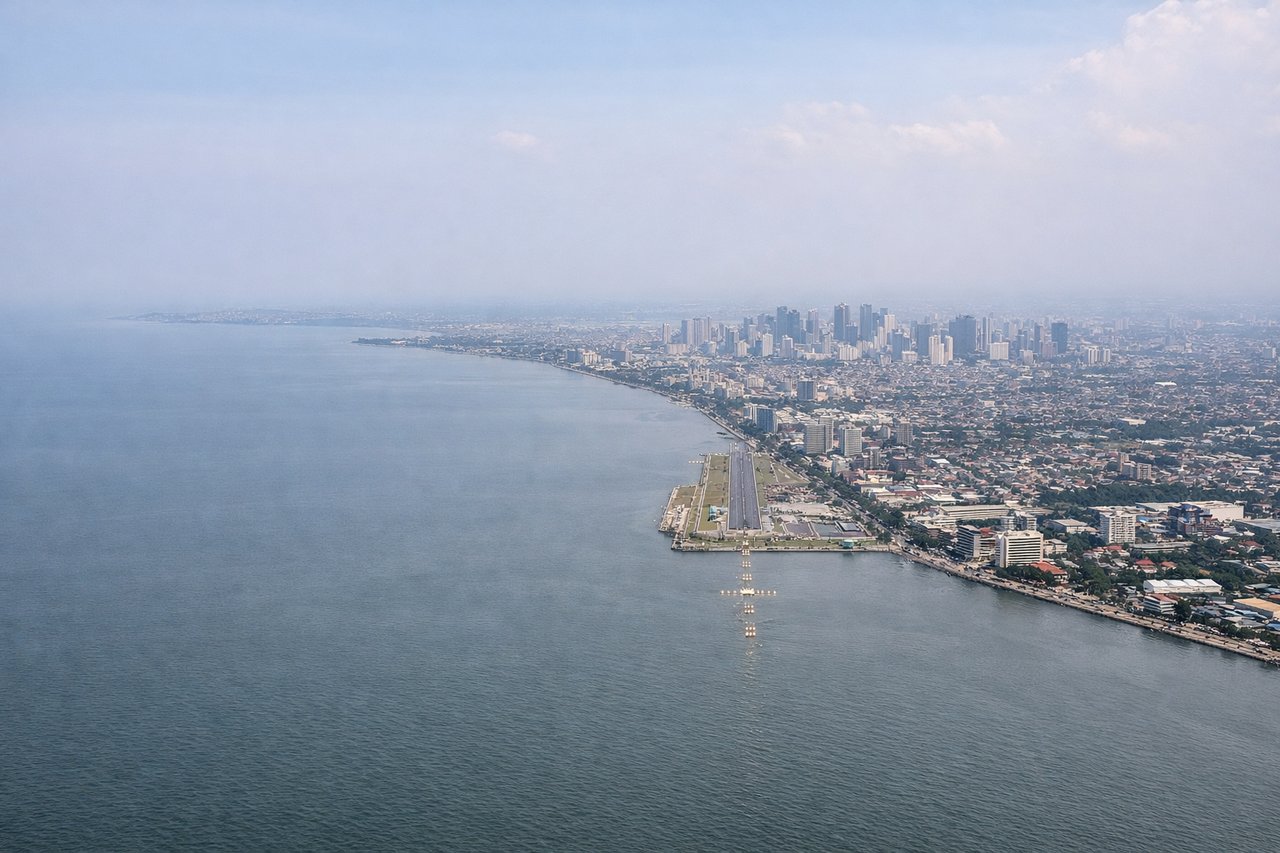
LEFTOn approach into NAIA, flights descending over Luzon toward Manila typically bank to align with the runway over Manila Bay, giving left-side passengers a wide view of the bay, Corregidor Island, and the Bataan Peninsula. The right side instead faces the flatter Sierra Madre foothills and Laguna de Bay area, which is comparatively less striking.
Landmarks on this routeAll landmarks →
Will your flight be in sunlight?
Pick a date and time in the Sun Map to watch the sun move across your whole flight.
About This Route
Which side of the plane should I sit on flying from John F Kennedy International (JFK) to Ninoy Aquino International (MNL)?
Sit on the Left side of the plane for the best views on flights from New York to Manila. The left side bookends the flight with two strong visual anchors — the New York skyline on departure and Manila Bay with its peninsula on arrival — and during the long cruise phase it faces the higher-latitude landmass side of the great-circle route (Canada, Alaska, Kamchatka), while the right side spends most of the flight over open ocean with little to distinguish it.
What can I see during takeoff from John F Kennedy International in New York?
During takeoff from John F Kennedy International (JFK), sit on the Left side for the best views. Departures from JFK on runway 31L climb out to the northwest, and the initial left turn puts Jamaica Bay, the Rockaway Peninsula, and the Manhattan skyline on the left side of the aircraft. The right side mostly faces Long Island and open Atlantic water, which is far less distinctive. Notable sights include: Jamaica Bay, Rockaway Peninsula, Lower Manhattan skyline, Verrazzano-Narrows Bridge.
What can I see when landing at Ninoy Aquino International in Manila?
When landing at Ninoy Aquino International (MNL), sit on the Left side for the best views. On approach into NAIA, flights descending over Luzon toward Manila typically bank to align with the runway over Manila Bay, giving left-side passengers a wide view of the bay, Corregidor Island, and the Bataan Peninsula. The right side instead faces the flatter Sierra Madre foothills and Laguna de Bay area, which is comparatively less striking. Notable sights include: Manila Bay, Corregidor Island, Bataan Peninsula, Metro Manila coastal skyline.
How long is the flight from New York to Manila?
The flight from John F Kennedy International (JFK) to Ninoy Aquino International (MNL) takes about 15 hours 55 minutes. The shortest flight path between them is 8,510 miles (13,696 km); winds and air traffic control usually add a few percent.
What does the New York to Manila flight path pass over?
The great-circle route runs northwest over Hudson Bay and northern Canada, across Alaska and the Bering Sea, past the volcanic Kamchatka Peninsula, down along Japan's Pacific coast, over the East China Sea near Taiwan, and through the Luzon Strait before descending into the Philippines.