New York to Split is 4,380 miles (7,049 km), a flight of about 9 hours 30 minutes.
Left side wins both ends of the flight. At takeoff you get the full New York Harbor and Manhattan panorama, and on approach to Split you get the Dalmatian island chain and the city itself. The right side offers the Atlantic and open Adriatic for most of the flight, which is less interesting.
Flight Path
The flight tracks northeast over New England and Nova Scotia, then crosses the North Atlantic on a great circle route passing south of Greenland and Iceland. Over Europe it crosses Ireland or southern England, then tracks across France and the Alps before descending over the Adriatic. The Alps crossing over northern Italy or Austria offers dramatic high-altitude views of glaciated peaks, and the Adriatic coast of Croatia is visible during the final descent.
Great circle distance and headings ›.jpg?width=600)

.jpg?width=600)

.jpg?width=600)

.jpg?width=600)


Phase by phase
Takeoff from JFK
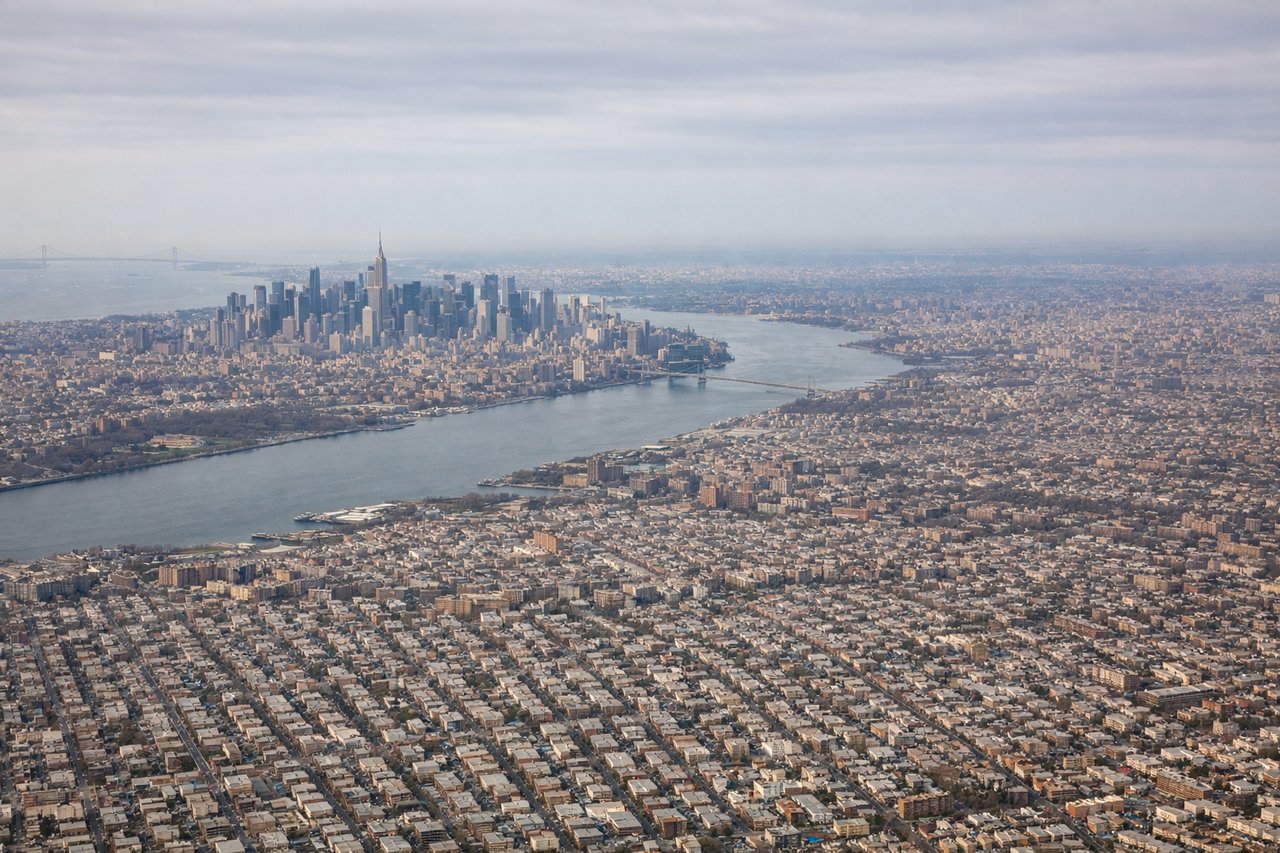
LEFTJFK's primary departure runways (22L/22R) head southwest, then aircraft turn northeast over the city. A left seat gives you Manhattan's skyline, the East River crossings, and the full sweep of New York Harbor as you climb out. The Verrazano-Narrows Bridge and Staten Island are clearly visible below.
Landing at SPU
LEFTSplit Airport sits on the Kaštela Bay coast, and aircraft typically approach from the northwest or west over the Adriatic. A left seat on approach gives you the Dalmatian coastline, the islands of Brač and Šolta in the Adriatic, and the city of Split itself with Diocletian's Palace visible on the waterfront. The Dinaric Alps rise dramatically to the northeast as a backdrop.
Landmarks on this routeAll landmarks →
Will your flight be in sunlight?
Pick a date and time in the Sun Map to watch the sun move across your whole flight.
About This Route
Which side of the plane should I sit on flying from John F Kennedy International (JFK) to Split (SPU)?
Sit on the Left side of the plane for the best views on flights from New York to Split. Left side wins both ends of the flight. At takeoff you get the full New York Harbor and Manhattan panorama, and on approach to Split you get the Dalmatian island chain and the city itself. The right side offers the Atlantic and open Adriatic for most of the flight, which is less interesting.
What can I see during takeoff from John F Kennedy International in New York?
During takeoff from John F Kennedy International (JFK), sit on the Left side for the best views. JFK's primary departure runways (22L/22R) head southwest, then aircraft turn northeast over the city. A left seat gives you Manhattan's skyline, the East River crossings, and the full sweep of New York Harbor as you climb out. The Verrazano-Narrows Bridge and Staten Island are clearly visible below. Notable sights include: Manhattan skyline and Central Park, Verrazano-Narrows Bridge, New York Harbor, Brooklyn waterfront.
What can I see when landing at Split in Split?
When landing at Split (SPU), sit on the Left side for the best views. Split Airport sits on the Kaštela Bay coast, and aircraft typically approach from the northwest or west over the Adriatic. A left seat on approach gives you the Dalmatian coastline, the islands of Brač and Šolta in the Adriatic, and the city of Split itself with Diocletian's Palace visible on the waterfront. The Dinaric Alps rise dramatically to the northeast as a backdrop. Notable sights include: Island of Brač in the Adriatic, Kaštela Bay and Split waterfront, Diocletian's Palace district, Dinaric Alps ridge to the northeast.
How long is the flight from New York to Split?
The flight from John F Kennedy International (JFK) to Split (SPU) takes about 9 hours 30 minutes. The shortest flight path between them is 4,380 miles (7,049 km); winds and air traffic control usually add a few percent.
What does the New York to Split flight path pass over?
The flight tracks northeast over New England and Nova Scotia, then crosses the North Atlantic on a great circle route passing south of Greenland and Iceland. Over Europe it crosses Ireland or southern England, then tracks across France and the Alps before descending over the Adriatic. The Alps crossing over northern Italy or Austria offers dramatic high-altitude views of glaciated peaks, and the Adriatic coast of Croatia is visible during the final descent.