New York to Wuhan is 7,476 miles (12,032 km), a flight of about 14 hours 30 minutes.
Left side wins at both ends of the flight. During the transpacific routing, the left side also faces south over the North Pacific, giving occasional views of the Aleutian Islands chain and the Kamchatka Peninsula coastline as the great circle route arcs over the northern Pacific. Right side is largely open ocean throughout the mid-flight.
Flight Path
The great circle route from JFK to Wuhan arcs north over Canada, crossing Hudson Bay, then tracks over the Canadian Arctic and southern Alaska. It then crosses the North Pacific, passing south of the Aleutian Islands chain and over the Kamchatka Peninsula in Russia. The route then descends over northeastern China, crossing Manchuria and the North China Plain before reaching Wuhan. Notable features include the Canadian Rockies visible early in the flight, the Aleutian Islands arc visible from altitude on the left side, the volcanic peaks of Kamchatka, and the broad Yellow River basin on descent into central China.
Great circle distance and headings ›.jpg?width=600)
.jpeg?width=600)


Phase by phase
Takeoff from JFK
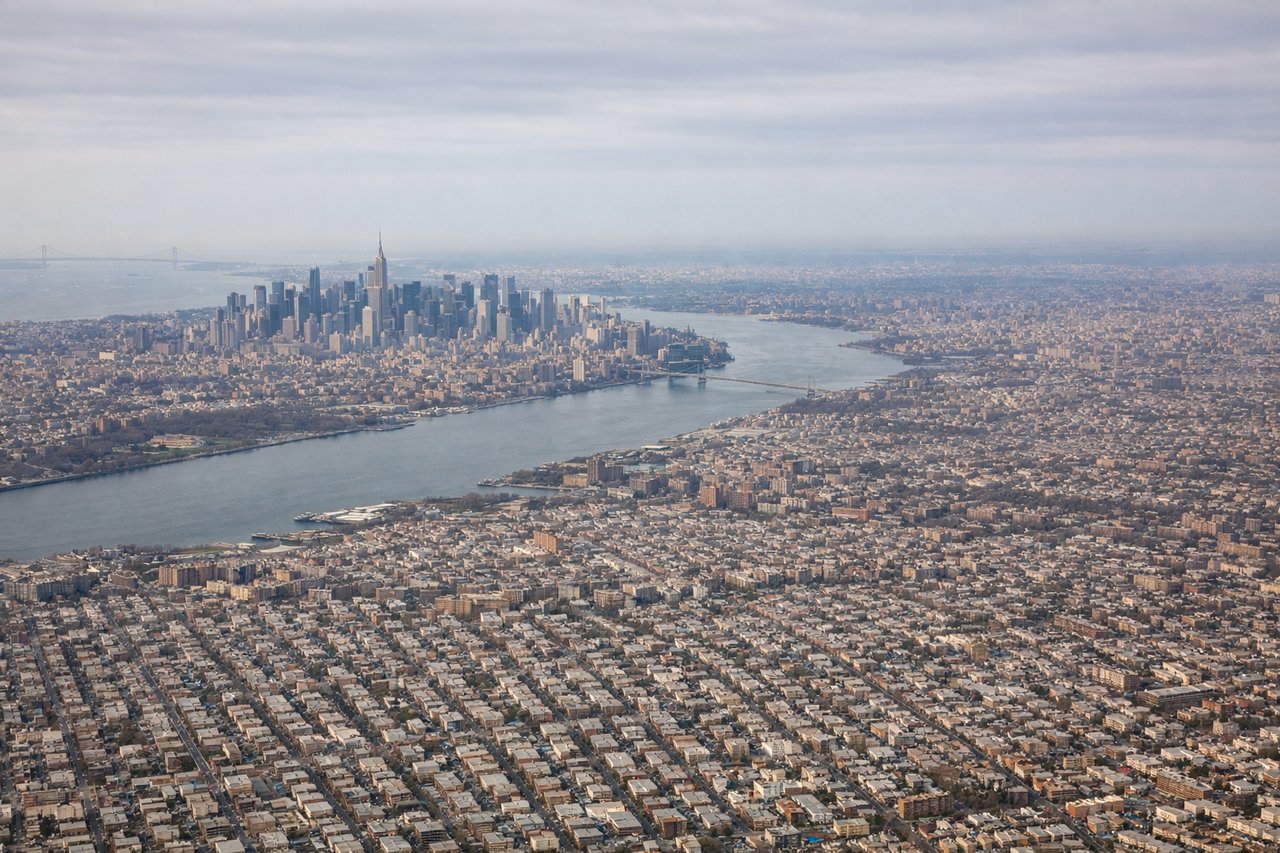
LEFTJFK departures heading east or northeast on runways 31L/31R put Manhattan and the full New York Harbor on the left side. You get a clear view of the Verrazano-Narrows Bridge, Lower Manhattan skyline, and the Hudson River as the aircraft climbs out over Jamaica Bay and turns north.
Landing at WUH
LEFTWuhan Tianhe approaches from the west or southwest typically bring the aircraft over the Han River confluence and the Yangtze River. The left side gives you the view of the Yangtze as it curves through the city, the Yellow Crane Tower area on Sheshan Hill, and the dense urban grid of Wuchang and Hankou districts.
Landmarks on this routeAll landmarks →
Will your flight be in sunlight?
Pick a date and time in the Sun Map to watch the sun move across your whole flight.
About This Route
Which side of the plane should I sit on flying from John F Kennedy International (JFK) to Tianhe (WUH)?
Sit on the Left side of the plane for the best views on flights from New York to Wuhan. Left side wins at both ends of the flight. During the transpacific routing, the left side also faces south over the North Pacific, giving occasional views of the Aleutian Islands chain and the Kamchatka Peninsula coastline as the great circle route arcs over the northern Pacific. Right side is largely open ocean throughout the mid-flight.
What can I see during takeoff from John F Kennedy International in New York?
During takeoff from John F Kennedy International (JFK), sit on the Left side for the best views. JFK departures heading east or northeast on runways 31L/31R put Manhattan and the full New York Harbor on the left side. You get a clear view of the Verrazano-Narrows Bridge, Lower Manhattan skyline, and the Hudson River as the aircraft climbs out over Jamaica Bay and turns north. Notable sights include: Manhattan skyline, Verrazano-Narrows Bridge, Jamaica Bay, Long Island Sound.
What can I see when landing at Tianhe in Wuhan?
When landing at Tianhe (WUH), sit on the Left side for the best views. Wuhan Tianhe approaches from the west or southwest typically bring the aircraft over the Han River confluence and the Yangtze River. The left side gives you the view of the Yangtze as it curves through the city, the Yellow Crane Tower area on Sheshan Hill, and the dense urban grid of Wuchang and Hankou districts. Notable sights include: Yangtze River, Han River confluence, Wuhan urban districts (Hankou, Wuchang), East Lake.
How long is the flight from New York to Wuhan?
The flight from John F Kennedy International (JFK) to Tianhe (WUH) takes about 14 hours 30 minutes. The shortest flight path between them is 7,476 miles (12,032 km); winds and air traffic control usually add a few percent.
What does the New York to Wuhan flight path pass over?
The great circle route from JFK to Wuhan arcs north over Canada, crossing Hudson Bay, then tracks over the Canadian Arctic and southern Alaska. It then crosses the North Pacific, passing south of the Aleutian Islands chain and over the Kamchatka Peninsula in Russia. The route then descends over northeastern China, crossing Manchuria and the North China Plain before reaching Wuhan. Notable features include the Canadian Rockies visible early in the flight, the Aleutian Islands arc visible from altitude on the left side, the volcanic peaks of Kamchatka, and the broad Yellow River basin on descent into central China.