While takeoff favors the right for Iceland's volcanic landscape, the landing view of Warsaw's Vistula River and city center is more visually distinctive and geographically significant. The river's dramatic meanders and urban context provide superior viewing for the majority of the flight's final phase.
Flown KEF to WAW? Did we get it right?
Flight Path
Keflavik to Warsaw is 1,743 miles (2,804 km), a flight of about 4 hours 15 minutes.
The flight crosses the North Sea and southern Scandinavia. Notable features include the Norwegian coast near Stavanger (if visible through weather), the Skagerrak strait, southern Sweden's lakes and forests, and the Baltic Sea's southern shore. The route typically passes east of Denmark and over the Baltic before turning south toward Poland. Few dramatic landmarks are visible at cruise altitude over open water and relatively flat Scandinavian terrain, making the takeoff and landing segments the primary viewing opportunities.
Great circle distance and headings ›


Phase by phase
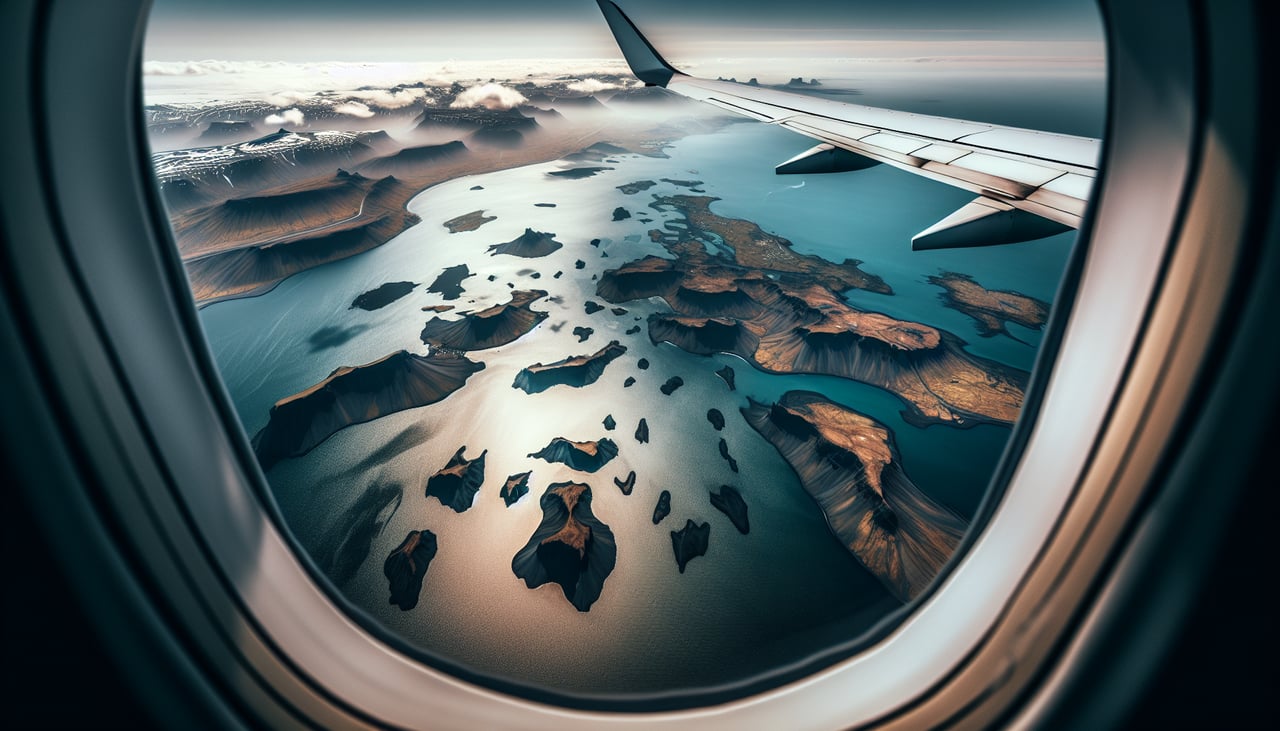
Takeoff from KEF
RIGHTKEF typically departs runway 02 (northbound) or 20 (southbound). Right-side seats offer views of Iceland's southwestern coast and the Reykjanes Peninsula's dramatic lava fields and geothermal features during initial climb. Left seats face inland toward less distinctive terrain.
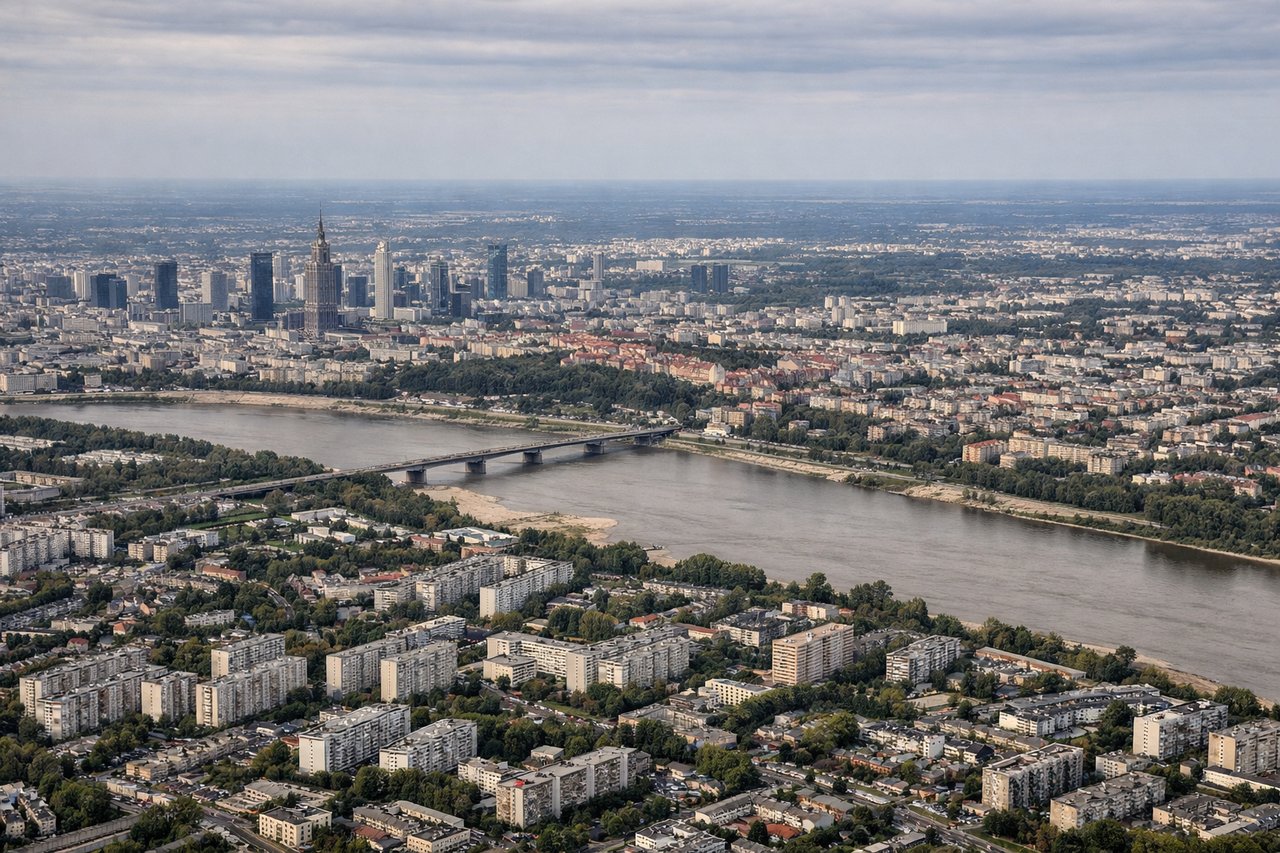
Landing at WAW
LEFTWAW uses runways 01L/19R and 01R/19L. Approaching from the northwest (typical routing), left-side seats provide views of the Vistula River's distinctive meanders through Warsaw, the city's urban sprawl, and the flat Masovian Plain. Right seats see less distinctive terrain to the east.
Will your flight be in sunlight?
Pick a date and time in the Sun Map to watch the sun move across your whole flight.
About This Route
Which side of the plane should I sit on flying from Keflavik Nas (KEF) to Okecie (WAW)?
Sit on the Left side of the plane for the best views on flights from Keflavik to Warsaw. While takeoff favors the right for Iceland's volcanic landscape, the landing view of Warsaw's Vistula River and city center is more visually distinctive and geographically significant. The river's dramatic meanders and urban context provide superior viewing for the majority of the flight's final phase.
What can I see during takeoff from Keflavik Nas in Keflavik?
During takeoff from Keflavik Nas (KEF), sit on the Right side for the best views. KEF typically departs runway 02 (northbound) or 20 (southbound). Right-side seats offer views of Iceland's southwestern coast and the Reykjanes Peninsula's dramatic lava fields and geothermal features during initial climb. Left seats face inland toward less distinctive terrain. Notable sights include: Reykjanes Peninsula lava fields (dark volcanic rock formations), Atlantic Ocean to the west, Fagradalsfjall volcanic region, Grindavík geothermal area.
What can I see when landing at Okecie in Warsaw?
When landing at Okecie (WAW), sit on the Left side for the best views. WAW uses runways 01L/19R and 01R/19L. Approaching from the northwest (typical routing), left-side seats provide views of the Vistula River's distinctive meanders through Warsaw, the city's urban sprawl, and the flat Masovian Plain. Right seats see less distinctive terrain to the east. Notable sights include: Vistula River with characteristic loops and bends, Warsaw city center and Old Town district, Masovian Plain extending eastward, Narew River confluence.
How long is the flight from Keflavik to Warsaw?
The flight from Keflavik Nas (KEF) to Okecie (WAW) takes about 4 hours 15 minutes. The shortest flight path between them is 1,743 miles (2,804 km); winds and air traffic control usually add a few percent.
What does the Keflavik to Warsaw flight path pass over?
The flight crosses the North Sea and southern Scandinavia. Notable features include the Norwegian coast near Stavanger (if visible through weather), the Skagerrak strait, southern Sweden's lakes and forests, and the Baltic Sea's southern shore. The route typically passes east of Denmark and over the Baltic before turning south toward Poland. Few dramatic landmarks are visible at cruise altitude over open water and relatively flat Scandinavian terrain, making the takeoff and landing segments the primary viewing opportunities.