The right side captures the most dramatic moments of the flight: Kobe's skyline and Rokko mountains during the departure turn, and Seoul's urban sprawl with the Han River and Incheon Bridge during the final approach. The left side mostly overlooks open Osaka Bay and featureless stretches of the Yellow Sea.
Flight Path
Korea Strait (Tsushima Strait) crossing with Tsushima Island occasionally visible below, followed by the open waters of the Yellow Sea before the Korean coastline comes into view.
Great circle distance and headings ›Phase by phase
Takeoff from KIX
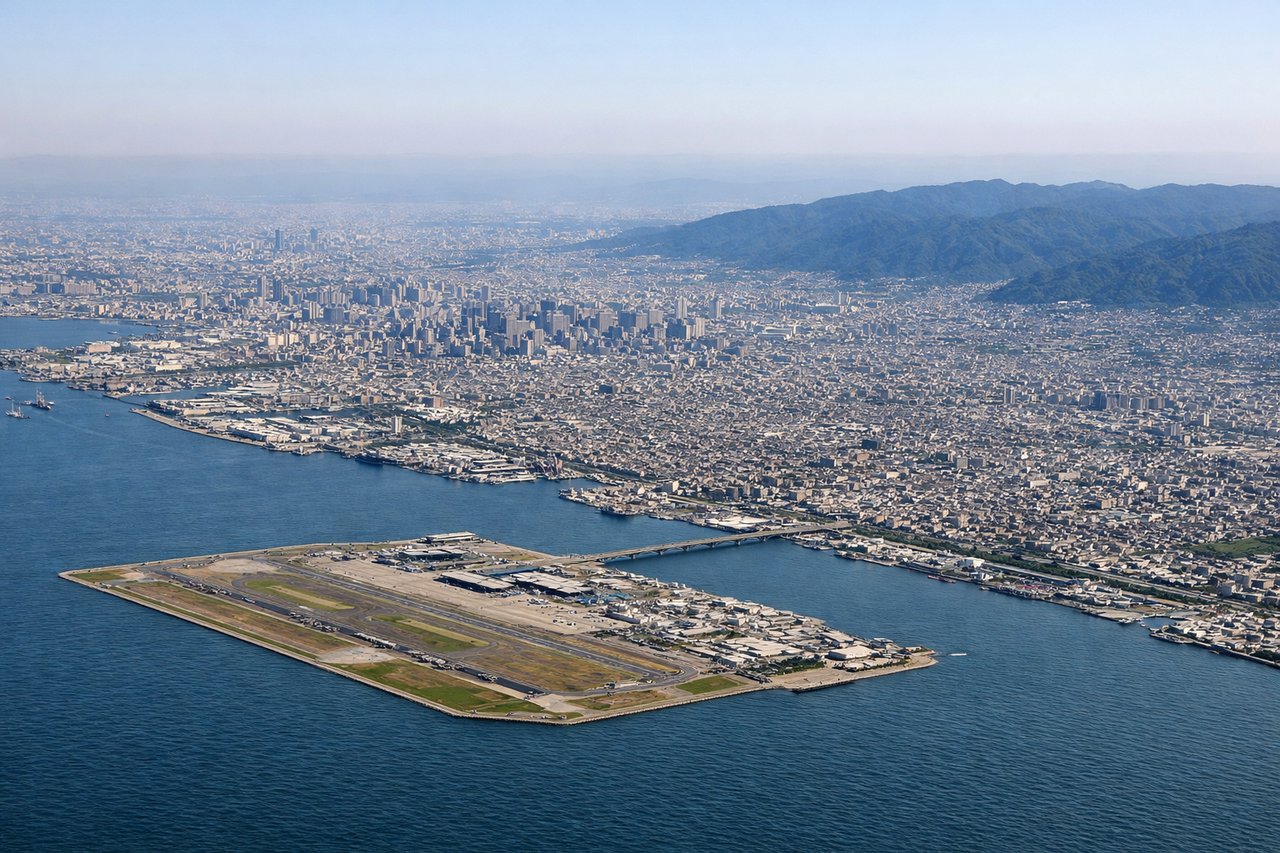
RIGHTKIX typically departs on runway 24 southwest over Osaka Bay, then banks right onto the northwest heading toward Korea. That turn puts Kobe's skyline, the Rokko mountain range, and the Akashi Kaikyo Bridge spanning to Awaji Island right in view on the right side.
Landing at ICN
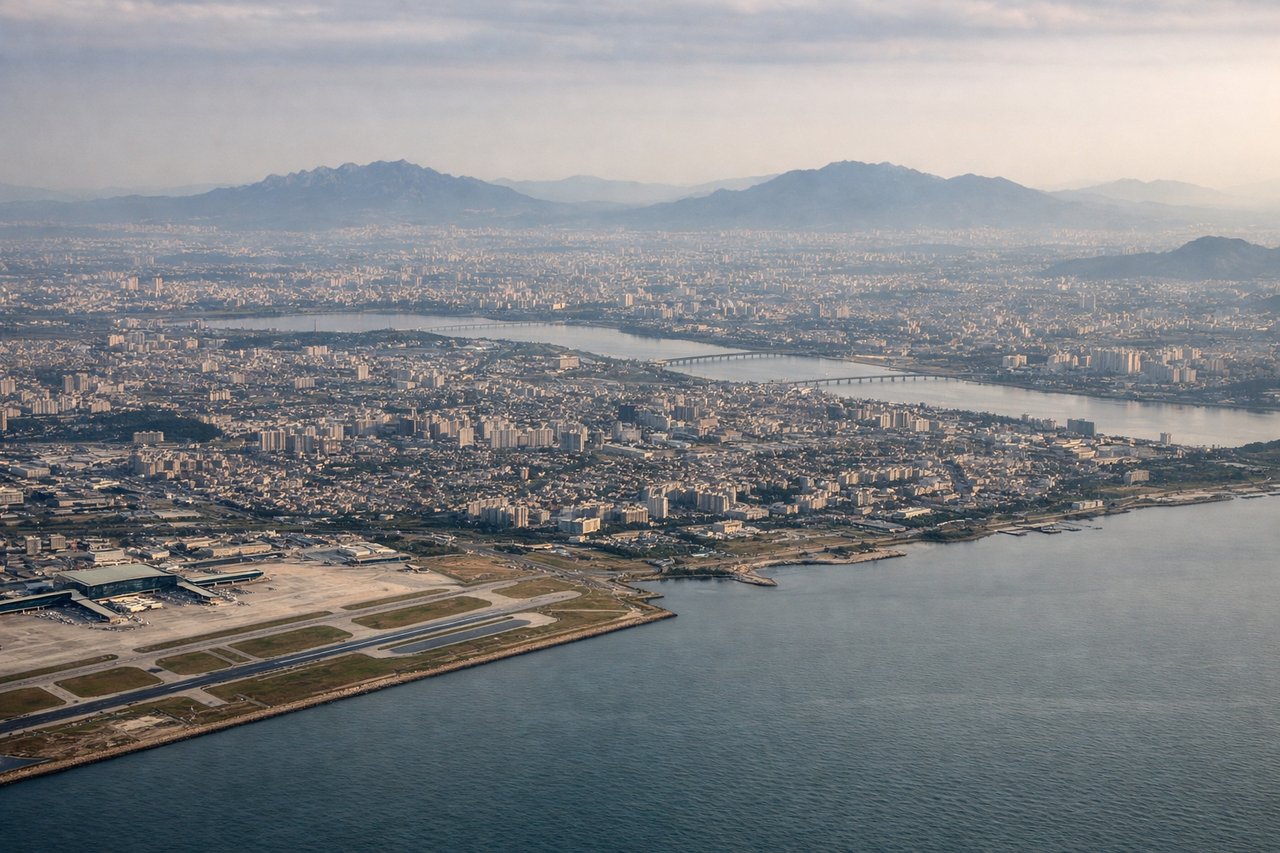
RIGHTOn approach into ICN from the southeast, the flight path descends over the Yellow Sea islands before aligning with the runway, giving right-side passengers a view across Incheon's bridge and the outskirts of Seoul's skyline along the Han River as the aircraft turns onto final.
Will your flight be in sunlight?
See exactly which side of the plane gets sun and shade at your departure time.
About This Route
Which side of the plane should I sit on flying from Kansai International (KIX) to Incheon International (ICN)?
Sit on the Right side of the plane for the best views on flights from Osaka to Seoul. The right side captures the most dramatic moments of the flight: Kobe's skyline and Rokko mountains during the departure turn, and Seoul's urban sprawl with the Han River and Incheon Bridge during the final approach. The left side mostly overlooks open Osaka Bay and featureless stretches of the Yellow Sea.
What can I see during takeoff from Kansai International in Osaka?
During takeoff from Kansai International (KIX), sit on the Right side for the best views. KIX typically departs on runway 24 southwest over Osaka Bay, then banks right onto the northwest heading toward Korea. That turn puts Kobe's skyline, the Rokko mountain range, and the Akashi Kaikyo Bridge spanning to Awaji Island right in view on the right side. Notable sights include: Kobe city skyline, Rokko Mountain range, Akashi Kaikyo Bridge, Awaji Island.
What can I see when landing at Incheon International in Seoul?
When landing at Incheon International (ICN), sit on the Right side for the best views. On approach into ICN from the southeast, the flight path descends over the Yellow Sea islands before aligning with the runway, giving right-side passengers a view across Incheon's bridge and the outskirts of Seoul's skyline along the Han River as the aircraft turns onto final. Notable sights include: Seoul skyline, Han River, Incheon Bridge, Yeongjong Island coastline.
How long is the flight from Osaka to Seoul?
The flight from Kansai International (KIX) to Incheon International (ICN) takes 1h 50m.
What does the Osaka to Seoul flight path pass over?
Korea Strait (Tsushima Strait) crossing with Tsushima Island occasionally visible below, followed by the open waters of the Yellow Sea before the Korean coastline comes into view.