Kunming to Kathmandu is 1,101 miles (1,773 km), a flight of about 2 hours 40 minutes.
While takeoff scenery favors the left briefly, the right side dominates during cruise and especially landing, where the Himalayan range—including Everest's vicinity—becomes visible as the flight approaches Kathmandu, a view unmatched in drama by anything on the left.
Flight Path
Eastern Himalayan foothills near the Yunnan-Tibet border, including the upper Mekong and Salween river valleys, with the Tibetan plateau's southern edge visible before descent into the Kathmandu Valley
Great circle distance and headings ›.jpg?width=600)

Phase by phase
Takeoff from KMG
LEFTDeparting KMG toward the southwest, the initial climb affords a brief view south toward Dianchi Lake and the karst hills surrounding Kunming's basin, which sit on the left side of the aircraft as it turns west. The right side mostly shows the flatter Yunnan plateau interior.
Landing at KTM
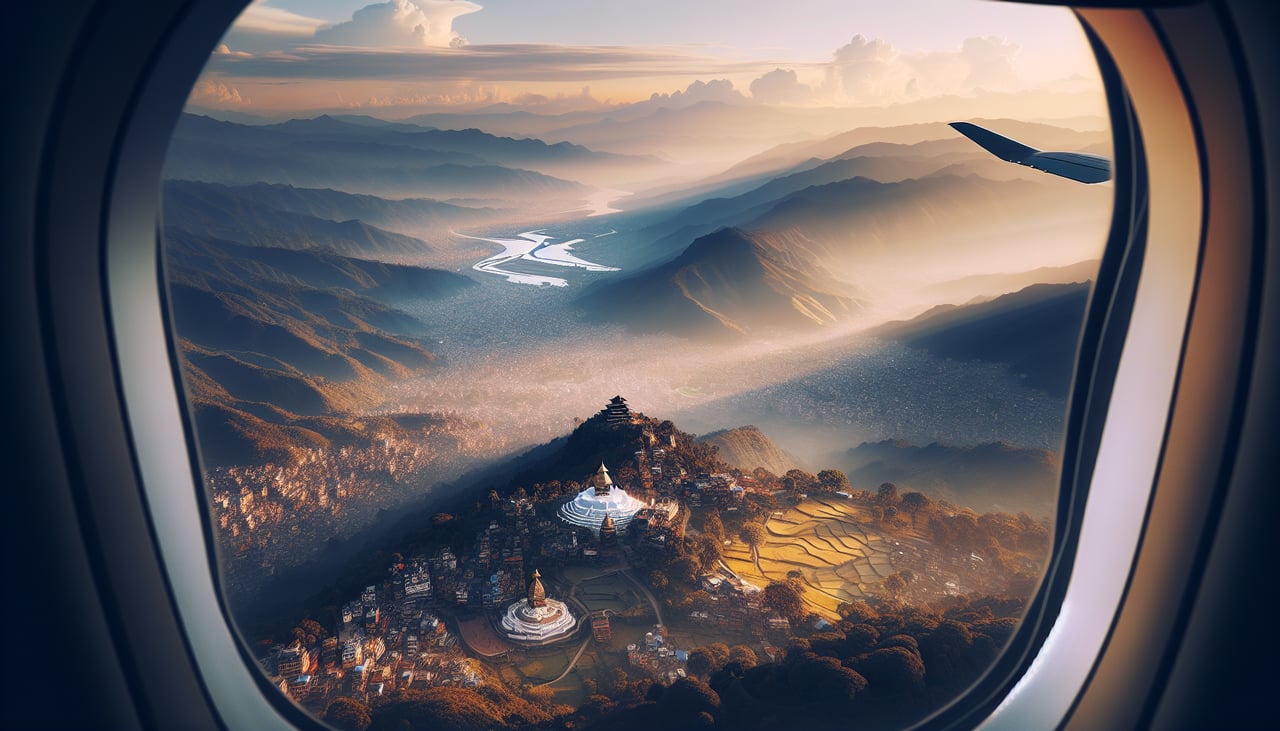
RIGHTOn approach into Kathmandu from the east, the aircraft typically banks to land on runway 02, putting the Himalayan skyline—including views toward the Everest massif and Langtang range—on the right side of the cabin. This is one of the most celebrated approach views in commercial aviation.
Landmarks on this routeAll landmarks →
Will your flight be in sunlight?
Pick a date and time in the Sun Map to watch the sun move across your whole flight.
About This Route
Which side of the plane should I sit on flying from Kunming Changshui International Airport (KMG) to Tribhuvan International (KTM)?
Sit on the Right side of the plane for the best views on flights from Kunming to Kathmandu. While takeoff scenery favors the left briefly, the right side dominates during cruise and especially landing, where the Himalayan range—including Everest's vicinity—becomes visible as the flight approaches Kathmandu, a view unmatched in drama by anything on the left.
What can I see during takeoff from Kunming Changshui International Airport in Kunming?
During takeoff from Kunming Changshui International Airport (KMG), sit on the Left side for the best views. Departing KMG toward the southwest, the initial climb affords a brief view south toward Dianchi Lake and the karst hills surrounding Kunming's basin, which sit on the left side of the aircraft as it turns west. The right side mostly shows the flatter Yunnan plateau interior. Notable sights include: Dianchi Lake, Kunming's karst hills, Yunnan plateau farmland.
What can I see when landing at Tribhuvan International in Kathmandu?
When landing at Tribhuvan International (KTM), sit on the Right side for the best views. On approach into Kathmandu from the east, the aircraft typically banks to land on runway 02, putting the Himalayan skyline—including views toward the Everest massif and Langtang range—on the right side of the cabin. This is one of the most celebrated approach views in commercial aviation. Notable sights include: Langtang Himal, distant Everest/Makalu massif, Kathmandu Valley terraces, Bagmati river valley.
How long is the flight from Kunming to Kathmandu?
The flight from Kunming Changshui International Airport (KMG) to Tribhuvan International (KTM) takes about 2 hours 40 minutes. The shortest flight path between them is 1,101 miles (1,773 km); winds and air traffic control usually add a few percent.
What does the Kunming to Kathmandu flight path pass over?
Eastern Himalayan foothills near the Yunnan-Tibet border, including the upper Mekong and Salween river valleys, with the Tibetan plateau's southern edge visible before descent into the Kathmandu Valley