While the takeoff offers dramatic volcanic scenery, the landing provides more sustained visual interest. The Rocky Mountain approach is one of the most visually distinctive descents in North America, and left-side seats capture the full Front Range and the dramatic transition from plains to peaks.
Flight Path
The flight path crosses the Pacific Ocean for roughly 2 hours, then enters Arizona/New Mexico airspace. You'll pass over the Colorado Plateau region (visible as tan, arid terrain with subtle canyon systems), then the New Mexico high desert. As you approach Colorado, the terrain gradually rises and becomes more rugged. The San Juan Mountains and other ranges become visible in the distance before the Front Range dominates the final descent.
Great circle distance and headings ›
.jpg?width=600)
Phase by phase
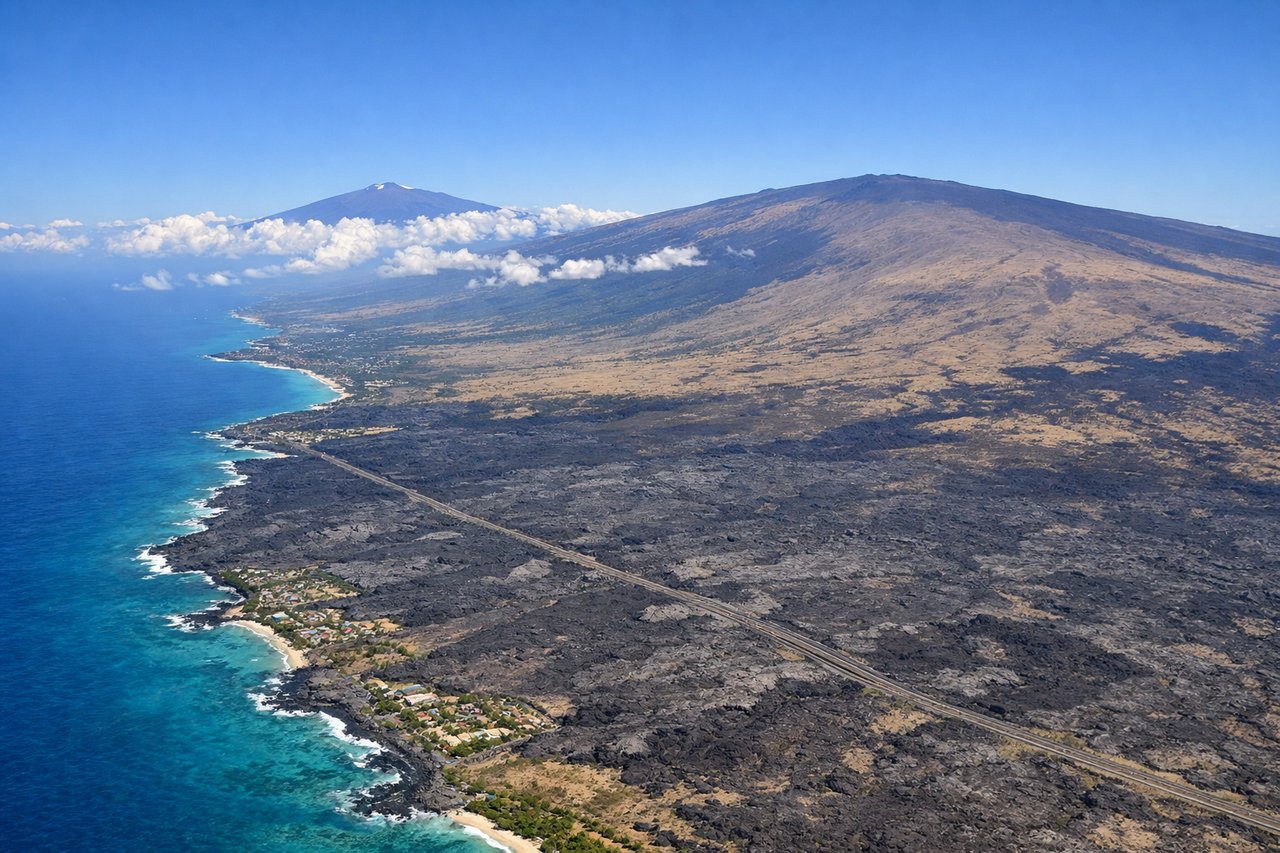
Takeoff from KOA
RIGHTRight-side seats capture the Big Island's volcanic landscape and the Kona coast as you climb out. You'll see Hualalai volcano and the dark lava fields that define this region, plus the Pacific Ocean stretching west.
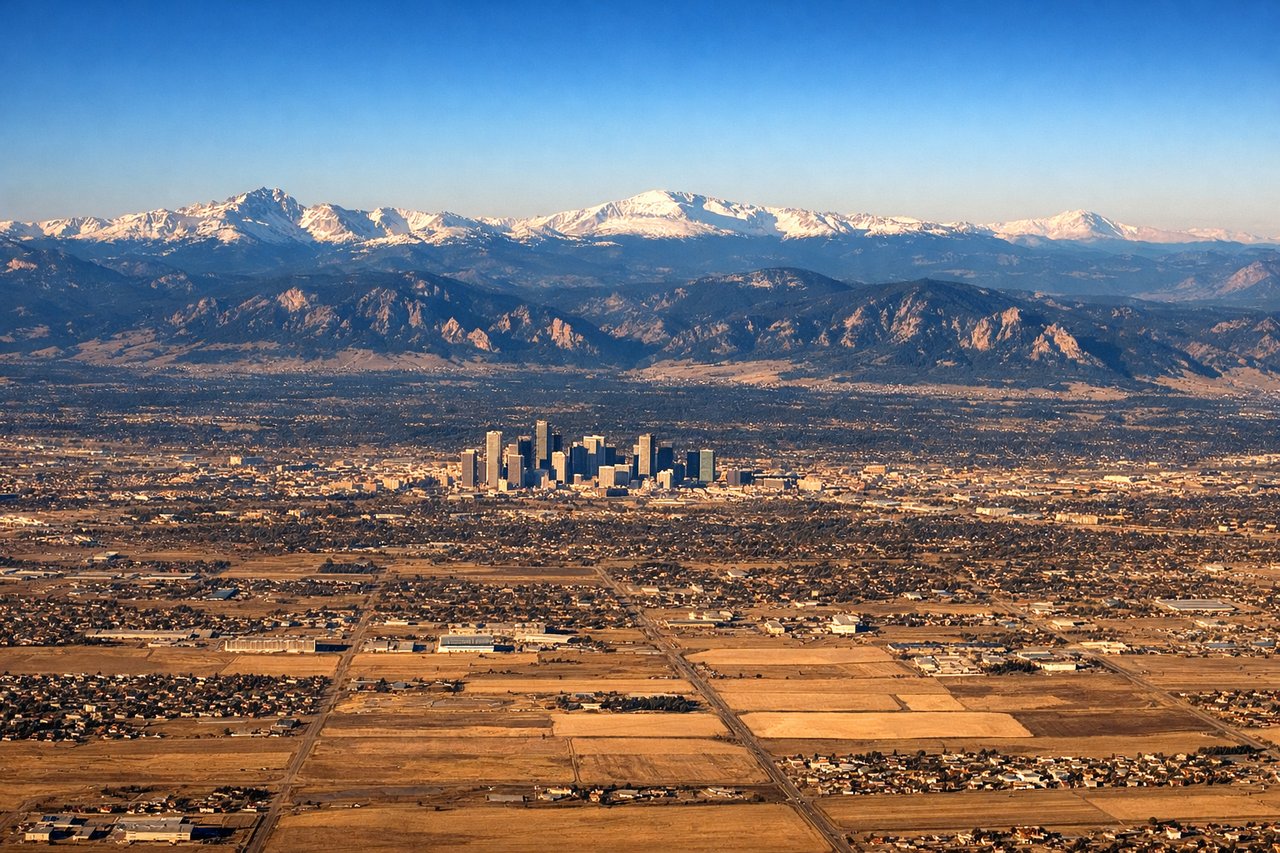
Landing at DEN
LEFTLeft seats offer the best views during descent into Denver. You'll see the Rocky Mountains rising dramatically from the plains—the Front Range is unmistakable. The transition from high plains to mountain terrain is visually striking.
Landmarks on this routeAll landmarks →
Will your flight be in sunlight?
See exactly which side of the plane gets sun and shade at your departure time.
About This Route
Which side of the plane should I sit on flying from Kona International At Keahole (KOA) to Denver International (DEN)?
Sit on the Left side of the plane for the best views on flights from Kona to Denver. While the takeoff offers dramatic volcanic scenery, the landing provides more sustained visual interest. The Rocky Mountain approach is one of the most visually distinctive descents in North America, and left-side seats capture the full Front Range and the dramatic transition from plains to peaks.
What can I see during takeoff from Kona International At Keahole in Kona?
During takeoff from Kona International At Keahole (KOA), sit on the Right side for the best views. Right-side seats capture the Big Island's volcanic landscape and the Kona coast as you climb out. You'll see Hualalai volcano and the dark lava fields that define this region, plus the Pacific Ocean stretching west. Notable sights include: Hualalai volcano (5,232 ft, visible as a dark volcanic cone), Kona coast lava fields (black basalt plains), Kailua-Kona town (small coastal settlement below), Pacific Ocean horizon.
What can I see when landing at Denver International in Denver?
When landing at Denver International (DEN), sit on the Left side for the best views. Left seats offer the best views during descent into Denver. You'll see the Rocky Mountains rising dramatically from the plains—the Front Range is unmistakable. The transition from high plains to mountain terrain is visually striking. Notable sights include: Rocky Mountains Front Range (peaks including Mount Evans and Longs Peak visible on clear days), South Platte River valley (linear feature cutting through plains), Denver metropolitan area sprawl, High Plains grasslands (tan/brown terrain east of mountains).
How long is the flight from Kona to Denver?
The flight from Kona International At Keahole (KOA) to Denver International (DEN) takes Approximately 5 hours 15 minutes.
What does the Kona to Denver flight path pass over?
The flight path crosses the Pacific Ocean for roughly 2 hours, then enters Arizona/New Mexico airspace. You'll pass over the Colorado Plateau region (visible as tan, arid terrain with subtle canyon systems), then the New Mexico high desert. As you approach Colorado, the terrain gradually rises and becomes more rugged. The San Juan Mountains and other ranges become visible in the distance before the Front Range dominates the final descent.