The right side delivers the best views at both ends of the flight — volcanic summits and lava coast on departure, and the Fort Worth skyline and Trinity River on arrival. Over the Pacific and mainland interior the views are similar on both sides, but the right side wins on the bookends.
Flight Path
The flight crosses the central Pacific Ocean for roughly the first 2,000 miles with open water below. The California coastline appears near Los Angeles or slightly north depending on routing. The route then crosses the Mojave Desert, the Colorado River, and the vast flat expanse of West Texas scrubland and the Permian Basin before descending into the Dallas-Fort Worth area.
Great circle distance and headings ›
.jpg?width=600)
Phase by phase
Takeoff from KOA
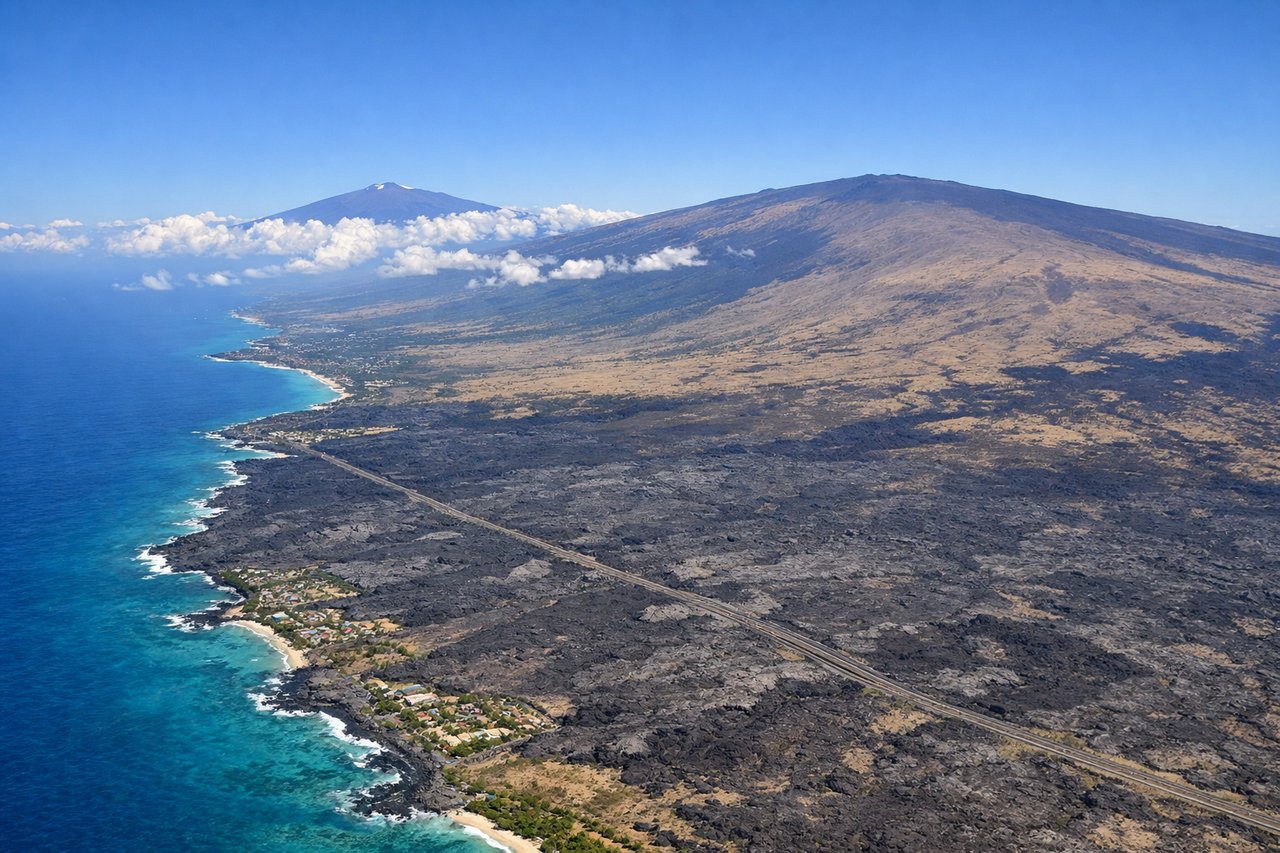
RIGHTKOA's runway 17 departure heads south, putting the volcanic summits of Mauna Kea and Mauna Loa on the right (west) side as the aircraft climbs and turns northeast. The right side also captures the rugged lava fields of the Kohala Coast and the blue Pacific shoreline below.
Landing at DFW
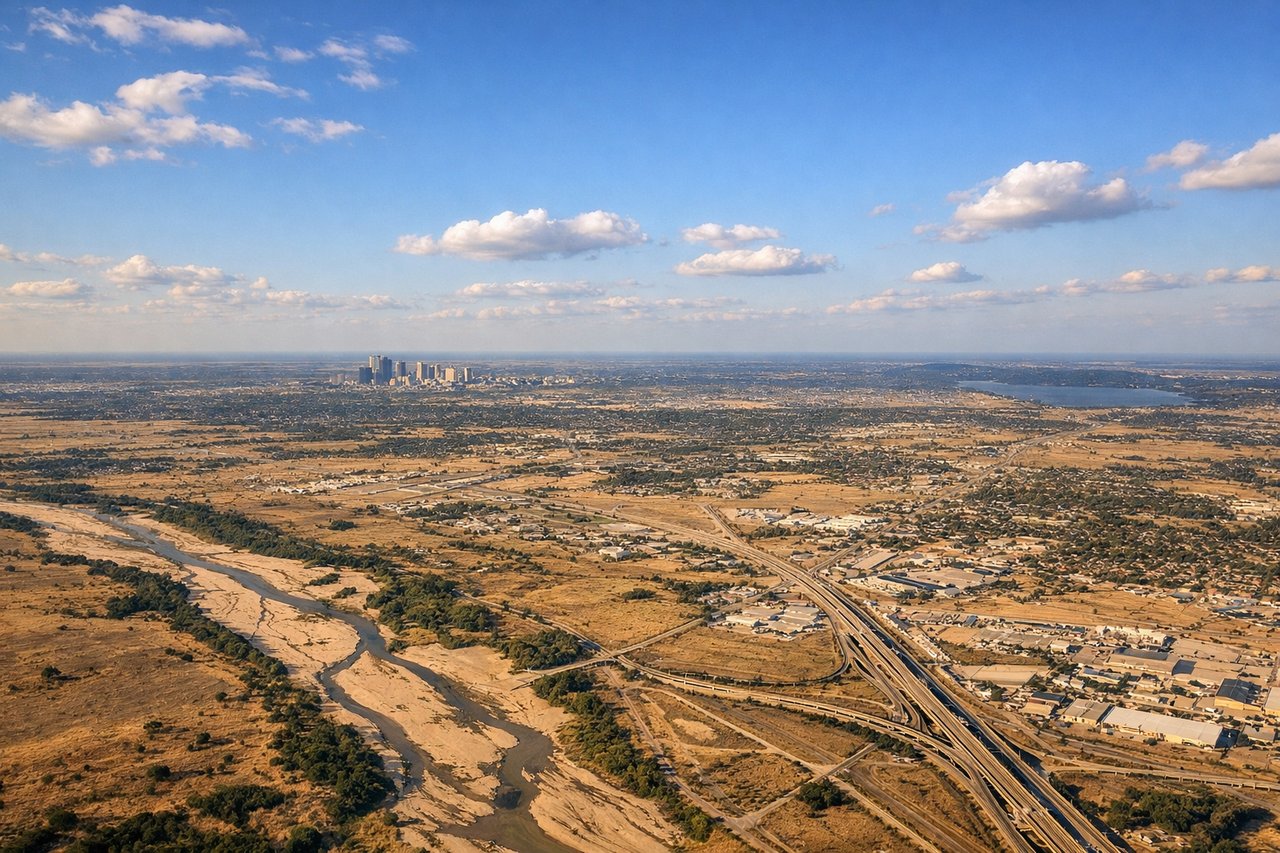
RIGHTDFW typically uses south or north flow runways. On approach from the west, the right side faces east and northeast, giving views over downtown Fort Worth, the Trinity River corridor, and the sprawling DFW metroplex grid. The left side faces mostly open Texas scrubland.
Landmarks on this routeAll landmarks →
Will your flight be in sunlight?
See exactly which side of the plane gets sun and shade at your departure time.
About This Route
Which side of the plane should I sit on flying from Kona International At Keahole (KOA) to Dallas Fort Worth International (DFW)?
Sit on the Right side of the plane for the best views on flights from Kona to Dallas-Fort Worth. The right side delivers the best views at both ends of the flight — volcanic summits and lava coast on departure, and the Fort Worth skyline and Trinity River on arrival. Over the Pacific and mainland interior the views are similar on both sides, but the right side wins on the bookends.
What can I see during takeoff from Kona International At Keahole in Kona?
During takeoff from Kona International At Keahole (KOA), sit on the Right side for the best views. KOA's runway 17 departure heads south, putting the volcanic summits of Mauna Kea and Mauna Loa on the right (west) side as the aircraft climbs and turns northeast. The right side also captures the rugged lava fields of the Kohala Coast and the blue Pacific shoreline below. Notable sights include: Mauna Kea summit (13,796 ft), Mauna Loa's broad shield profile, Kohala Coast lava fields, Keahole Point shoreline.
What can I see when landing at Dallas Fort Worth International in Dallas-Fort Worth?
When landing at Dallas Fort Worth International (DFW), sit on the Right side for the best views. DFW typically uses south or north flow runways. On approach from the west, the right side faces east and northeast, giving views over downtown Fort Worth, the Trinity River corridor, and the sprawling DFW metroplex grid. The left side faces mostly open Texas scrubland. Notable sights include: Downtown Fort Worth skyline, Trinity River, Lake Worth, DFW airport complex.
How long is the flight from Kona to Dallas-Fort Worth?
The flight from Kona International At Keahole (KOA) to Dallas Fort Worth International (DFW) takes Approximately 7.5 to 8.5 hours.
What does the Kona to Dallas-Fort Worth flight path pass over?
The flight crosses the central Pacific Ocean for roughly the first 2,000 miles with open water below. The California coastline appears near Los Angeles or slightly north depending on routing. The route then crosses the Mojave Desert, the Colorado River, and the vast flat expanse of West Texas scrubland and the Permian Basin before descending into the Dallas-Fort Worth area.